TWS is a Great Training Option for Everyone
Learn more about how we can prepare you to advance your career.
Learning as you work on a job site can teach you to finish the task in front of you, but not everything there is to know about the trade as a whole. It is valuable, but what you learn is a reaction to what you are trying to accomplish. Formal training programs provide a well-rounded foundation that fills knowledge gaps before you ever set foot in the field.
That distinction matters more than most people expect when they are first researching how to get into trades careers like welding or electrical work. The foundational skills, the theory, the safety standards, the processes you never happened to see on a job site: those gaps form quietly, and often no one notices until they matter.
What Job Site Learning Actually Looks Like
Working on a job site from day one has genuine appeal. You are earning, you are moving, and you are watching skilled tradespeople work in real conditions. But the learning is situational by design. Your exposure depends entirely on what happens to come up: which processes are running, which tasks you are assigned, and how much time a busy crew has to explain what they are doing and why.
Job sites are not structured to teach a trade. They are structured to get work done. The two goals do not always overlap, which means gaps accumulate in ways that are easy to miss:
Have You Considered a Career in the Skilled Trades?
Fill out the form to recieve a no obligation info packet.
- A welding process you were never assigned to run
- A wiring method that did not come up on any of your jobs
- A safety standard everyone on the crew follows out of habit but no one ever explained
- Theory behind a technique you learned by watching, not by understanding
Those gaps are not a reflection of how hard you worked. They are a natural result of learning in an environment where training is secondary to production.
What Formal Training Actually Builds
A structured program teaches the full trade, not just the corner of it that happened to be in front of you. The curriculum is sequenced: fundamentals come before advanced work, and theory runs alongside hands-on practice so that students understand not just how to do something, but why it works that way.
Consistency
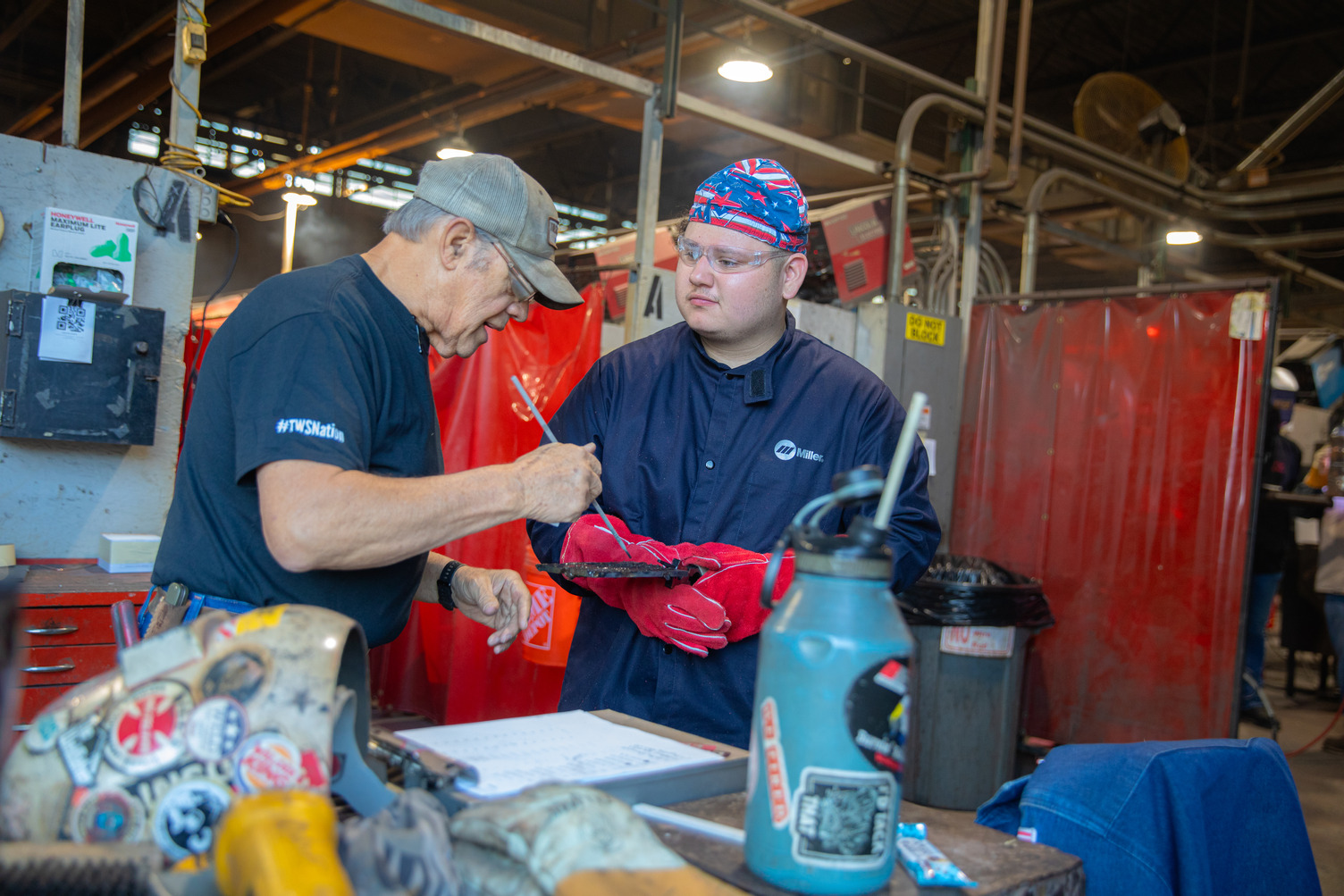
When you learn a technique correctly from the start, under an instructor who can correct your form before a bad habit sets in, you build consistency faster. On a job site, incorrect technique can go unaddressed for months because no one is specifically watching for it.
In a training environment, it gets caught early, which changes how quickly a student becomes genuinely competent, not just experienced. Students also get the chance to try different tasks and make mistakes without the consequences that come with errors in a live work environment.
Practical Readiness
Familiarity with a skill is not the same as being prepared to use it under real conditions. Structured training builds that readiness by moving students through a curriculum in a deliberate sequence — each module building on the last — so that by the time they finish, they have practiced processes repeatedly under instructor guidance rather than encountering them for the first time on a job site.

New: Industrial Maintenance
Learn About Our New Advanced Industrial Maintenance Program
Tulsa Welding School is proud to announce our newest program offering available at our Houston & Dallas Metro Campuses – Advanced Industrial Maintenance Technology! Learn the skills you need to take on the industries of manufacturing, distribution, energy production and facility maintenance in as few as 7 months.
That kind of structured exposure may support stronger performance in entry-level roles than on-the-job learning alone. It is also part of why formal welding training can help students pursue better job opportunities than those without structured preparation.
Breadth
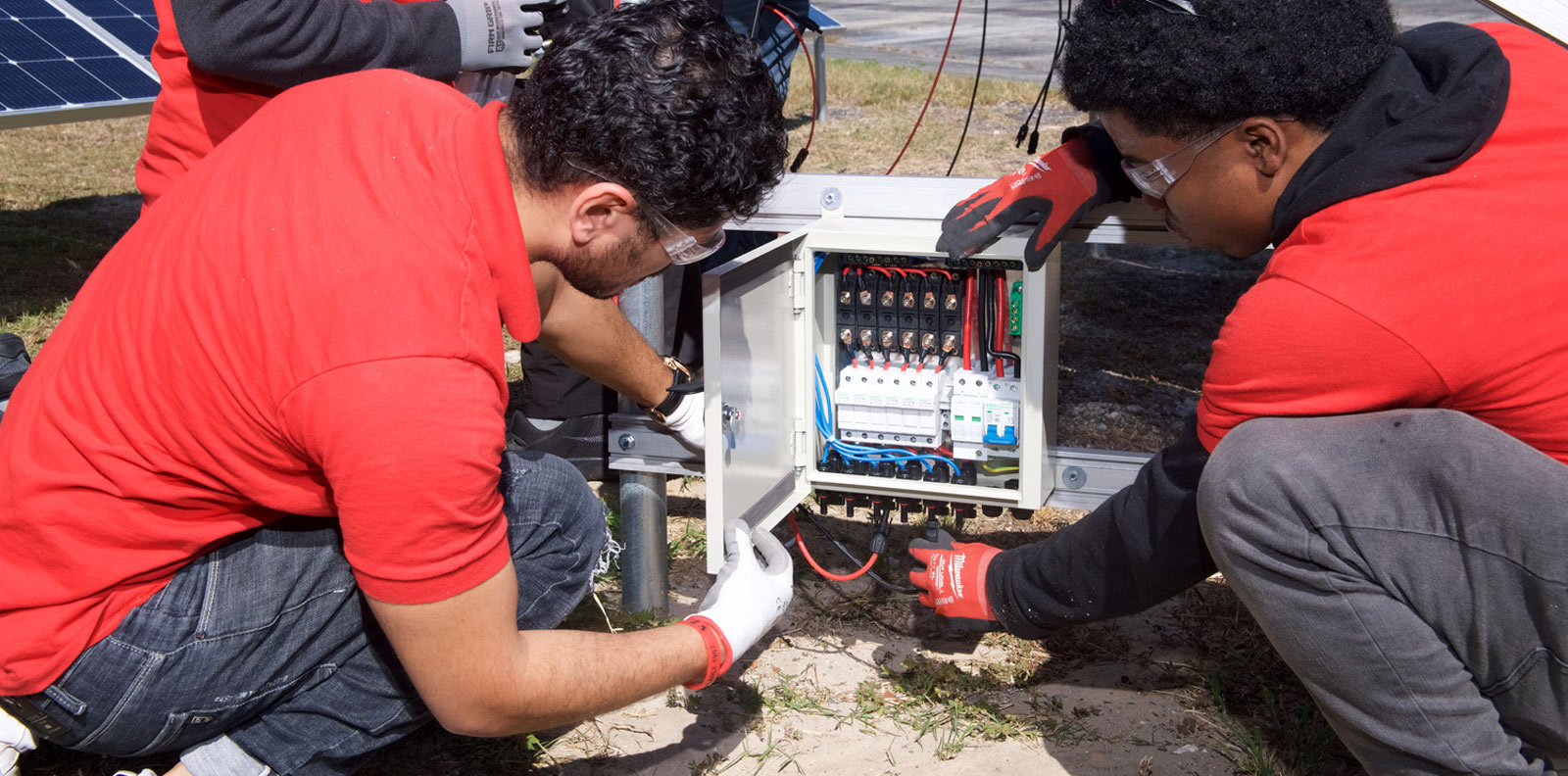
Formal welding and electrical programs cover the full range of processes and skills an entry-level worker is expected to know, not just the ones that happened to come up on a particular job site. Electrician training, for example, covers foundational electrical theory, residential and commercial wiring, blueprint reading, and safety practices, a scope that job site exposure rarely delivers in full during the first years of work.
Safety in Formal Training Programs
Job sites operate under the assumption that the people arriving already know the basics: how to handle equipment, what the relevant hazard protocols are, when a situation requires stopping. That assumption puts newer workers in a difficult position, because the safety knowledge job sites assume is exactly what formal training programs teach.
Structured programs build safety into the curriculum from day one. That includes understanding Occupational Safety and Health Administration (OSHA) standards, proper equipment handling, and hazard recognition specific to the trade. Welding students learn OSHA and American Welding Society (AWS) safety standards as part of their core curriculum, before they ever work in a professional environment. More importantly, students learn the reasoning behind the rules. A worker who understands why a safety protocol exists is more consistent about following it than one who was simply told to.
That foundation carries into every job a graduate works on after training, regardless of which employer they end up with or what the specific site conditions are.
Trade School vs. Apprenticeship: What the Comparison Actually Comes Down To
Questions like “should I go to trade school or do an apprenticeship to become an electrician faster?” and “is welding school or an apprenticeship better if I need to start making money soon?” come up constantly, and they are worth addressing directly.
Both paths can lead to careers in the skilled trades. The differences come down to structure, timeline, and how you prefer to learn.
| Factors | Trade School | Apprenticeship |
|---|---|---|
| Timeline | Typically 7 months to 2 years, depending on program and trade | Typically 3 to 5 years, combining paid work with required classroom hours |
| Pay during training | Tuition required; not earning during program | Paid from day one, with wages increasing as skills develop |
| Structure | Fixed curriculum, sequenced learning, set graduation date | Training depends on available jobs and employer needs |
| Availability | Enroll when programs begin | Apprenticeship slots can be limited, and wait times vary by trade and location |
| Skill breadth | Broad foundational training across the trade | Deeper experience in the work performed by the sponsoring employer |
The right answer depends on your timeline, your trade, and your situation. Formal training gives you more control over the starting line. You know what you will learn, when you will finish, and what credential you will have when you leave.
Perks of Formal Training
Not every program delivers what it promises. The signals below apply whether you are evaluating a welding program, an electrical program, or any other trade training path.
- Accreditation: Look for schools accredited by a recognized body, such as the Accrediting Commission of Career Schools and Colleges (ACCSC). Accreditation means the school has been evaluated against published standards for program quality, faculty qualifications, and student outcomes, and continues to be held to those standards. A school without recognized accreditation is one where those checkpoints do not exist.
- Lab time vs. classroom time: Welding, electrical work, and HVAC involve physical skills. A program heavy on lectures and light on hands-on practice is not preparing students for what the job actually demands. Ask specifically about how many hours students spend working in the lab versus sitting in a classroom.
- Instructor background: Experienced trade instructors have worked in the trade. An instructor who has spent years in the field brings practical knowledge that a classroom-only background cannot replicate, and students can usually tell the difference in the quality of feedback they receive.
- Equipment: Training on outdated or inadequate equipment leaves students unprepared for what they will encounter in the field. A strong program keeps its labs current.
- Employer relationships: Look for programs with active connections to employers who hire graduates, relationships that were built over time, not just listed on a webpage.
What to Look for in a Program That Actually Gets You Hired After Graduation
The question “how do I pick a welding school that actually helps you get hired after graduation?” is really two questions: does the training prepare you for the work, and does the school help you connect with employers who want to hire people with your skills?
A program worth enrolling in should be able to answer both. Here is what to look for:
- Curriculum depth: The coursework should reflect what entry-level employers commonly look for, covering the right processes, the right safety knowledge, and enough hands-on time for students to develop real consistency, not just familiarity.
- Transparent outcomes: Ask what graduate outcomes actually look like, not just a general placement rate, but what kinds of roles graduates go into and how long it typically takes to find work after finishing. Programs that track that data and share it are programs that take those outcomes seriously.
- Active career support: Career services should extend beyond graduation, with real employer connections and support through the job search, not just a résumé template handed out at the end.
Tulsa Welding School (TWS) is accredited with programs built around hands-on lab work, and graduates pursue a range of electrician and welding career paths across residential, commercial, and industrial settings. If you are evaluating your options, that is worth looking at closely.
If you are ready to take the next step, request more information or schedule a tour to see what training at TWS looks like in person.