TWS is a Great Training Option for Everyone
Learn more about how we can prepare you to advance your career.
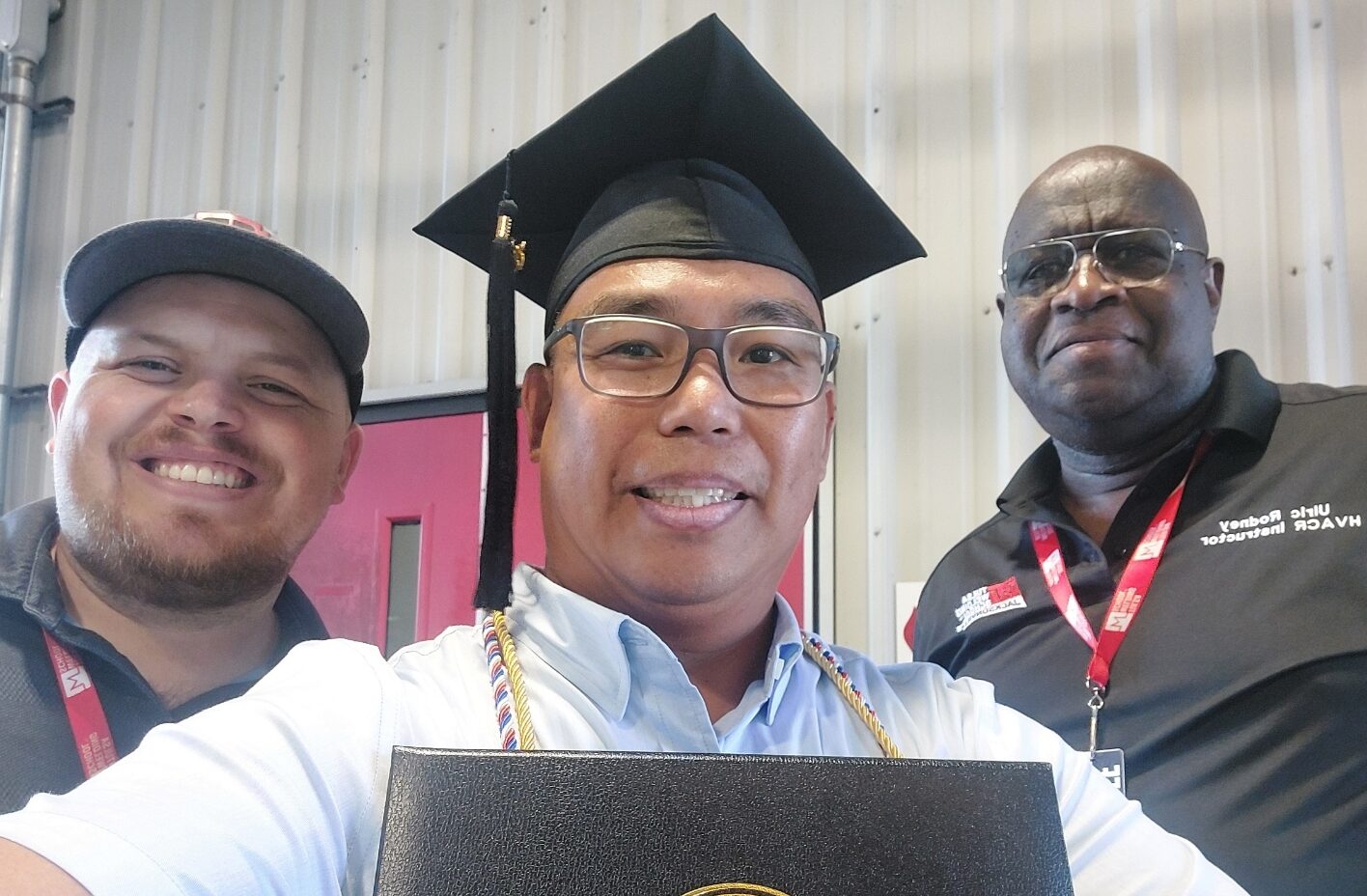
Ray, 44, was born in the Philippines and came to the United States in 1986 when he was six years old. He grew up in Jacksonville, Florida. Ray first finished the Electrical Technologies (ET) program in September 2025 at Tulsa Welding School in Jacksonville and then completed the Refrigeration Technologies (RT) program in February 2026. 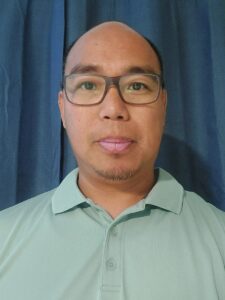
Thanks for your time, Ray. What did you do after high school?
I joined the military when I was 18. I actually signed up when I was 17 during my junior year of high school because I needed money for college. My dad told me that if I wanted to go to college, I’d need to join the military, save my money, and then go afterward. But once I got in, it ended up becoming a career.
Being in Jacksonville, I’m going to assume Navy?
Have You Considered a Career in the Skilled Trades?
Fill out the form to recieve a no obligation info packet.
Actually, the Army. I served nine years active duty and 12 years in the Army Reserve, so 21 years total.
Thank you for your service. So, when you came out of active duty, what did you do for work?
At first, I worked retail jobs here and there. I spent some time doing cellular sales with T-Mobile, and then in 2011 I got mobilized with the Army Reserve. I ended up working at Fort Bliss in El Paso, Texas, as a lab technician. I got called up for a year and then extended because I ended up really liking being out in Texas.
So, what else did you do professionally over the years?
The majority of my civilian career – and my military career – was actually in healthcare. I worked at Baptist Medical Center in Patient Access Services. I checked patients in for appointments in outpatient services, and later I worked in the ER doing bedside registration and patient intake. I was in the medical field for about nine and a half years at Baptist, from around 2016 through 2025.

New: Industrial Maintenance
Learn About Our New Advanced Industrial Maintenance Program
Tulsa Welding School is proud to announce our newest program offering available at our Houston & Dallas Metro Campuses – Advanced Industrial Maintenance Technology! Learn the skills you need to take on the industries of manufacturing, distribution, energy production and facility maintenance in as few as 7 months.
What led you to leave healthcare and jump into electrical and HVAC training at Tulsa Welding School?
My significant other – Shannon – and I have been together for five years, and a couple of years ago we went through some family health challenges. I needed more flexibility so I could help with appointments, take care of the kids, and handle school pickups and daily responsibilities at home.
At the time, I was working as a supervisor at the hospital and balancing that schedule with everything happening at home became too much. So, I made the decision to step away from the hospital and focus on family while also thinking seriously about changing careers. We talked about me going back to school and trying something different. Between my military experience and healthcare background, I’d already spent more than 20 years in medical-related fields. But I’ve always been handy with electrical work and woodworking, so the trades felt like a natural fit.
You mentioned AI being a concern?
Yes, another factor was job security. In healthcare administration, I could see automation and AI starting to change the field. But in the trades, skilled technicians are still needed. Unless somebody invents a robot that can fully diagnose and repair an AC system on its own, tradespeople are still going to be essential.
The school schedule must have helped with your family responsibilities too.
Definitely. The way Tulsa structured the program really worked for me. I chose afternoon classes for the Electrical program, so I could handle the kids in the morning. I’d go to class from around 12:45 until 5:45. Later, when I went into the HVAC, I started doing night classes and then moved to weekend classes. That flexibility made a huge difference.
Did you have any formal experience with electrical or HVAC work before going to school?
No formal training. My dad worked maintenance after coming to the United States, so I learned a lot just watching him and helping out. A lot of it was hands-on learning growing up.
Looking back on your overall experience at Tulsa Welding School, what did you enjoy most?
Honestly, I enjoyed going to class. The instructors were great. They didn’t just teach the curriculum — they prepared us for what real life in the field would actually be like. They were very upfront about customer interactions, troubleshooting issues, and the kinds of situations we’d run into on the job. It was very practical and very real-world focused.
After finishing the electrical program, what made you come back for HVAC?
My long-term goal is to eventually become self-employed and own my own company. I wanted to understand both electrical and HVAC so I could offer complete services – kind of like a one-stop shop. If I’m installing an AC unit, I also want to understand the electrical side of hooking it up and servicing it properly. I wanted more tools in my belt.
Had it been a while since you’d been in a classroom environment?
Oh yeah, definitely. The biggest adjustment for me wasn’t really the coursework though – it was the VR training with the Oculus system. Learning how to use the Oculus controllers and manipulate tools virtually was honestly tough for me. The younger students adapted immediately because they grew up with video games, but I never really played video games growing up. I was always outside as a kid. Using the virtual multimeters and troubleshooting systems inside VR took some getting used to.
Did you ever have moments where you questioned whether the program was right for you?
Not really. If I struggled with something in VR, I’d go back to class and ask the instructors how it would actually be done in the real world. I also watched YouTube videos to help reinforce concepts. I’m definitely more of a hands-on learner, so physically doing the work in class helped me a lot.
 So, was the VR training more of an extra practice tool?
Exactly. Whatever we practiced in VR, we also practiced physically in class. It just gives you the opportunity to practice more at home.
You graduated from the HVAC program in February. Where are you working now?
I’m working with a company called Lone Starr Heating and Air in Jacksonville doing commercial HVAC and refrigeration work. Finding work at first was honestly frustrating. Even with my military background and general work experience, most companies still wanted two to five years of direct HVAC experience. Thankfully, someone from my mom’s church owned an HVAC company and gave me an opportunity.
It’s been just a couple of weeks, how’s it going so far?
Really well. Within my first two weeks I helped install a compressor on a commercial AC system at a school and assisted with replacing a unit at an assisted living facility. I’m getting a lot of hands-on experience, and my manager has been great about teaching me.
Starting over in a new trade at 44 must come with challenges financially too.
Definitely. I’m starting at entry-level pay, so it’s an adjustment. While I was in school, I also worked part-time at Home Depot unloading trucks and stocking shelves overnight. My significant other has been very supportive while I build experience in the field. At the moment, I view it as I’m getting paid to learn. This time is an investment in our future.
What’s the long-term plan from here?
Right now, I want to learn everything I can – installation, troubleshooting, preventative maintenance, all of it. I told my boss I want to understand the trade from start to finish. If I become proficient enough, there’s a possibility I could eventually run my own truck and crew. If Lone Starr gives me that opportunity, I’d absolutely stay there and continue growing with the company.
What do you enjoy most about HVAC work now that you’re doing it professionally?
Honestly, it’s helping people and solving problems. In the Florida heat, people are miserable when their AC goes down. Seeing customers happy when their system is working again feels good. I also appreciate that our company isn’t focused on upselling people things they don’t need. We try to fix problems honestly and help customers stay within their budget while still getting reliable results.
Did you build lasting connections during school?
Absolutely. A group of us stay in touch, and we’ve even talked about eventually opening our own company together someday once we all gain enough experience. We still help each other with troubleshooting problems and sharing knowledge. We have a group chat where we bounce ideas off each other.
What advice would you give to new students starting at Tulsa Welding School?
Learn as much as you can from your instructors. Pick their brains. They have real-world experience and knowledge that goes way beyond the textbook. Ask questions, absorb everything you can, and take advantage of the real-world scenarios and experience they bring to the classroom. Knowledge is power!
If you’re a TWS graduate and would like to share your success and be an inspiration to others, please email [email protected] to be considered for a Graduate Connection interview. Please include details such as your graduation date (month/year), program, and campus name (Tulsa/Jacksonville/Houston/Dallas/Atlanta).