TWS is a Great Training Option for Everyone
Learn more about how we can prepare you to advance your career.
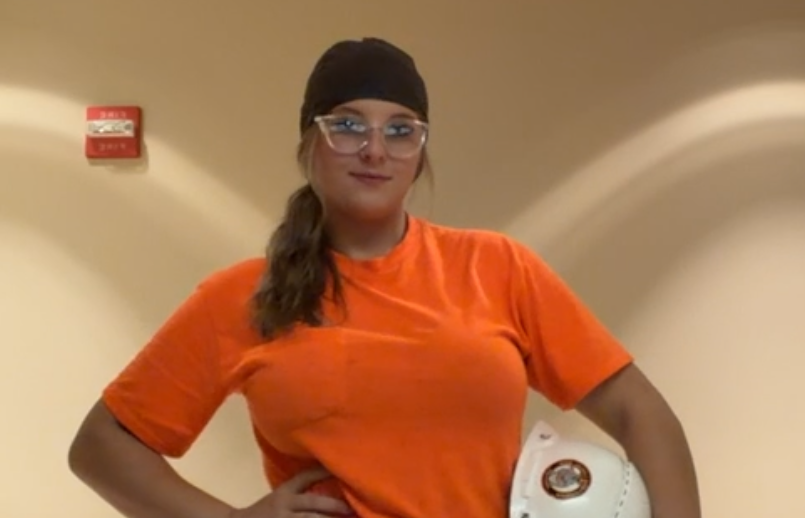
Megan, 18, was born and raised in Denver, Colorado. Megan completed the seven-month Professional Welder program at our Tulsa Welding School campus in Tulsa, Oklahoma, in January 2026.
Thanks for your time, Megan. Did you go to welding school straight out of high school?
I did my senior year of high school online, so I graduated in 2024 at 16, a year earlier than I was supposed to. That gave me some time and that’s when I discovered welding. I moved out to Oklahoma because my sister and her husband already lived there, and that’s what led me to Tulsa Welding School.
Got it. So, you didn’t move to Tulsa and then discovered Tulsa Welding School?
Have You Considered a Career in the Skilled Trades?
Fill out the form to recieve a no obligation info packet.
No, I moved there to go to TWS, but I just didn’t start right away. I was debating between Lincoln Tech and Tulsa Welding School, but I read a lot of reviews from alumni at both places. A lot of people said Lincoln Tech didn’t have enough hands-on work, and that was important to me.
Were you working during that interim year before starting welding school?
Yes. I was a manager at Domino’s for a while. The TWS session I wanted to join didn’t begin until May 2025, so I needed something to do in the meantime. I was in Oklahoma about a year before I started school.
Did you do any welding in high school or have any exposure to it? Where did the idea come from?
No, not at all. I didn’t even really know what welding was until a few months before. My grandpa was a welder, but I didn’t really know him that well. I wasn’t around blue-collar work growing up. But my brother-in-law works at Caterpillar and has done some welding; he told me I should try it. I was like, “What the heck is welding?” I tried it with him a couple times and I really loved it. I didn’t know any of the vocabulary or anything about the trade, but I still decided to go for it. Honestly, I went in to welding school terrified.
New: Industrial Maintenance
Learn About Our New Advanced Industrial Maintenance Program
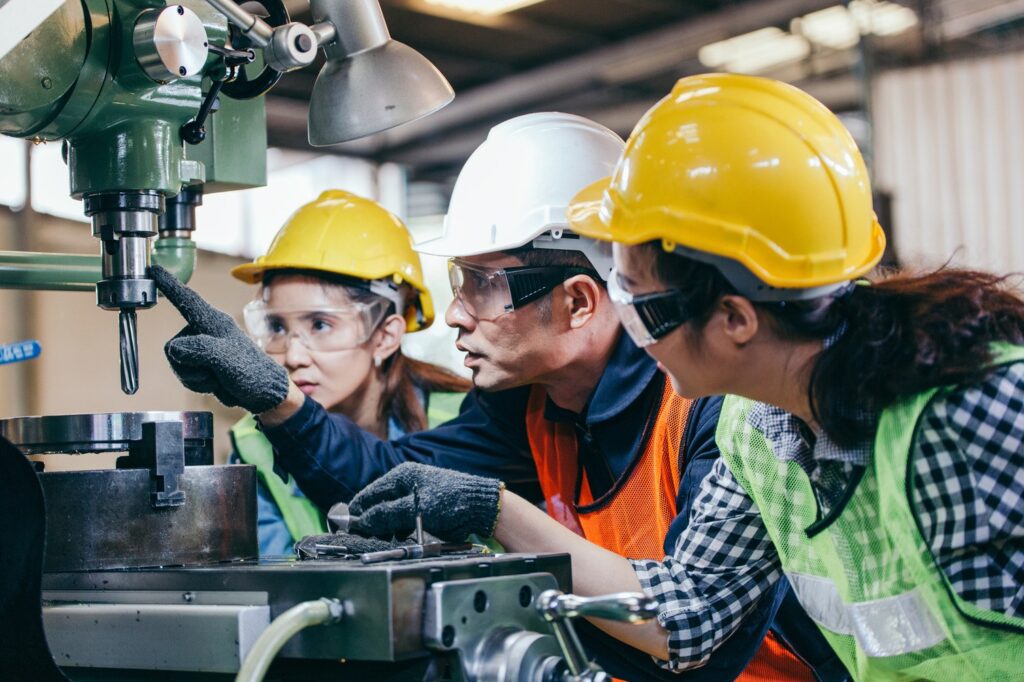
Tulsa Welding School is proud to announce our newest program offering available at our Houston & Dallas Metro Campuses – Advanced Industrial Maintenance Technology! Learn the skills you need to take on the industries of manufacturing, distribution, energy production and facility maintenance in as few as 7 months.
It’s a big step to move out of state at that age. How did you cope?
Yes, it was difficult, but having my sister there really helped. I think it also helped me find myself in a new sense. When you think of blue-collar women, that wasn’t me at all. I was very girly. I’m very interested in cars, but that’s about the only thing that isn’t traditionally girly. Going into welding was definitely difficult mentally, but the school helped me grow a lot. It helped me stop being scared and start trying new things.
What did you enjoy most about your TWS experience?
My favorite part was how short the program was while still packing in so much information. It was definitely intense. I learned so quickly. I was a really slow learner before, but you adapt. You start picking things up faster, not just in school but in everyday life too because you’re constantly learning. I also loved how supportive everyone was. The instructors and staff were very welcoming and understanding. They took time with every student to make sure we understood what was being taught. That was important to me because that’s what I was most nervous about.
Did you have to adapt to a different kind of learning environment from high school?
Yeah, definitely. I think it was easier because I was genuinely interested in welding. In high school, a lot of what you learn doesn’t feel connected to real life. But at welding school, everything matters. Something that frustrated me was seeing some students not take it seriously. They’d show up late, skip assignments, not really care. The hands-on work is important, but so are the assignments because they teach the math and science behind everything. You actually need that information. It’s not like high school where you can ignore half the material and never use it again.
Going into welding green, were there days where you thought, “This isn’t for me”?
Absolutely. It did not come easy for me, especially in the beginning. I had a lot of self-doubt. The hardest days were actually after I’d already learned a lot because then I’d think, “I should know how to do this by now.” When something wouldn’t work, I’d get really frustrated with myself. I’d talk to the instructors a lot during those moments and tell them, “I’m about to throw this pipe across the room.” Every instructor had different methods because they all came from different backgrounds in the trade, so it helps to hear different approaches. The biggest thing I learned was patience – especially patience with myself.
Once you get in your own head, everything gets harder. You won’t be successful if you’re constantly beating yourself up. Taking breaks helped too. I used to stay at school 12 hours a day and come in on weekends because one of my friends worked like that. But eventually I realized I personally needed breaks to succeed. It’s about figuring out what works for you.
And not comparing yourself to other people.
That was my biggest problem. Comparing myself to others was the most self-destructive thing I could do. Some people learned faster than me, but eventually I practiced more and improved. Early on though, I’d think, “They’re so much better than me. I’m never going to make it.”
You’ve been out of school for several months. Are you working your first welding job?
Yes. I’m currently a helper and about to become an apprentice with Pipefitters Union Local 208 in Denver. I’m working for a contractor called Braconier and right now I’m working at a Best Buy data center installing piping systems. We’re doing plastic piping inside and carbon piping outside.
That’s awesome. How did you get into the union?
For this union, you have to apply in person. They do one application day a month. You fill out paperwork, watch informational videos about the trade and the downsides of union work, and eventually they call you back for orientation. I ranked pretty low initially on the labor pool list, so they suggested I apply for the pipefitter side first. That’s why I started as a helper. Later, I did a weld test, and the project manager was impressed. He wrote me a recommendation letter, and I enter the welding apprenticeship in September.
Perfect. That’s a great path to be on. So how long is the welding apprenticeship?
Five years. I’ll be just 24 when I finish. The pay increases every year. Right now, I make $21 an hour as a helper plus all the union benefits, and once I officially enter the apprenticeship it’ll go up to around $22 and keep increasing from there. Journeymen make over $44 an hour, so it’s a really good path.
Most 18-year-olds are graduating high school while you’re building a union career. That’s impressive!
Yeah, I’m really grateful for it. I’d eventually love to become a foreman. I’m also really family-oriented and want to be a mom someday, and I think union work fits that lifestyle well because of the benefits and protections. I was originally looking into shop welding, but I’ve really enjoyed learning what pipefitting is because it’s so much more than just welding. I’ll learn the systems and everything surrounding the work.
What do you enjoy most about the trade so far?
The coolest thing has been seeing something get built from start to finish. In just a month we’ve accomplished so much at this data center. Looking back at where we started is crazy. It’s also made me respect people a lot more – the welders, pipefitters, office staff, everyone involved. It takes a huge team to build something like that. Independence is great, but teamwork is better. It’s changed my perspective.
Did you make some connections, friendships, while you were in school?
Definitely. I’m still in touch with several girls from the program and we all update each other on jobs and where life has taken us. Everyone kind of took different paths, which is cool to see. Having those friendships helped because I was really nervous going in. The environment was a lot more welcoming than I expected.
Were you worried about the perceived “man’s world” aspect of welding?
Absolutely. I was worried about all the stereotypes people talk about. But honestly, if you focus on your work, most people respect you. The older guys were really respectful because they saw that I was willing to work hard. The few negative experiences I really had were guys my own age who saw me as competition.
We see way more women enrolling at TWS than we used to. It’s definitely changing.
Yeah, and that’s important. Seeing women on the school’s social media pages actually helped me feel more comfortable applying. I even got to participate in some of those social media shoots while I was there, which was really cool because hopefully it encourages other women too. If I can do it, anybody can.
What’s the biggest piece of advice you’d give new students about to start at TWS?
Have patience with yourself. Understand that going to school is a learning process. Don’t compare yourself to others and put in the work. If you put in the work, you’ll gain the respect of the instructors, and they will do everything they can to help you.
Also, and this is a big one! Take notes! I didn’t do that in the first phases and I wish I had. There’s one class a week online, classroom stuff, so take notes because you need to know all that. They cover everything, but it’s on you what you do with that information. So, my biggest thing is to take notes in those classes. If I had done that in the early phases, it would definitely have helped me later.
The people who succeeded were the ones who showed up, worked hard, and respected the instructors. If you do that, you’ll have a great experience.
If you’re a TWS graduate and would like to share your success and be an inspiration to others, please email [email protected] to be considered for a Graduate Connection interview. Please include details such as your graduation date (month/year), program, and campus name (Tulsa/Jacksonville/Houston/Dallas/Atlanta).