TWS is a Great Training Option for Everyone
Learn more about how we can prepare you to advance your career.
Construction alone needs 349,000 net new workers in 2026 amid a skilled trades labor shortage that’s only getting worse, and most firms say they can’t find qualified people to fill the roles they already have open.
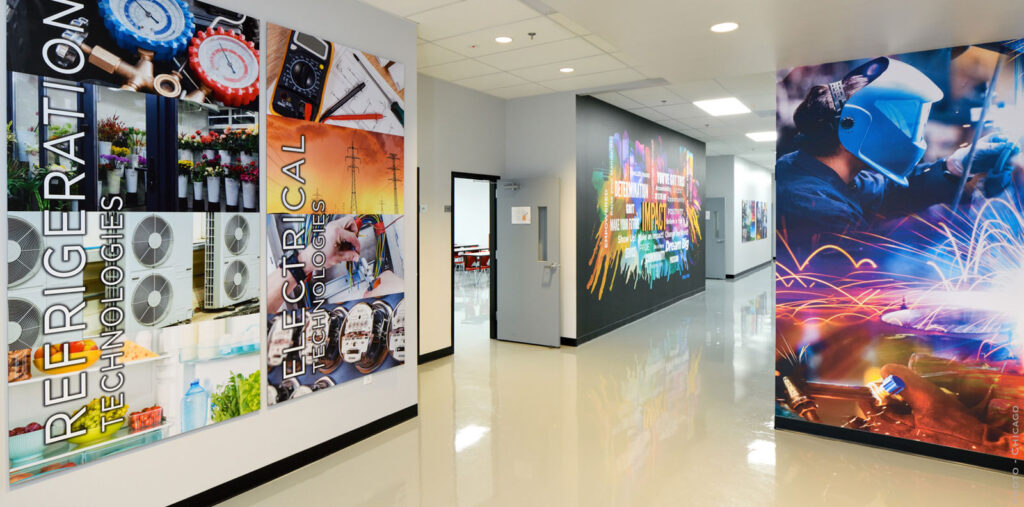
Welding, heating, ventilation, and air conditioning (HVAC), and electrical work are three of the trades feeling that gap hardest. Every open position that goes unfilled slows down housing, infrastructure, and manufacturing projects that depend on these trades. That’s part of why employers are rethinking who they recruit.
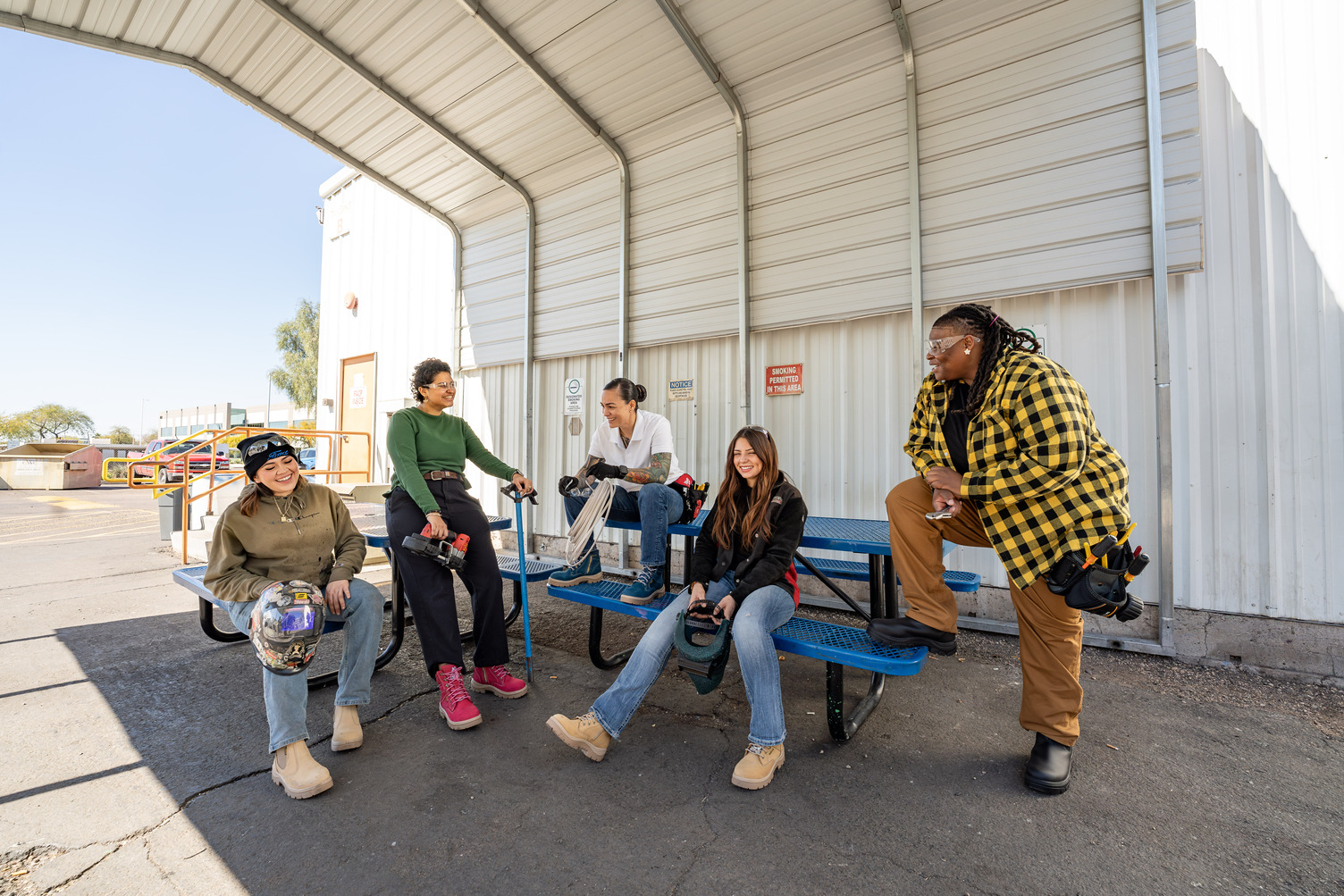
Women in skilled trades remain rare, and that gap is exactly where the next wave of tradespeople could come from.
How Big Is the Skilled Trades Labor Shortage
The shortage isn’t a short-term blip. A large share of the current workforce is aging out of physically demanding trade work well before typical retirement age, and new workers aren’t entering fast enough to replace them. Employers feel this most acutely in the specific skills that take the longest to build, since a worker who can pass a certification exam isn’t automatically ready for the complexity of a live jobsite.
Have You Considered a Career in the Skilled Trades?
Fill out the form to recieve a no obligation info packet.
Each trade is feeling different pressure:
- Electricians face rising demand from grid modernization, electric vehicle (EV) charging buildout, and data center construction, all competing for the same limited pool of licensed talent
- HVAC technicians face similar pressure as extreme weather and updated refrigerant regulations reshape the field
- Welders are seeing the same pattern from infrastructure projects and manufacturing work that isn’t slowing down
- All three trades are losing workers to retirement faster than training programs can replace them
Training programs across the country are trying to scale up, but the math doesn’t close quickly. A welding or electrical apprenticeship still takes years to produce a fully certified worker. HVAC certification moves faster, but it still requires supervised hours before someone can work unsupervised on a system that handles regulated refrigerants.
That shortfall shows up in longer project timelines and higher labor costs for the businesses that depend on these trades to operate.
As the shortage persists year after year, employers compete harder for the same certified workers. That competition pushes wages up and gives new entrants real leverage the moment they’re job-ready.
Why the Trades Are Still Male-Dominated, and What’s Starting to Change
Women in male-dominated industries like construction still make up a small share of the workforce. Women make up about 4.3% of trade workers in the construction trades nationally, the trade-worker figure specifically, not the broader construction industry number that includes office and administrative roles. The trend looks different depending on which trade:
New: Industrial Maintenance
Learn About Our New Advanced Industrial Maintenance Program
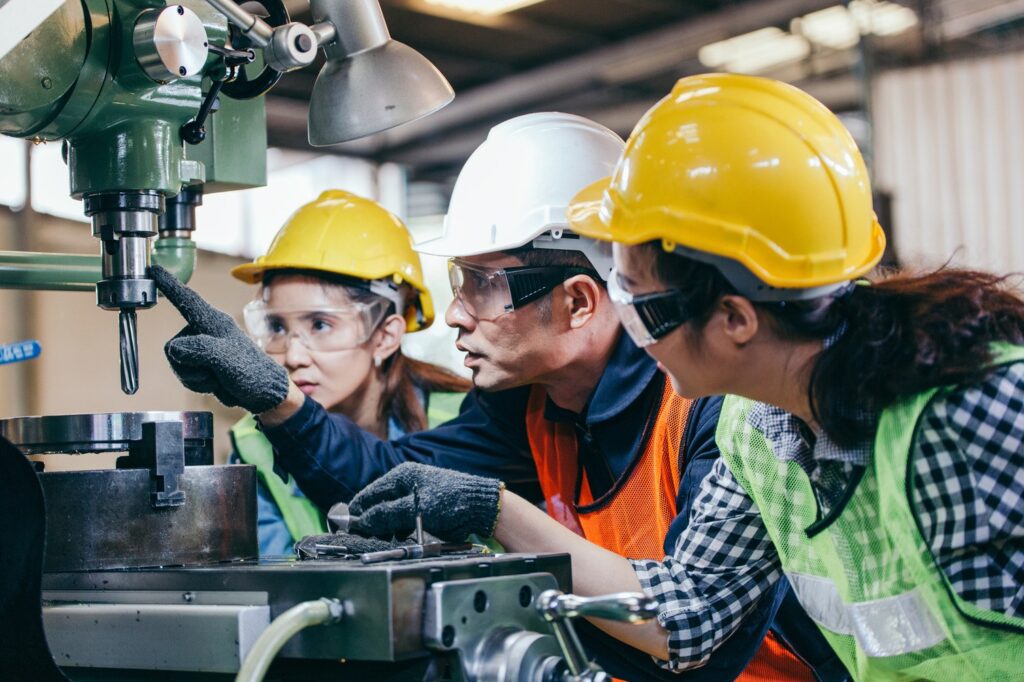
Tulsa Welding School is proud to announce our newest program offering available at our Houston & Dallas Metro Campuses – Advanced Industrial Maintenance Technology! Learn the skills you need to take on the industries of manufacturing, distribution, energy production and facility maintenance in as few as 7 months.
- Construction trades: 4.3% of workers are women, up from 2.7% in 2015
- Electricians: about 2.9% of electricians are women, below the trade-wide average
- Apprenticeships: Women’s participation grew 185.9% over the past decade, from 3,789 to 10,834
Some of the gap comes down to old assumptions that are no longer accurate:
- Gear historically wasn’t sized for women, and that’s changed as personal protective equipment (PPE) and tool manufacturers have expanded their fit ranges
- Modern jobsites run on safety protocols set by the Occupational Safety and Health Administration (OSHA), regardless of who’s on the crew
- Physical demands matter less than they used to. Modern equipment, hoists, and ergonomic tool designs have reduced how much raw strength any single task requires, and welding, HVAC, and electrical work all lean on precision and procedure more than brute force
Every woman already working as a welder or electrician makes the next one’s decision easier, and every one of those decisions chips away at the shortage.
What Women Bring to Welding, HVAC, and Electrical Work
Welding rewards precision and fine motor control more than upper-body strength. A clean, consistent bead comes from steady hands and careful technique, not brute force. HVAC diagnostics and electrical troubleshooting reward that same attention to detail, since a missed step in either field means a callback or a code violation.
These trades also demand:
- Problem-solving under real constraints, tight crawlspaces, live electrical panels, non-standard installs that don’t match the textbook diagram
- Careful documentation and communication, increasingly important as inspections and code requirements get stricter
- Safety-conscious teamwork, crews that mix perspectives tend to communicate more carefully on safety-critical tasks
None of this is about redefining what the trades require. Welding, HVAC, and electrical work were never really about size or strength. They’re skill-based, procedural fields, and that plays to strengths that have nothing to do with gender.
The same precision that makes for a clean weld or a correctly wired panel doesn’t care who’s holding the tool. That’s exactly why an entire half of the workforce that’s barely been recruited is a real answer to a real shortage, not just a nice addition.
Pay and Career Path in the Trades
The U.S. Bureau of Labor Statistics (BLS) tracks pay across every trade nationwide. BLS wage data for May 2025 shows a clear, documented path from entry-level to skilled pay across all three trades.
| Trade | 10th Percentile | 75th Percentile |
|---|---|---|
| Electricians | $42,640 | $83,940 |
| HVAC Technicians | $40,050 | $77,060 |
| Welders | $39,240 | $63,010 |
That jump from entry-level to the upper range comes with certification, not just time on the job. Most apprenticeships run three to five years depending on the trade, and pay typically rises at set milestones rather than jumping all at once, as workers complete hands-on hours and pass certification checkpoints on the way to journeyman status.
Specialization pushes pay even further. Welders certified for aerospace or pipeline work, and electricians working data center or solar installations, both earn well above the trade-wide averages.
None of this requires a four-year degree or the debt that typically comes with one. Hands-on training programs are built to get graduates working and earning within months. That timeline changes the entire return-on-investment calculation compared to a traditional college path.
How TWS Is Training More Women for Welding, HVAC, and Electrical Careers
At Tulsa Welding School’s Atlanta Metro campus, women make up 16% of students, well above that 4.3% national workforce figure, and enrollment climbed 19.2% nationwide across TWS campuses between 2024 and 2025.
The programs reflect that priority:
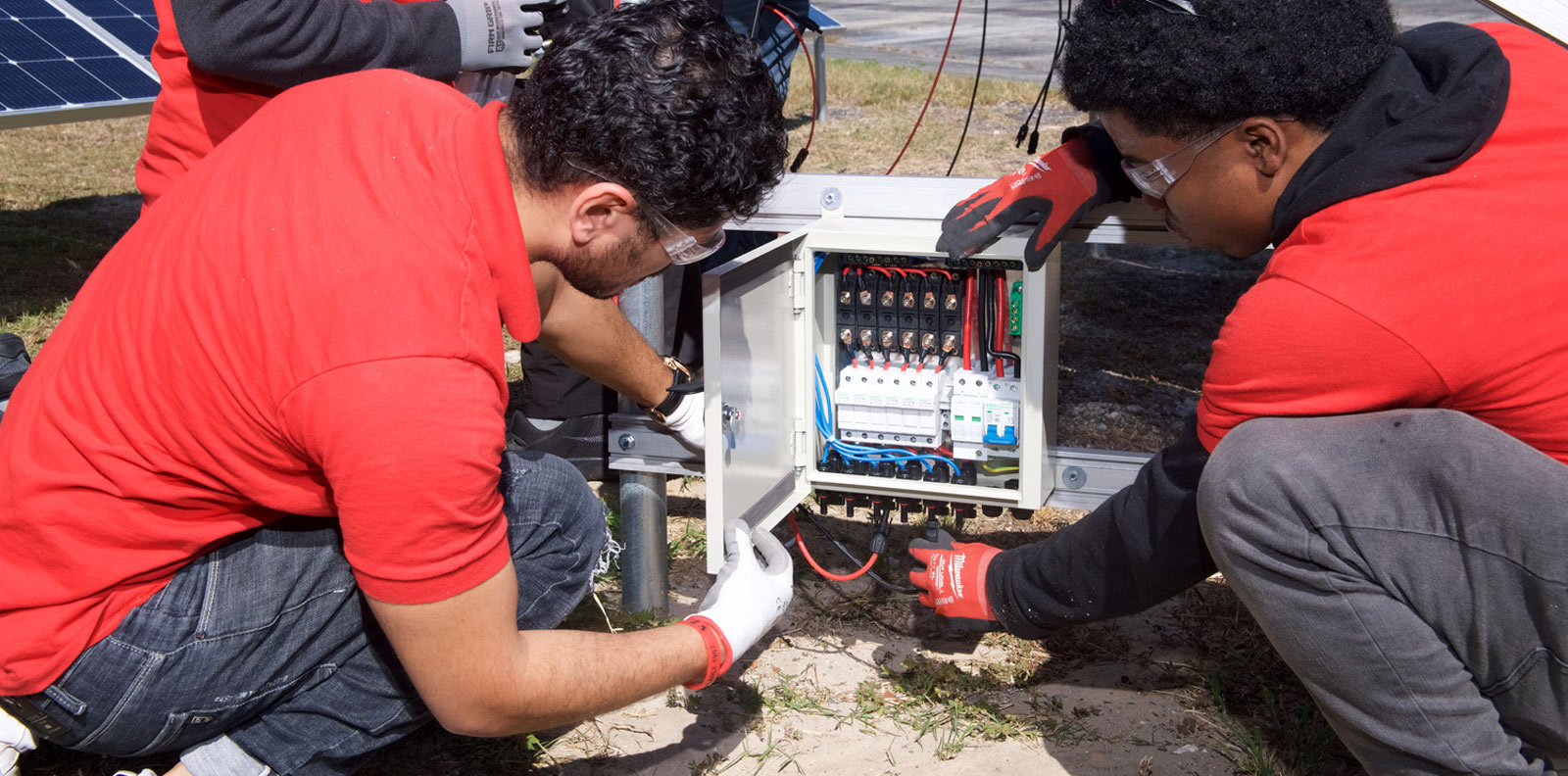
- Hands-on training from day one, students work in labs alongside classroom instruction rather than sitting through a semester of theory first
- Programs built to move quickly, often preparing students for entry-level work in as few as seven months
- Flexible scheduling for students working or managing family obligations while they train
- Career services and job placement support that continue after graduation, connecting students with employers actively looking to hire
Flexible scheduling exists because career changers, women balancing work or family responsibilities among them, can’t structure their lives around a traditional class schedule built for someone with no other obligations. Someone entering a trade for the first time usually has no existing network of contacts already working in it. Career services exist to close exactly that gap.
Start Learning Skills to Help Close the Labor Shortage Gap
The labor shortage in welding, HVAC, and electrical work isn’t closing on its own, and women entering these fields are already changing that math. Whether the goal is a fresh start after high school or a full career change, the training path is the same for everyone who walks through the door.
Request more information and connect with someone at TWS who can walk you through your options.