TWS is a Great Training Option for Everyone
Learn more about how we can prepare you to advance your career.
If you’re working a job that isn’t working anymore, the thought of going back to school can feel like it requires quitting first. For most people in Texas, that’s not an option. Bills don’t pause, and neither does a mortgage or a family. The good news is that switching careers into the trades doesn’t require a gap in your income or a leap into the unknown.
Trade programs in Texas vary in length. Some tracks run as few as 15 weeks. Others take up to 9.5 months. Either way, the scheduling options that exist today are built around people who are still employed, not just recent high school graduates with wide-open calendars.
Why the Trades Are Worth Considering in Texas Right Now
Texas isn’t a state where trade work is in short supply.
Texas construction added 5.1% more jobs between September 2023 and September 2024, and demand is still outpacing supply. The construction industry alone needed an estimated 439,000 additional workers in Texas in 2025. Nationally, up to 2.1 million skilled trades positions could go unfilled by 2030 if the workforce gap doesn’t close.
Have You Considered a Career in the Skilled Trades?
Fill out the form to recieve a no obligation info packet.
That gap is felt in specific ways across the state. Houston accounts for 44% of the nation’s petrochemical manufacturing capacity, and its shipyards and fabrication shops add to consistent, year-round demand for welders and industrial technicians. The Dallas-Fort Worth (DFW) metro has seen data center construction activity jump 73% year over year, driven by hyperscale and AI infrastructure investment that requires electricians and HVAC technicians at every stage of development and operation.
None of these careers require a four-year degree, and most programs can be completed in under a year.
Starting a trade program at 32 still leaves 30 or more working years to build on that credential. The trades also reward experience over time. Certifications, specializations, and hours on the job translate directly into earning potential and career stability.
Which Trades Can You Train for Quickly in Texas?
The right trade depends on your timeline, your local market, and what kind of work suits you.
| Trade | Program | Length | Certification Path |
|---|---|---|---|
| Welding | Professional Welder | 7 months | AWS certification |
| Welding | Welding Specialist with Pipefitting | 9.5 months | AWS certification |
| HVAC/Refrigeration | Refrigeration Technologies | 7 months | EPA 608 certification |
| Electrical | Electrical Technologies | 7 months | Entry-level electrician roles |
| Electrical | Electrical Lineworker | 15 weeks | Power distribution and transmission |
| Industrial Maintenance | Advanced Industrial Maintenance Technology | 7 months | PLC/HMI systems, industrial safety |

New: Industrial Maintenance
Learn About Our New Advanced Industrial Maintenance Program
Tulsa Welding School is proud to announce our newest program offering available at our Houston & Dallas Metro Campuses – Advanced Industrial Maintenance Technology! Learn the skills you need to take on the industries of manufacturing, distribution, energy production and facility maintenance in as few as 7 months.
Welding
The Professional Welder program takes as few as 7 months to complete and covers structural, MIG, TIG, fluxcore, and pipe welding. Graduates are prepared to test for American Welding Society (AWS) certification, a widely recognized credential across the manufacturing, construction, and energy sectors. Houston’s concentration of petrochemical facilities and fabrication shops makes it one of the stronger local markets for welders in the country.
For those who want to go deeper, the Welding Specialist with Pipefitting program takes 9.5 months and adds pipefitting and steamfitting to the credential. That combination is particularly relevant for Gulf Coast oil and gas work, where pipe welders are consistently in demand.
HVAC/Refrigeration
Heating, Ventilation, Air Conditioning, and Refrigeration (HVAC/R) training can be completed in as few as 7 months and covers heating, cooling, refrigeration, and the electrical systems that run them. The program prepares students for the Environmental Protection Agency (EPA) 608 certification, which is required to work with refrigerants in the field. In Texas, where cooling systems run hard for most of the year, HVAC/R technicians see year-round demand.
The field is projected to add 42,500 jobs nationally by 2033.
Electrical
The Electrical Technologies program covers residential, commercial, and industrial electrical systems and can be completed in about 7 months. For those who need to move faster, the Electrical Lineworker track at the Dallas Metro campus runs just 15 weeks and focuses on power distribution and transmission.
Electrical positions are projected to grow 9.5% through 2034, more than triple the average growth rate across all occupations.
Industrial Maintenance
The Advanced Industrial Maintenance Technology program is a 7-month track available at both Houston and Dallas Metro campuses. It covers mechanical systems, electrical controls, Programmable Logic Controllers (PLCs), Human-Machine Interfaces (HMIs), and predictive maintenance. The program targets roles in manufacturing, energy, distribution, and facility operations, all of which are well represented across both Texas markets.
Trade School in Texas Built Around a Work Schedule
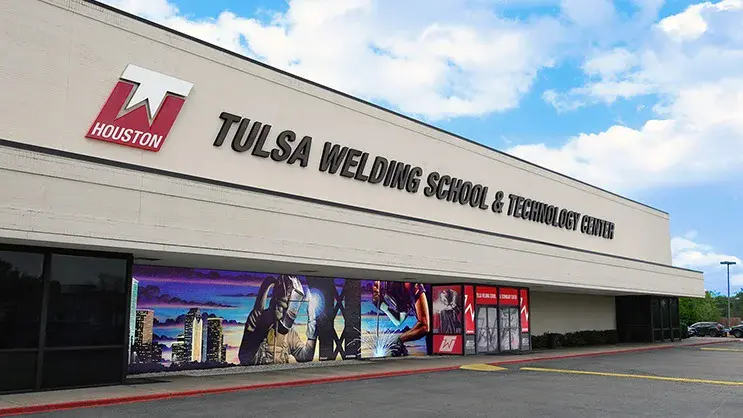
Tulsa Welding School (TWS) has two Texas campuses, one in Houston and one in Irving serving the Dallas Metro area. Both are designed to accommodate working adults, not just students with wide-open schedules.
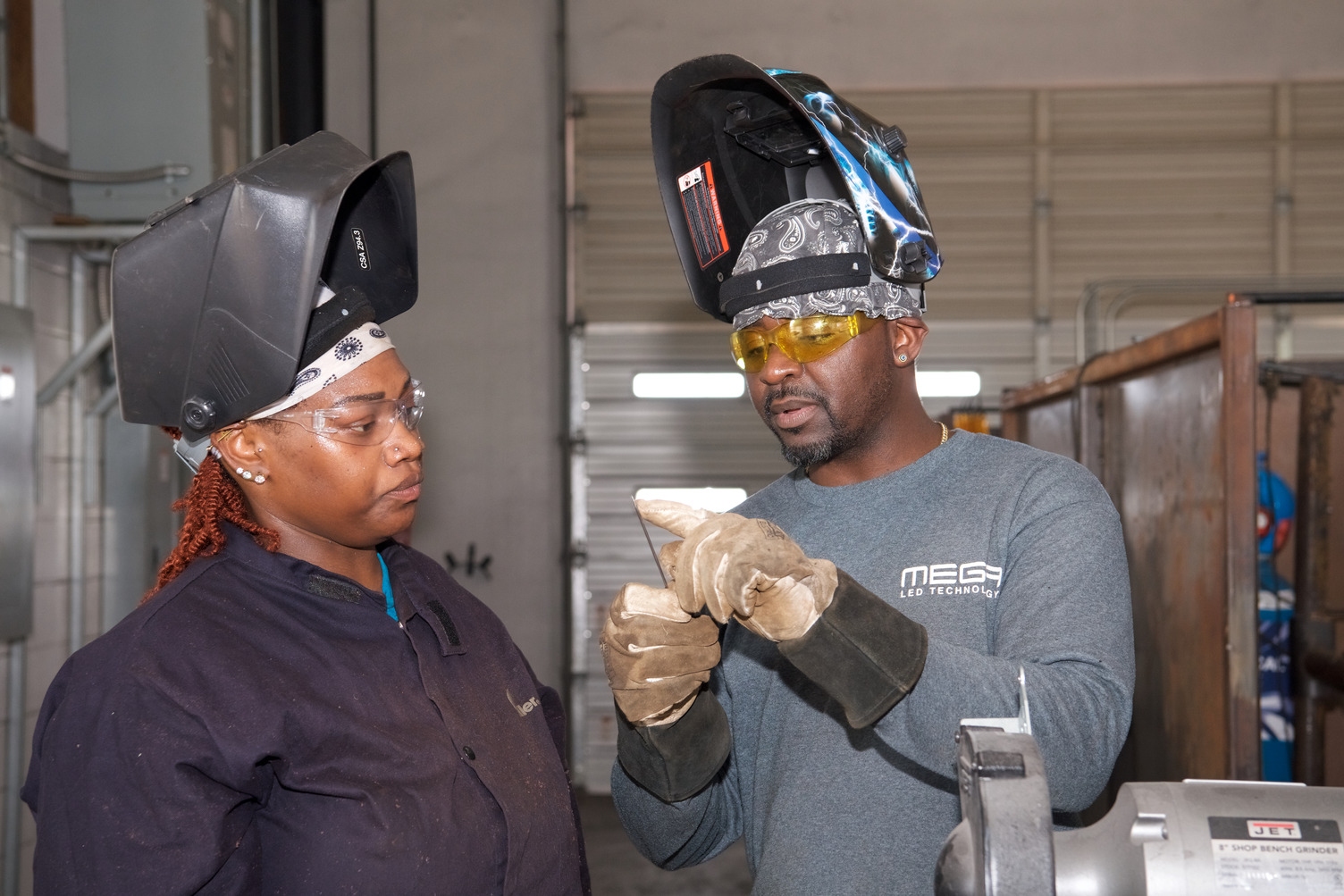
The programs are built on a hybrid model. Theory coursework is completed online, on your own time, by set deadlines. When you’re on campus, that time is reserved for hands-on lab work only. You’re not commuting to sit through a lecture you could have read at home. You’re in a welding booth, an HVAC lab, or an electrical systems bay, building the hands-on skills the credential actually requires.
Class timing options at TWS Texas campuses include:
- Morning sessions
- Afternoon sessions
- Evening sessions
- Weekend sessions (availability varies by program and campus)
The admissions team works through scheduling with prospective students before enrollment, so you’re not guessing at whether a time slot exists that fits around your current job.
Day students can complete most programs in as few as 7 months, while students attending night classes will have longer course lengths. That’s something to consider if the timeline matters, and it’s worth asking about early in the admissions conversation.
What Training Looks Like While You’re Still Working
Starting a trade program while employed isn’t a dramatic overnight transition. It’s an overlap period, and understanding what that looks like week to week makes the decision easier to evaluate.
The structure is straightforward from day one:
- Students receive a gear package with the professional tools the program requires at the start of enrollment
- Theory coursework is completed online with set weekly deadlines. You can work through it at any point before the deadline, whether that’s before a shift, during a lunch break, or after the kids are in bed
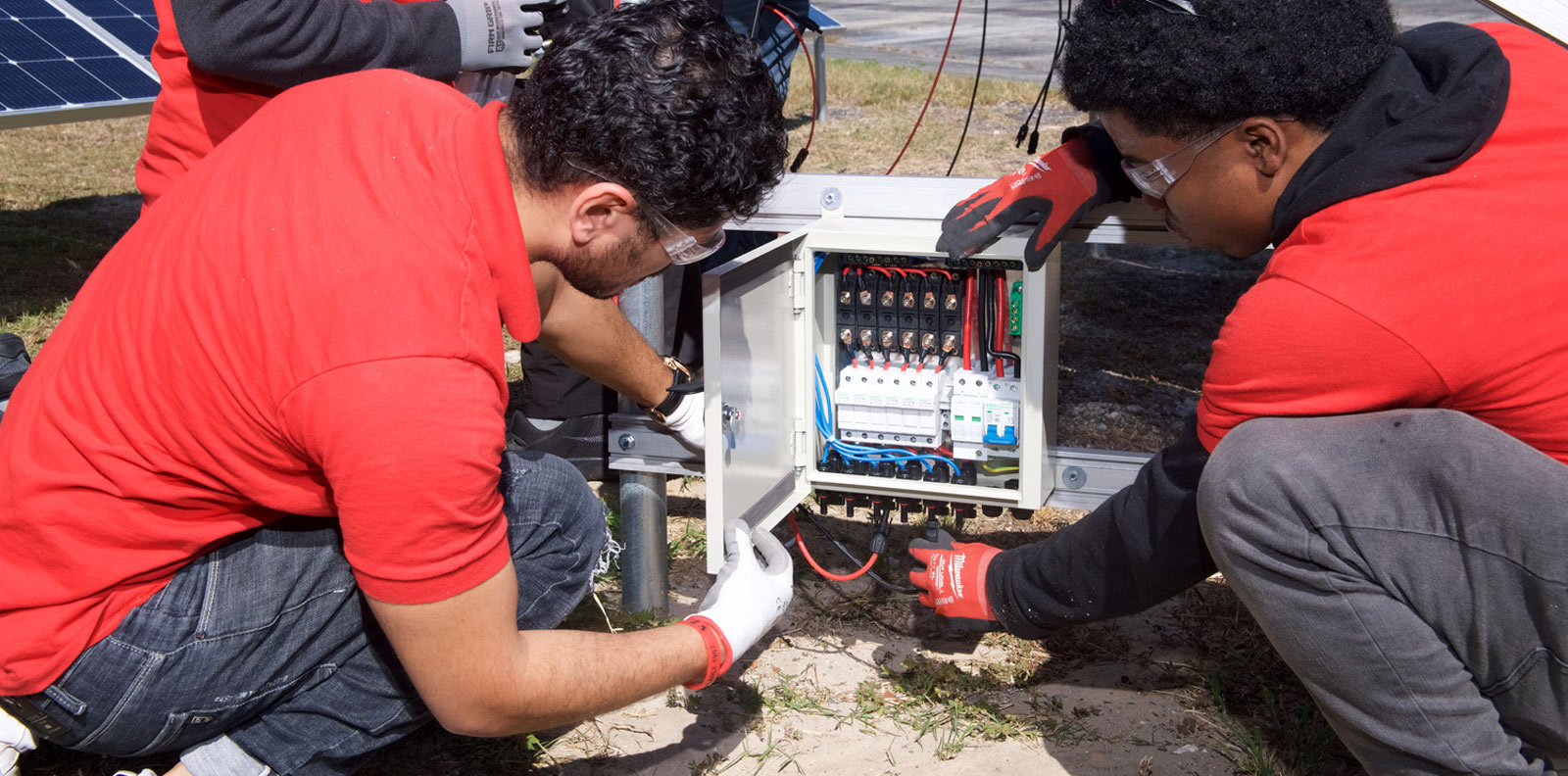
- Campus lab sessions are where the hands-on work happens: welding booths, HVAC systems, electrical panels, or industrial equipment depending on the program
- No prior trade experience is required; programs are built for beginners regardless of industry background
- Financial aid is available for those who qualify, and scholarships are offered, which can reduce the financial pressure of managing tuition while still employed
Career Services support starts during enrollment, not after graduation. TWS maintains employer relationships nationwide, and graduates have been placed in all 50 states.
How to Get Started
The admissions process at TWS starts with a single conversation, not a stack of paperwork.
- Contact admissions. One conversation covers which program fits your goals, which schedule fits your current job, and what upcoming start dates are available at the Houston or Dallas Metro campus.
- Check your eligibility. No high school diploma or GED? That’s not an automatic barrier. TWS offers a path to earn it before enrolling.
- See the campus. In-person visits are available at each Texas location before you commit.
- Review start dates. Upcoming class dates for both Texas campuses are listed on the TWS site, so you can see what’s coming up before making any decisions.
You don’t need trade experience, a four-year degree, or a plan to quit your current job before finding out whether this works for your schedule. Request information to learn about upcoming classes at the Houston or Dallas Metro campus.