TWS is a Great Training Option for Everyone
Learn more about how we can prepare you to advance your career.
Houston is one of the strongest markets in the country for heating, ventilation, and air conditioning (HVAC) technician jobs.
The U.S. Department of Labor reports a shortage of 110,000 HVAC technicians nationwide, and Texas ranks second in the country for HVAC employment demand. Graduates who come out of school with their Texas Department of Licensing and Regulation (TDLR) Air Conditioning and Refrigeration (ACR) technician registration and Environmental Protection Agency (EPA) Section 608 certification don’t need years of field experience before employers will consider them. Those credentials open the door.
What varies is the type of employer.
Residential service companies, commercial contractors, school districts, refrigeration operations, and property management firms all hire entry-level techs, and each offers a different work environment, schedule, and career path.
Have You Considered a Career in the Skilled Trades?
Fill out the form to recieve a no obligation info packet.
Residential HVAC Service Companies
Residential service companies post more entry-level HVAC jobs in Houston than any other employer type. These are the companies that show up when a homeowner’s air conditioner stops working in August, and in Houston, those calls come in constantly. Systems run nearly year-round in the Texas heat, which means more breakdowns, more maintenance visits, and more demand for technicians at every experience level.
New graduates typically start as HVAC helpers or apprentices, running calls alongside a lead technician. The learning curve is steep and fast. Within months, most grads are diagnosing systems, pulling permits, and handling installs with less supervision. The work is varied.
One call might be a refrigerant recharge in a 1970s ranch house. The next is a full system replacement in a new construction home across town.
To get hired, new grads generally need:
- TDLR ACR technician registration, which carries a $20 application fee and is required to work under a licensed contractor
- EPA Section 608 certification, the federal requirement for anyone who handles refrigerants
- A valid driver’s license is listed as a condition of hire by nearly every residential employer
Residential roles are customer-facing, so employers screen for communication skills alongside technical ones.
Commercial HVAC Contractors
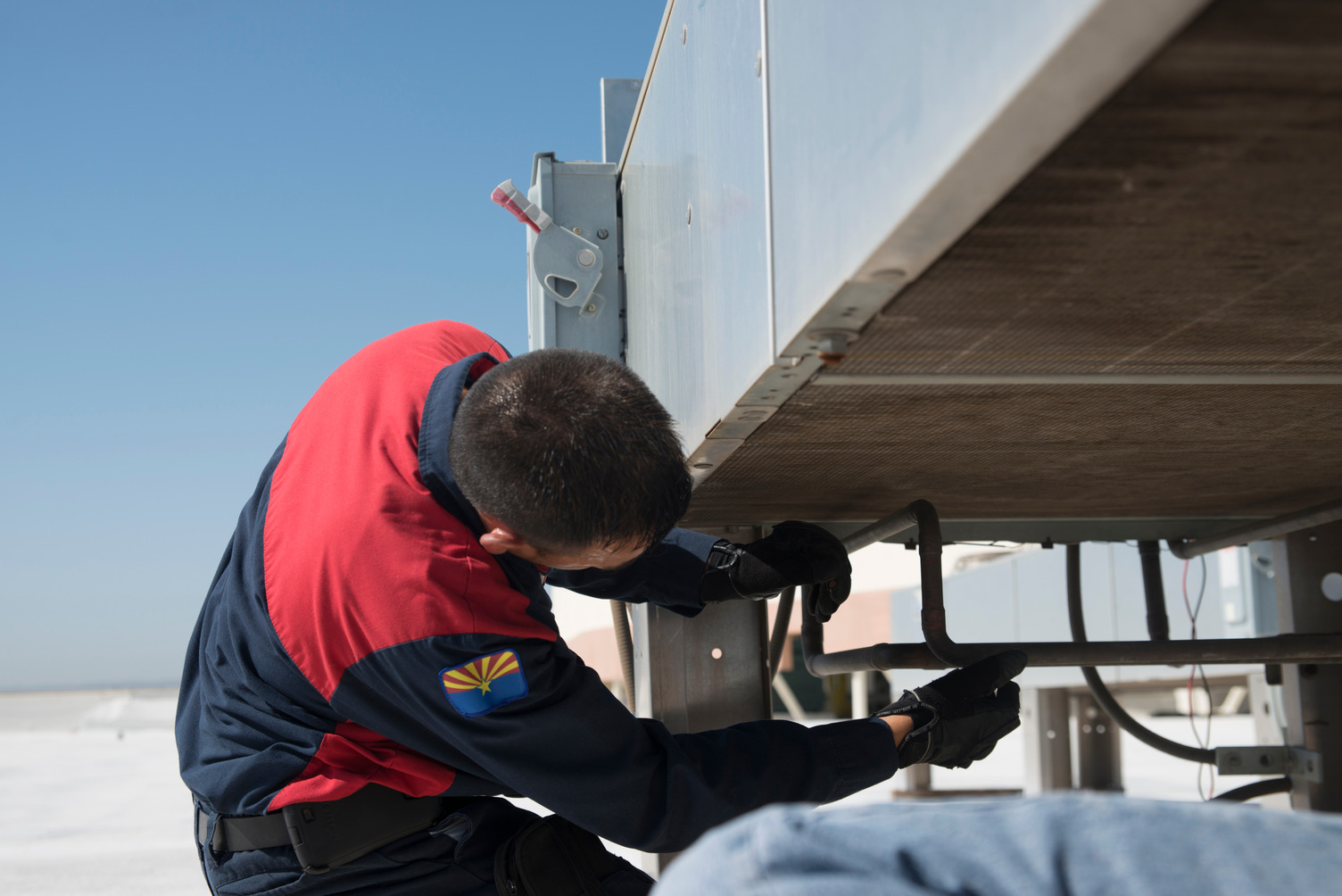
Commercial contractors work on a different scale than residential companies. Instead of split systems in homes, these teams install and maintain large rooftop package units, chillers, and complex ductwork in office buildings, warehouses, retail centers, and industrial facilities. The systems are bigger, the job sites are more physically demanding, and the technical complexity ramps up quickly.
New grads typically join a crew and work under a lead on large installations, which gives them early exposure to system configurations that residential work rarely offers at the same stage.
Among the HVAC companies hiring Houston trade school graduates, commercial contractors and mechanical firms are some of the most active, and for anyone coming out of school with credentials in hand, commercial work is a realistic target from day one.
Entry-level titles include:
- HVAC Installer
- Sheet Metal Helper
- Commercial Apprentice
Pay tends to run higher in commercial work than residential. On government-funded construction projects, wages are set locally and must meet Davis-Bacon Act minimums for the trade, which can push entry-level rates up considerably. The credential requirements are the same as residential work:
- TDLR ACR technician registration, required to work under a licensed contractor
- EPA Section 608 certification, required for any refrigerant handling
- A valid driver’s license
- North American Technical Excellence (NATE) certification is not required to get hired, but it is a differentiator for moving into lead roles faster
Rooftop work, confined spaces, and heavy equipment are part of the job description from day one.
School Districts and Government Facilities
School districts, universities, and public health systems across the Houston metro represent a category of HVAC technician jobs Houston graduates often overlook.
These employers hire techs to maintain the climate control systems in their buildings, and they post entry-level roles regularly. Rather than running calls across the city, techs are assigned to specific campuses or facilities and work through scheduled preventive maintenance on a defined building portfolio.
The pace is steadier and the schedule more predictable than residential or commercial service work. Emergency calls happen, but they’re the exception. Entry titles include HVAC Mechanic Apprentice, HVAC Helper, and Maintenance Technician.
Public sector positions typically come with structured benefits packages and defined hours. Capital improvement cycles keep aging equipment on a regular replacement schedule, so work volume stays consistent year-round. Most postings require:
- A high school diploma or equivalent
- TDLR ACR registration
- A valid driver’s license
No prior field experience is required on most postings.
Refrigeration and Industrial Employers
Houston’s healthcare sector and food service industry create steady demand for refrigeration technicians in a way most people don’t consider when they picture HVAC work.
Hospitals depend on precise temperature control for medications, lab samples, and operating environments. Grocery distribution centers, restaurant chains, and cold storage operators need their systems running around the clock. When refrigeration fails in these settings, the consequences move fast.
Graduates trained in refrigeration can handle this work from day one. Walk-in coolers, commercial freezers, medical-grade cooling systems, and food-safe refrigeration maintenance make up much of the job, and most of it is indoors. The EPA 608 Universal certification carries particular weight here because it covers all refrigerant types, not only those common in residential systems.
Property Management and Facilities Maintenance
Multi-family housing complexes, hotel groups, and commercial real estate portfolios hire on-staff HVAC technicians to maintain the systems in their own buildings. These are in-house positions. The work stays within one property or a defined portfolio rather than dispatching across the city each day.
Techs handle preventive maintenance schedules and respond to resident or tenant service requests in buildings they know well. The entry point is typically an HVAC helper or maintenance mechanic apprentice role. TDLR ACR registration is required.
Benefits in property management tend to be competitive. Common offerings include:
- Employer-paid health coverage
- Housing discounts at managed properties
- Tuition assistance for additional certifications
Lead technician and facilities manager promotions often come faster in an in-house role than at a service company, because the path is internal and the team is small.
Start With the Right Credentials
Every employer type above requires the same baseline before a new grad can work on a system:
| Credential | Requirement | Notes |
|---|---|---|
| TDLR ACR Technician Registration | Required in Texas | $20 fee; must work under a licensed contractor |
| EPA Section 608 Certification | Federal requirement | Needed for any refrigerant handling; does not expire |
| Valid Driver’s License | Required by most employers | Condition of hire across nearly all employer types |
| NATE Certification | Preferred for advancement | Not required to get hired; strengthens commercial applications |
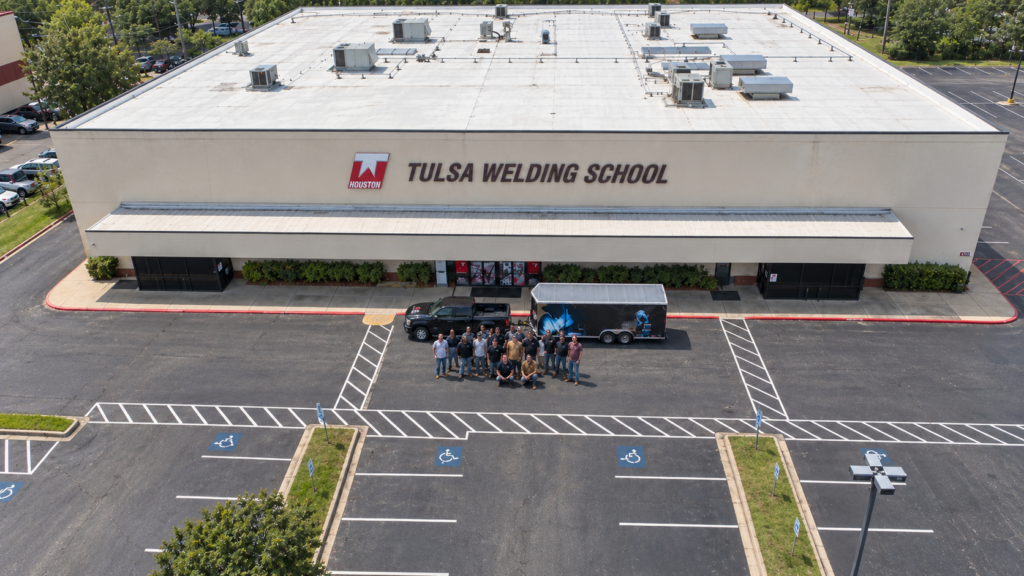
Tulsa Welding School’s (TWS) HVAC/R program at the Houston campus prepares students for EPA 608 and TDLR registration before they graduate. The Refrigeration Technologies program can be completed in as little as seven months, shorter than most apprenticeship tracks. TWS career services connects graduates with HVAC companies hiring Houston grads and helps with resumes and interview prep so they’re not starting from zero.
Request more information from the TWS Houston team to find out what training looks like and how to get started.