TWS is a Great Training Option for Everyone
Learn more about how we can prepare you to advance your career.
Owning a non-contact voltage tester doesn’t protect anyone. Knowing how to read it correctly under pressure does. That distinction explains two mistakes that keep showing up before a first job even starts:
- Showing up under-equipped and scrambling to catch up on-site
- Spending several hundred dollars on a full electrician tool kit that duplicates half of what training already covers
Electrician Tools Split Into Training, Buying, and Rental Groups
Electrician tools split cleanly into three groups: what’s covered during training, what’s worth buying for a first job, and what makes more sense to rent or add later.
| Covered during training | Worth buying for a first job | Rent, borrow, or add later |
|---|---|---|
| Core hand tools (pliers, screwdrivers, wire strippers, tape measure, level) | Cordless 18V or 20V drill and driver kit | Conduit benders |
| Multimeter and non-contact voltage tester | Tool belt or bag sized to the tools carried | Fish tape |
| Oscilloscopes and circuit testers | EH (Electrical Hazard) rated boots and other personal PPE | Specialty testers beyond a CAT III (Category III) multimeter |
First-Job Shopping Checklist
These five purchases get a starting technician ready for a first gig:
- Cordless drill and driver kit (18V or 20V)
- Tool belt or bag sized to your tools
- EH-rated boots
- Safety glasses
- Insulated gloves
Have You Considered a Career in the Skilled Trades?
Fill out the form to recieve a no obligation info packet.
What a Tuition-Included Tool Package Covers
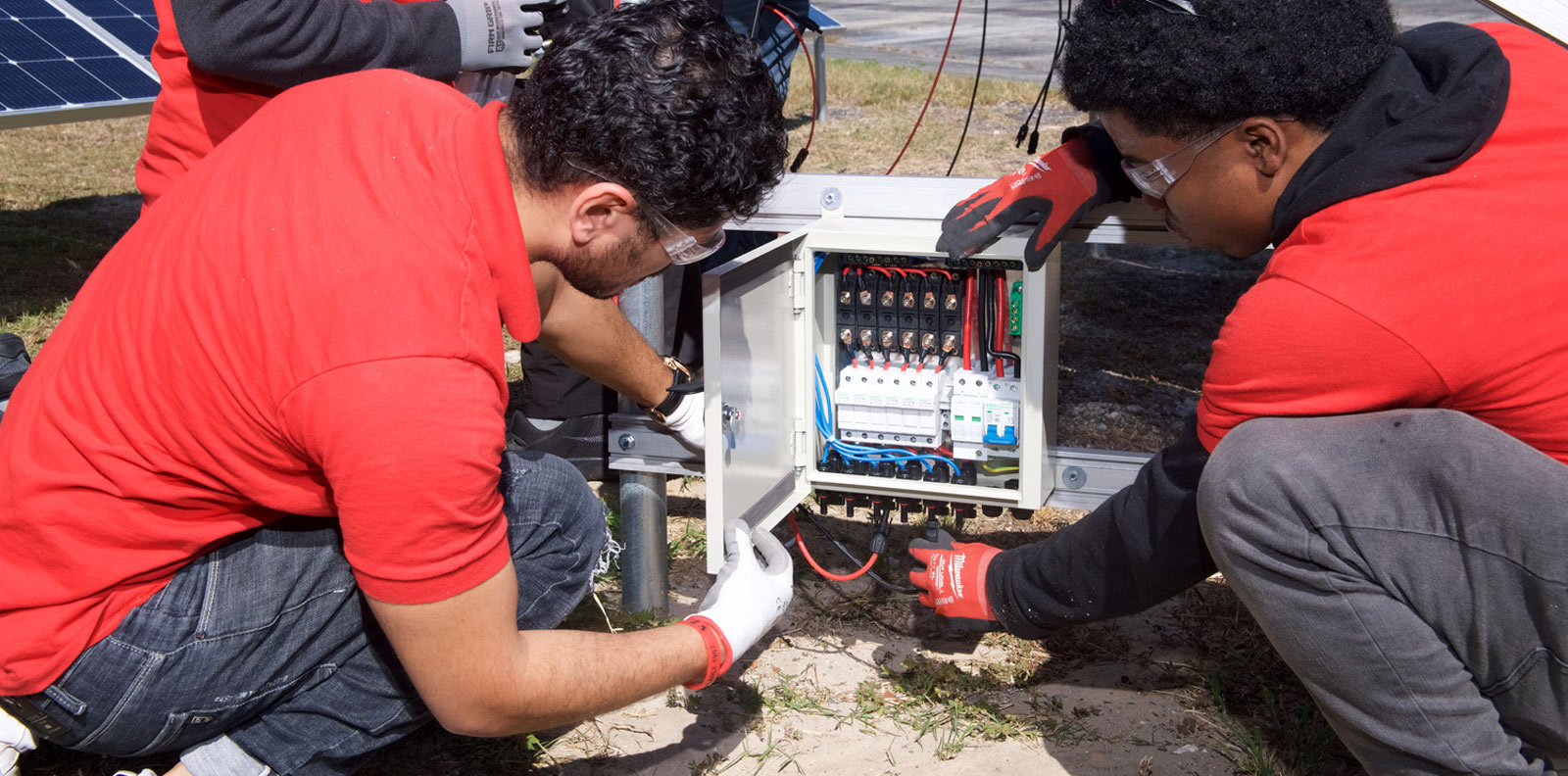
A tool package that’s already factored into tuition, like the gear package included in Tulsa Welding School’s (TWS) Electrical Technologies training, can cover the core hand tools before class ever starts. Doing so cuts the pre-enrollment shopping list down to almost nothing. Exact contents vary by program, and admissions can walk through them program by program instead of guessing from a generic online list.
Hands-on lab time built around actual tools and equipment is where technique gets built. Using a tool correctly matters as much as owning it, and a purchased kit can’t teach that on its own.
Training that includes hands-on time with a multimeter and non-contact voltage tester up front means a graduate already knows how to use the two instruments most first service calls depend on.
Curriculum built around blueprint reading and conduit work, both part of TWS’s Electrical Technologies training, points to hands-on time with a conduit bender as well, a tool tied specifically to running conduit rather than to general wiring work. Fish tape usually rides along with a conduit bender for the same reason. Once conduit is in place, pulling wire through it is the very next step.
Hand Tools Electricians Use Every Day
Some tools stay in daily use long after training ends, no matter where the work happens. Every solid electrician tools list includes:
- Lineman’s pliers, diagonal cutters, and needle-nose pliers. These handle most of the twisting, cutting, and pulling involved in running and terminating wire, which is why they’re reached for most in a given shift.
- Insulated screwdrivers in both Phillips and flathead, in several sizes, for the terminal screws on outlets, switches, and panels, with flathead still needed for older devices and grounding screws. OSHA requires insulated tools whenever a tool might contact an exposed energized conductor, so this isn’t just a durability upgrade.
- Wire strippers sized to the gauge being worked on, which let a tech clean insulation off a conductor without nicking the copper underneath, since a nicked conductor is a weak point that can fail later. Screwdrivers, wire strippers, drills, and saws round out the tools electricians use daily across the trade.
- A 25-foot tape measure and a torpedo level round out the must-have electrician tools for box placement, conduit runs, and fixture alignment, worth having as a personal set once on the job, since a shared classroom set doesn’t follow anyone to a jobsite.
Voltage Testers, Multimeters, and PPE Requirements
A non-contact voltage tester and a CAT III-rated digital multimeter are the baseline for confirming a circuit is dead before anyone touches it, not just a nice-to-have add-on, and both are covered in coursework alongside oscilloscopes and circuit testers.
Rubber insulating gloves used for electrical protection have to pass a dielectric test every six months while in service. That’s a certification requirement, not a general safety suggestion.
Core personal protective equipment worth owning for a first job, even on jobs where an employer supplies additional gear, includes:
- Safety glasses
- Insulated gloves
- EH-rated boots
What Power Tools Does an Electrician Need to Buy?
A first job’s power tool decisions mostly come down to three things: what to own personally, what to rent, and which battery platform to commit to.
- A cordless 18V or 20V drill and driver kit is close to universal, used for everything from drilling studs to mounting boxes and fixtures. Whether buying one personally is necessary depends on the employer. Some supply cordless tools outright; others expect an electrician to bring their own. Either way, it’s the power tool most electricians end up owning.
- Conduit benders and fish tape see heavy use on a big commercial rough-in but sit idle for months on residential-only work, which makes renting or sharing one through a shop smarter than a personal purchase early on. Search any best tools for electricians roundup and conduit benders rarely make the cut, precisely because they’re situational rather than daily.
- Standardizing on one battery platform across a drill, impact driver, and future tools avoids paying for a second charger and battery set down the line.
Electrician Tool Bag or Tool Belt: Which Do You Need?
An electrician tool belt keeps pliers, a tester, and a driver within reach while working from a ladder or lift. This setup earns its keep most in service and residential work, where a tech moves between rooms all day.
An electrician tool bag or rolling box makes more sense for a truck or shop setup with a larger rotation of tools, since it trades pocket-level access for capacity and organization.
Either option should have dividers sized to the actual tools being carried. Pliers dull and a tester’s battery contacts corrode faster when everything is rattling loose together in an unsorted bag.
How Much Does an Electrician Toolbox Cost?
A starter electrician toolbox built from scratch, hand tools and testing equipment only, typically runs a few hundred dollars, a fair benchmark for anyone budgeting before enrollment. That number shrinks for anyone whose program already includes a gear package.
Buying personal backups and power tools first, then adding specialty items as a job actually calls for them, keeps a new electrician from paying for a master electrician’s full truck stock on day one.
Knowing which of these costs training already absorbs, and which ones land on a first paycheck instead, is easier to plan around than a generic shopping list ever is. Specifics like a program’s exact gear package are worth confirming directly rather than guessing.
Request more information to get a straight answer on what’s included in Electrical Technologies training before buying anything.