TWS is a Great Training Option for Everyone
Learn more about how we can prepare you to advance your career.
Some veterans leaving service may spend weeks updating their resume and worrying about specific certifications. Employers in the skilled trades are asking a different set of questions.
- Can this person be reliable?
- Will they follow a safety procedure without being reminded?
- Do they know how to work inside a chain of command from the first day?
Veterans can answer yes to all three before a single weld is made or a single circuit is wired. The credential matters. In the trades, though, it accelerates an advantage that military service already built.
Why the Skilled Trades Are Actively Recruiting Veterans Right Now
The skilled trades have a workforce problem that predates any single economic cycle. The industry doesn’t have enough qualified workers entering to replace the ones retiring out of it. That gap has pushed employers well past passive openness to veterans and into active, structured recruitment.
Nearly 1000 employers earned the Department of Labor’s HIRE Vets Medallion Award in 2025, a federal designation that companies apply for to demonstrate a formal commitment to veteran hiring. These aren’t employers doing veterans a favor. They’re competing for a labor pool they’ve identified as more reliable and more retentive than the general workforce.
Have You Considered a Career in the Skilled Trades?
Fill out the form to recieve a no obligation info packet.
In February 2026, the National Center for Construction Education and Research (NCCER) partnered with Hiring Our Heroes to launch a Skilled Trades Academy built specifically for transitioning service members, veterans, and military spouses. The program was designed around the gap between what veterans already know and the credential employers need to hire someone on the spot.
The Department of Veterans Affairs identifies skilled trades, manufacturing, and infrastructure as the fields where veteran experience translates most directly to what employers need. That framing is deliberate. Veterans don’t need to be rebuilt in these environments. They need a credential that formalizes what they already have.
Programs that place veterans directly into trades roles bear that out. One veteran-focused placement organization reports an 80% retention rate among veterans placed in skilled trades positions. That number matters to employers who factor turnover into every hiring decision.
The Specific Habits Military Service Builds That Employers Can’t Train
The trades can teach a person to weld, wire a panel, or troubleshoot an HVAC system. That training takes weeks or months depending on the program. The habits below take years to build, and most civilian workers show up without them — because most never had to develop them.
Department of Defense data shows that nearly 77% of Americans between the ages of 17 and 24 don’t qualify for military service due to physical, academic, or conduct disqualifiers. Veterans didn’t just choose to serve; they cleared a bar that most of the civilian labor pool never had to meet. On a job site, that difference shows up immediately, before a foreman knows anything else about a new hire.
- Punctuality and physical readiness. Job sites run on schedules. A crew that can’t start on time loses money before the first tool is picked up. Veterans are conditioned to arrive ready, not to arrive and get ready.
- Safety compliance without supervision. On a job site, safety procedures exist because the consequences of skipping them are serious. Veterans don’t need coaching to take safety protocols seriously. They’ve worked in environments where cutting corners gets people hurt.
- Chain-of-command awareness. Job sites have structure: general contractor, foreman, lead, journeyman, apprentice. Veterans move through that hierarchy without friction because the structure itself is familiar.
- Clear communication under pressure. Shift handoffs, safety callouts, and tool coordination require people to communicate without being prompted. That habit is trained into military service from the start.
- Task completion. Veterans don’t walk away from a job half-done. That isn’t a personality trait. It’s a conditioned reflex built from missions that don’t have a “close enough” threshold.
- Performance in high-consequence environments. Welding, electrical work, and lineworker roles carry real injury risk. Veterans have already learned to work accurately when the stakes are high.
That combination is rare in the general workforce and consistent among veterans. Skilled labor and trades entered the top 10 job functions for veteran hires for the first time in 2025, with installation, maintenance, and repair leading at 6.1% of all placements. Employers are directing veterans toward these roles because the fit is evident from the first day on the job.
Where Military Experience Maps Directly to Trade Work
The connection between military background and skilled trade isn’t always obvious from the outside. The table below cuts through the guesswork.
| Military Background | Trade Where It Transfers Strongest |
|---|---|
| Mechanical / Electronics MOS | Industrial Maintenance, Electrical |
| Combat / Field Operations | Welding, Pipefitting |
| Logistics / Supply Chain | HVAC/R |
| Communications / Signals | Electrical Lineworker |
| General Infantry / Leadership | Any trade — habits transfer regardless of MOS |
Veterans with electronics or mechanical MOS backgrounds may find that industrial maintenance and electrical programs build directly on what they already know rather than starting from scratch.
Veterans from combat and field operations backgrounds tend to adapt quickly to welding and pipefitting, where working under physical stress in difficult conditions is a daily requirement. HVAC/R rewards the methodical, systems-level thinking that logistics and supply chain roles demand in the military.
Lineworker training asks for comfort with height, danger, and coordinated team execution under load. That combination is uncommon in the civilian labor pool and familiar to most veterans.
No specific MOS is a prerequisite for any trade. The behavioral habits described in the previous section transfer regardless of what a veteran did in service. The table reflects where specific technical backgrounds overlap with trade requirements, not where the only opportunities are.
How to Pick a Welding School That Actually Helps You Get Hired After Graduation
Not all trade programs produce the same outcomes. The school’s name on a certificate matters less than what the program actually did to prepare the graduate for the job site. These are the factors that separate programs with strong hiring outcomes from those that move students through without building hire-ready skills.
- Accreditation. An accredited program and/or school signals to employers that the training met a defined standard. Some schools hold institutional accreditation, while others hold both institutional and programmatic accreditation. TWS holds institutional accreditation through ACCSC, and all programs are submitted for ACCSC approval before being offered.
- Lab-to-classroom ratio. Technical skills are built through repetition in the lab, not through lectures. Ask any program how many hours per week students spend in hands-on practice versus seated instruction.
- Instructor backgrounds. An instructor who spent years in the field teaches differently than one who moved into teaching from academia. Ask specifically whether instructors have worked the trade they’re teaching.
- GI Bill® and Tuition Assistance approval. A school that accepts military education benefits reduces out-of-pocket cost significantly and has met VA approval standards to do so.
- Career services with real employer relationships. A job board is not a placement service. Ask what employer partnerships the school maintains and how graduates are connected to open positions.
| Question to Ask | Why It Matters |
|---|---|
| What % of graduates find trade employment within 6 months? | Outcome data beats marketing claims |
| How many hours per week are spent in the lab vs. a classroom? | Lab time builds job-ready skills |
| Do instructors have field experience in the trade they teach? | Practical knowledge transfers differently than theory |
| Does the school accept the GI Bill® or Tuition Assistance? | Reduces out-of-pocket cost significantly |
| What employer relationships does the career services team maintain? | Connections get interviews; job boards don’t |
These questions apply to any school. If an admissions rep can’t answer them specifically, that’s a useful data point.
What to Look at When Comparing Lineman Schools to Figure Out Which One Actually Gets People Hired
Lineworker training is not a generic electrical program. It’s a physically demanding, safety-intensive specialty, and the criteria for evaluating programs reflect that.
- OSHA safety training integration. Electrical lineworker work falls under OSHA’s electrical standards, and any program worth completing weaves safety training throughout the curriculum rather than treating it as a single standalone module.
- Climbing and equipment hours. This trade is learned through physical repetition on poles and with real equipment. Total program length is a less useful measure than the number of hours students spend in actual climbing and hands-on equipment practice.
- Apprenticeship pathway alignment. Programs that prepare students for IBEW or NJATC apprenticeships give graduates a clear path into union employment and structured career progression after training.
- Employer placement track record. Ask what percentage of graduates move into lineworker roles and within what timeframe. Employer connections, not general job postings, drive those outcomes.
Tusla Welding School (TWS) offers an Electrical Lineworker Training program that covers safety, climbing, and the technical fundamentals required to enter the field.
For veterans, the physical conditioning and comfort with high-risk environments that the role demands are already in place. The program adds the credential and the compliance knowledge that move a veteran from qualified-in-behavior to qualified-on-paper.
Is Tulsa Welding School Good for Electrician Training?
Yes, with specifics worth knowing before enrolling.
TWS offers two electrical tracks:
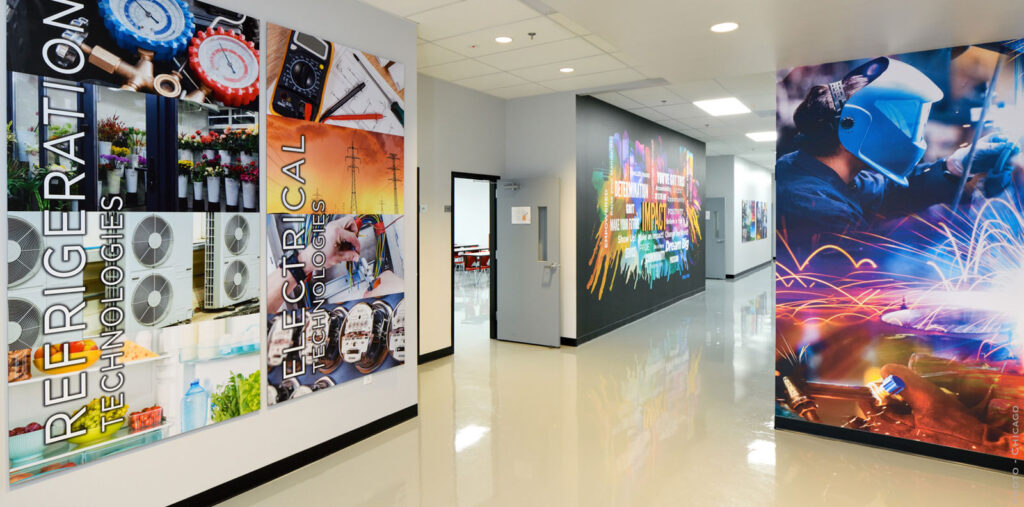
- Electrical Technologies, which is available at most campuses.
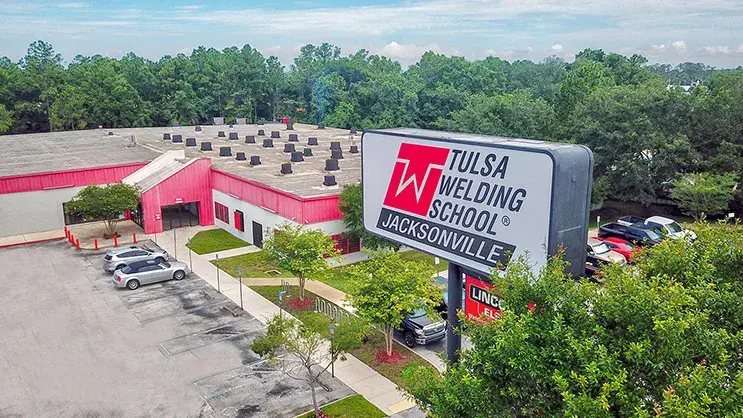
- Electrical Lineworker, which is available at our Dallas Metro and Jacksonville campuses
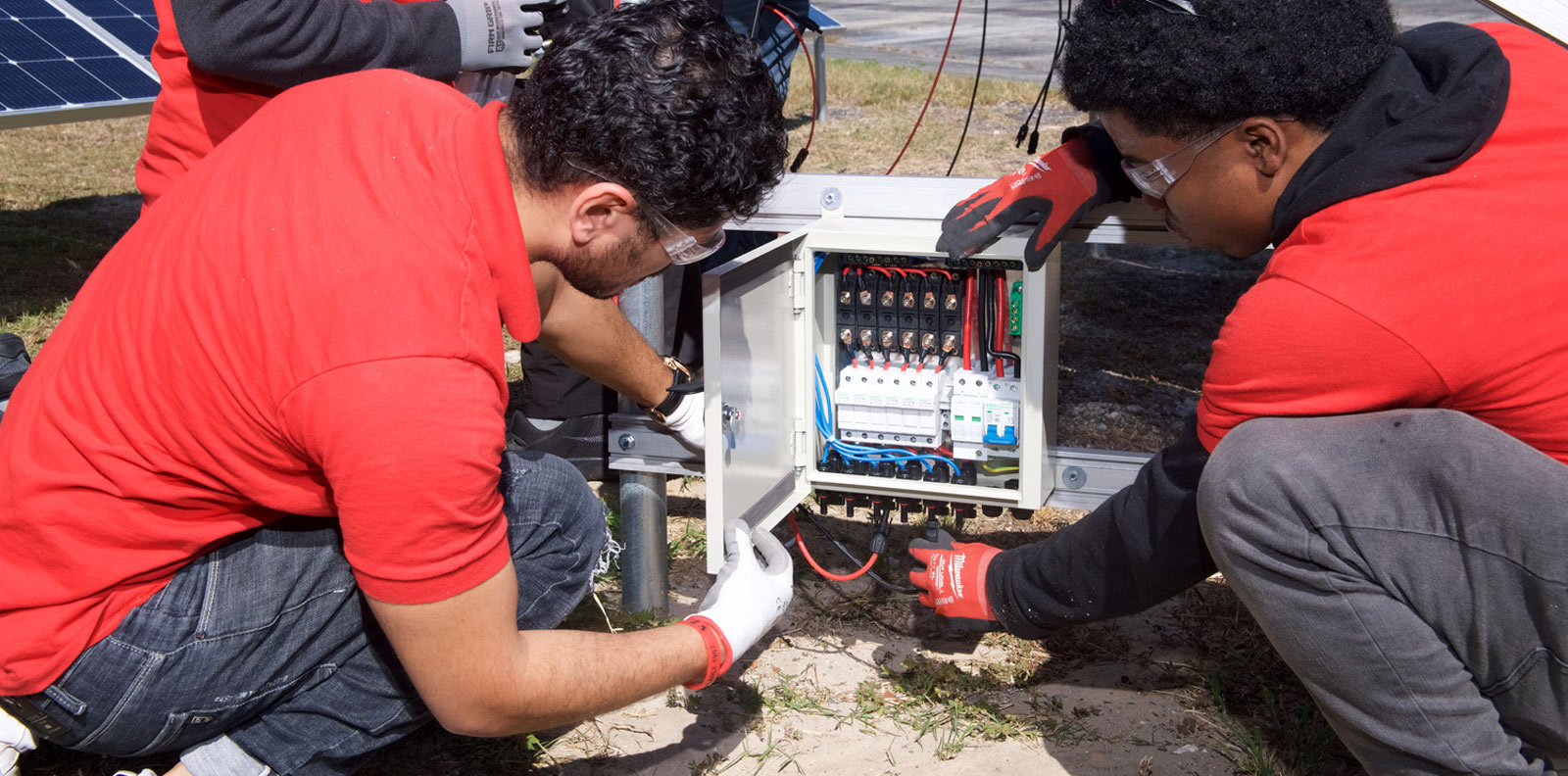
Both programs are built around hands-on lab training rather than lecture-heavy instruction, which matters for veterans who learn by doing and want to spend time building real skills rather than sitting in class.
TWS is approved for the GI Bill® and offers military tuition discounts. The school also maintains a dedicated resource page for military and veteran students that covers benefits, application support, and the transition process specifically, so veterans aren’t navigating the enrollment process without guidance.
Instructors at TWS come from field backgrounds. That distinction matters in a technical program where students are preparing for job-site conditions, not theoretical exams.
TWS has been training students for careers in the skilled trades since 1949, making it one of the longest-running trade schools in the country.
Ready to Put Your Service to Work
Veterans eligible for the GI Bill® or Tuition Assistance can apply those benefits toward TWS programs in welding, electrical, HVAC/R, lineworker training, and industrial maintenance. Request more information or schedule a tour to see the program in person and talk through which track fits your background.