Key Takeaways
- Women hold about a quarter of jobs in the technician category that covers electro-mechanical work, several times their share in construction trades.
- Most technicians spend their days indoors in climate-controlled spaces, testing, calibrating, and repairing equipment alongside engineers.
- Manufacturing, solar maintenance, and data centers all need technicians who understand electrical and mechanical systems together.
- A 10-month training program plus targeted credentials, such as U.S. Environmental Protection Agency (EPA) Section 608 certification, offers a path into the field without a four-year degree.
TWS is a Great Training Option for Everyone
Learn more about how we can prepare you to advance your career.
Women hold about 25% of jobs in the engineering technician category that includes electro-mechanical work, compared with 47.1% of the total U.S. workforce. In the construction trades, women fill 4.3% of trade jobs and less than 3% of electrician jobs.
That gap points to a trade that rarely comes up in career conversations. Electro-mechanical technicians work on machines where electrical controls, mechanical parts, and computer programming meet, from factory robots to solar arrays.
What Does an Electro-Mechanical Technician Do?
An electro-mechanical technician installs, repairs, upgrades, and tests electronic and computer-controlled mechanical systems. The role combines mechanical knowledge with an understanding of electrical circuits. One technician can trace a fault whether it starts in a motor, a sensor, or the controls that tie them together.
Day-to-day duties usually include:
Have You Considered a Career in the Skilled Trades?
Fill out the form to recieve a no obligation info packet.
- Reading blueprints, schematics, and diagrams to plan the order of assembly
- Repairing and calibrating hydraulic and pneumatic assemblies
- Operating, testing, and maintaining robotic equipment
- Verifying part dimensions with precision measuring instruments
That robotic equipment reaches well beyond the factory floor. Some technicians maintain unmanned submarines and aircraft used for oil drilling, deep-ocean exploration, and hazardous-waste removal.
Electrical work is the trade this role gets confused with most often, but the focus differs. Electricians install and repair power, lighting, communications, and control systems in buildings, and most learn through apprenticeships and need a state license. On a factory floor, an electrician might wire the power feed to a packaging line, while an electro-mechanical technician calibrates the sensors and repairs the robotic arms on that line.
How a Typical Workday Looks
About 80% of technicians work indoors in climate-controlled spaces every day, and 85% hold face-to-face team discussions daily. The hours can run long, with 71% working more than 40 hours a week. Testing assemblies with oscilloscopes and electronic voltmeters is a core, recurring task.
Much of the day runs through engineers. Technicians follow engineers’ instructions, take the precise measurements engineers need, and use soldering irons on small circuitry. When a job wraps up, they write reports that explain test results and flag any problems for the engineering team.
Why More Women Are Choosing Electro-Mechanical Work
Occupations where women hold 25% or less of jobs count as nontraditional, and those roles tend to pay more than fields where women make up the majority. Electro-mechanical work sits right at that line. It carries the pay advantage of a nontraditional field while employing far more women than trades where women hold 2% to 4% of positions.
The same pattern shows up in the industries that hire these technicians. Solar counts women as 29% of its workforce, above the 26% share across the broader energy sector.
Manufacturing, where most electro-mechanical technicians work, looks similar. Women fill 29% of manufacturing jobs but hold only 12% of leadership roles. That leadership gap leaves room for skilled technicians to move into supervisory and specialist positions.
Manufacturing and Automation Careers
Most electro-mechanical technicians work in engineering firms and on production floors. The largest employers are:
- Engineering services at 13%
- Machinery manufacturing at 11%
- Computer and electronic product manufacturing at 11%
- Scientific research and development at 10%
- Transportation equipment manufacturing at 9%
Technicians in these settings typically split their time between production sites and offices. On the floor, they keep automated lines, robotic cells, and test equipment running. In the office, they document results and work through design problems with engineers.
Factory hiring needs keep growing. U.S. manufacturers may need 3.8 million new workers between 2024 and 2033, and 1.9 million of those jobs could go unfilled as demand for digital skills rises. Automated production depends on people who can work across the electrical, mechanical, and software sides of a machine.
Solar Operations and Maintenance Careers
Every solar installation needs ongoing service after the panels go up. Solar operations and maintenance jobs nearly doubled from 11,164 in 2019 to 21,833 in 2024 as the number of installed systems grew.
Close to 90% of solar employers report some difficulty filling open positions, and operations and maintenance was the only solar sector where hiring got harder in 2024.
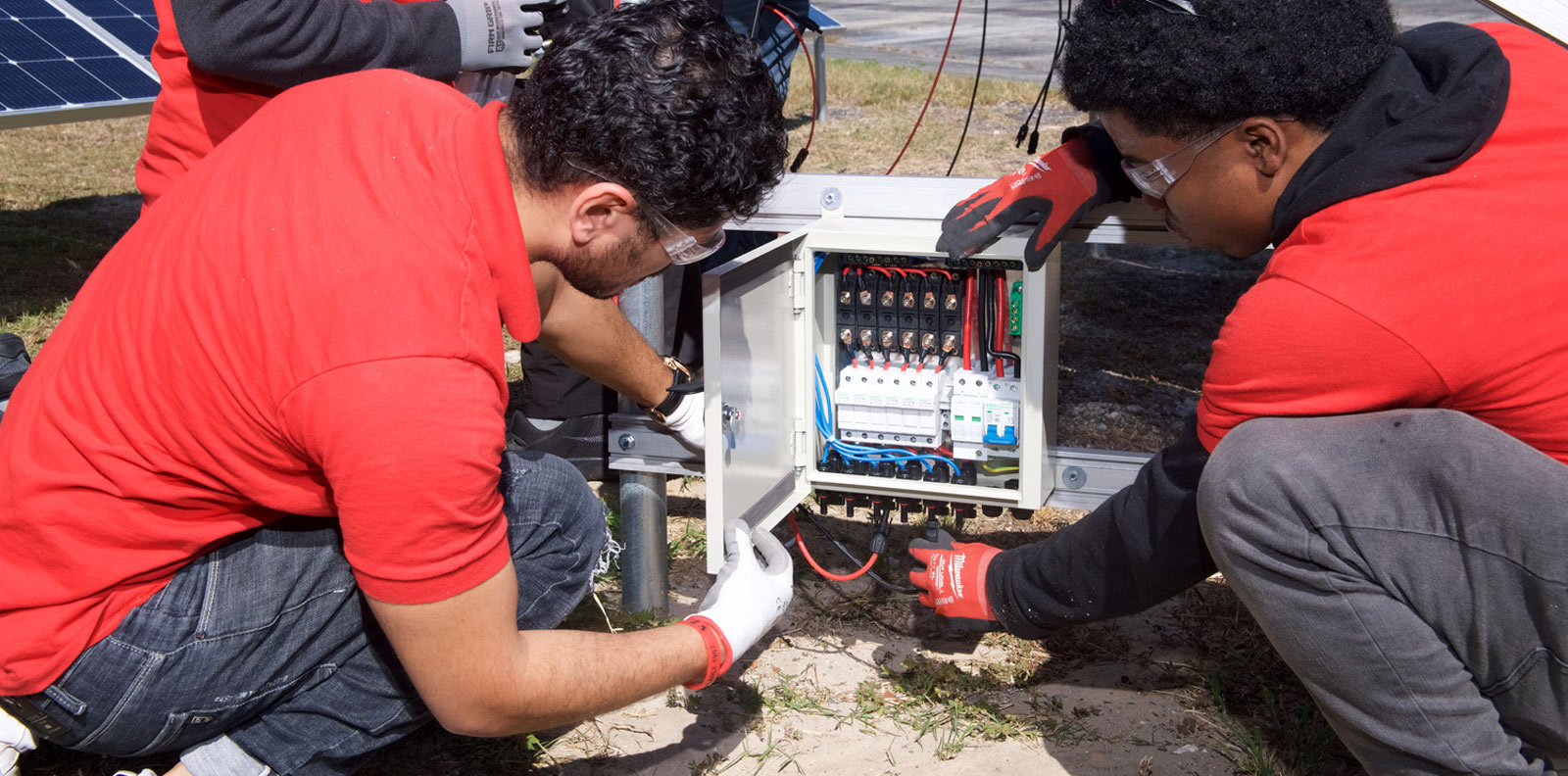
Maintenance work on solar systems draws on wiring, electrical safety, and troubleshooting skills. Electro-mechanical training that includes photovoltaic coursework builds a direct bridge into this side of the energy industry.
Can Electro-Mechanical Technicians Work in Data Centers?
Yes. Data centers rely on cooling, power, and control equipment that has to stay online around the clock. These facilities run every hour of every day, which puts constant strain on cooling, water, and power systems.
Demand for that equipment keeps climbing. Data centers used about 4.4% of U.S. electricity in 2023, and the chips behind artificial intelligence (AI) workloads require intense cooling systems. Keeping chillers, pumps, backup power, and monitoring controls working together calls for the same blend of electrical and mechanical skills this trade teaches.
How Much Do Electro-Mechanical Technicians Earn?
The median annual wage reached $73,900 in May 2025. Pay spreads widely across the field, with research settings at the top of the range:
| Pay Measure | Annual Wage (May 2025) |
|---|---|
| Lowest 10% | Under $47,840 |
| Median, all technicians | $73,900 |
| Median, transportation equipment manufacturing | $78,270 |
| Median, scientific research and development | $101,580 |
| Highest 10% | More than $109,890 |
About 1,400 openings per year are projected over the decade. Most of those openings come from current workers retiring or moving into other occupations, which creates steady entry points for new technicians.
Training and Certification Requirements
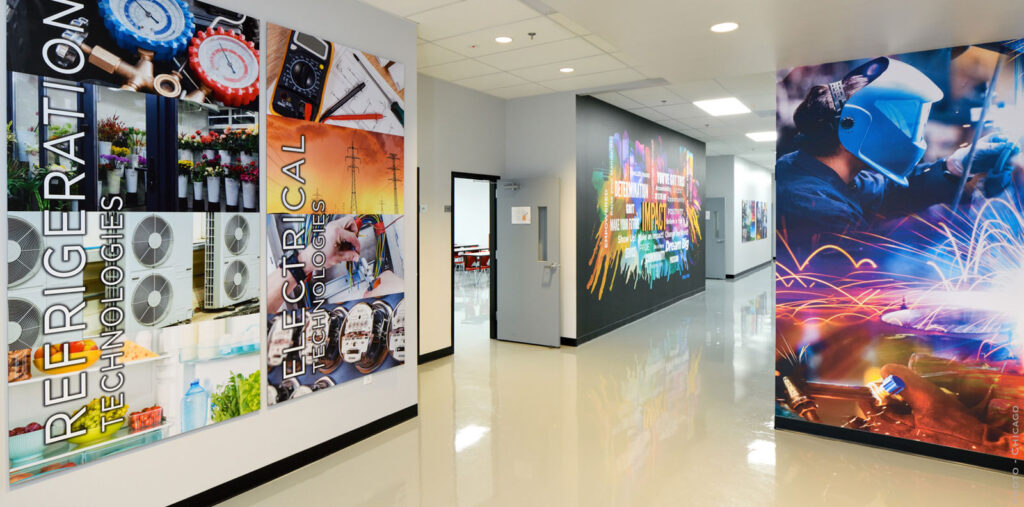
Many paths into this field run through short, hands-on programs rather than a four-year degree. The Tulsa Welding School (TWS) Electro-Mechanical Technologies program runs 10 months and covers:
- Electricity fundamentals, plus residential and commercial wiring
- Refrigeration and residential and commercial comfort systems
- Solar photovoltaic science, system design, and wiring
- Advanced troubleshooting, with the chance to qualify for Section 608 certification
Morning, afternoon, and evening classes are available, and theory coursework can be completed online. That structure lets students train around jobs and family responsibilities.
Two credentials apply directly to electro-mechanical work:
- EPA Section 608 certification. Technicians who service equipment that could release refrigerant must hold Section 608 certification from the EPA. The certification comes in four types, each tied to the equipment a technician services: Type I for small appliances, Type II for high-pressure systems, Type III for low-pressure systems, and Universal for all three. Once earned, a Section 608 certification never expires.
- SACA Industry 4.0 certifications. The nonprofit Smart Automation Certification Alliance (SACA) offers stackable Industry 4.0 certifications, including Electrical Systems Specialist and Mechanical Systems Specialist. These cover the installation, troubleshooting, and repair of industrial circuits, motors, and power transmission systems.
Support Networks for Women in Skilled Trades
Opportunities for women in skilled trades are expanding well beyond electro-mechanical work. Women’s participation in construction apprenticeships grew 186% over a decade, from 3,789 to 10,834.
Federal funding also targets the practical barriers that can keep women out of technical training. The Women in Apprenticeship and Nontraditional Occupations (WANTO) grant program funds nonprofit community organizations that train women for apprenticeships and nontraditional jobs. Grantees can spend up to 15% of each award on supportive services like childcare, housing, transportation, job-related gear, and training tuition.
Those same questions about cost, childcare, and scheduling shape any decision about trade school. A TWS admissions representative can walk through start dates, class times, and scholarship options for the Electro-Mechanical Technologies program.
Request program information to get answers based on your own schedule and budget.