TWS is a Great Training Option for Everyone
Learn more about how we can prepare you to advance your career.
A2L refrigerants are showing up in new heating, ventilation, and air conditioning (HVAC) equipment across the country, and most people outside the trade have never heard the term. It’s a federally driven shift in what refrigerant goes into the systems technicians install every day.
Training programs build around these systems directly. Systems built on this refrigerant type are already shipping, and training now means learning the systems technicians actually use.
The shift touches how systems get installed, what tools a technician carries, and what a training program needs to cover to prepare someone for current work.
What Is an A2L Refrigerant?
An A2L refrigerant is a mildly flammable, low-toxicity refrigerant used in new HVAC equipment as a lower-emission alternative to older refrigerants like R-410A. The classification itself breaks down into three parts:
Have You Considered a Career in the Skilled Trades?
Fill out the form to recieve a no obligation info packet.
- A means low toxicity
- 2 means mildly flammable
- L means it burns slowly, if it ignites at all
R-410A, the refrigerant A2Ls are replacing, carries an A1 rating instead, meaning it’s nonflammable. The flammability difference is why A2L systems need different handling procedures for technicians, though that risk doesn’t extend to occupants in the home.
This isn’t limited to central air conditioners. Heat pumps, mini-splits, and other residential and light commercial cooling equipment fall under the same classification requirements.
Why Is the Industry Moving Away From R-410A?
R-410A traps roughly 2,088 times as much heat as carbon dioxide if it leaks, a measurement called global warming potential (GWP). The refrigerants replacing it score under 700, and that gap is the actual reason regulators are forcing the switch.
The Environmental Protection Agency (EPA) enforces this cutoff under the American Innovation and Manufacturing (AIM) Act. The law mandates an 85% cut in hydrofluorocarbon production from baseline levels by 2036, and new residential and light commercial air conditioning and heat pump equipment above the 700 GWP line has been barred from manufacture since January 1, 2025. The EPA has separately adjusted some installation deadlines since the rule first passed in 2023.
That restriction only applies to new equipment, so homeowners and businesses can keep running R-410A systems already installed. Manufacturers didn’t wait for the deadline either; many had already shifted production to A2L-compatible equipment before the cutoff took effect.
Which A2L Refrigerants Are Replacing R-410A?
Manufacturers now build new equipment around R-32 or R-454B instead of R-410A. Both are approved by the EPA for new residential and light commercial systems, and major manufacturers have picked one or the other for their current product lines.
R-32 is a single-component refrigerant. R-454B is a blend engineered to run closer to R-410A’s original operating range, which is part of why several manufacturers chose it for an easier equipment redesign.
| Refrigerant | GWP | Safety Classification |
|---|---|---|
| R-410A | 2,088 | A1 (nonflammable) |
| R-32 | 675 | A2L (mildly flammable) |
| R-454B | ~466 | A2L (mildly flammable) |
Neither refrigerant can simply be added to an existing R-410A system. They run at different operating pressures, pair with different compressor lubricants, and require equipment engineered around those specific safety and handling needs from the start, which is why the switch happens through new equipment rather than a refrigerant swap.
Is Working With A2L Refrigerants Dangerous?
When handled properly, working with A2L refrigerants is safe, and it’s not a reason to think twice about training in the field. The “mildly flammable” label sounds worse than what it describes. A2L refrigerants have a burn velocity low enough that they’re difficult to ignite and slow to propagate a flame even when a leak does occur.
Building codes require engineered safeguards on top of that, not instead of it. Equipment ships with safety features already built in, and technicians are trained specifically on how those safeguards work before they ever touch a live system.
The real risk isn’t the refrigerant itself; it’s a technician who wasn’t trained on the current safety protocols working on a system that has them. That’s exactly the gap current HVAC/R training needs to close.
New Training and Safety Requirements for Technicians
EPA Section 608 certification still governs refrigerant handling broadly, and that includes A2Ls. Nothing about the refrigerant shift changes who’s legally allowed to touch a system.
Passing the 608 exam confirms legal authority to handle refrigerants, but it doesn’t cover the specific field skills A2L systems demand, like leak detection procedures or brazing changes for flammable gases.
Updated standards from the American Society of Heating, Refrigerating, and Air-Conditioning Engineers (ASHRAE 15 and 34, both revised in 2024), plus the International Mechanical Code, now govern ventilation, charge limits, and built-in leak detection on new installs. A technician trained only on older code requirements would be working from an outdated rulebook on a modern job site.
What Hands-On A2L Training Covers
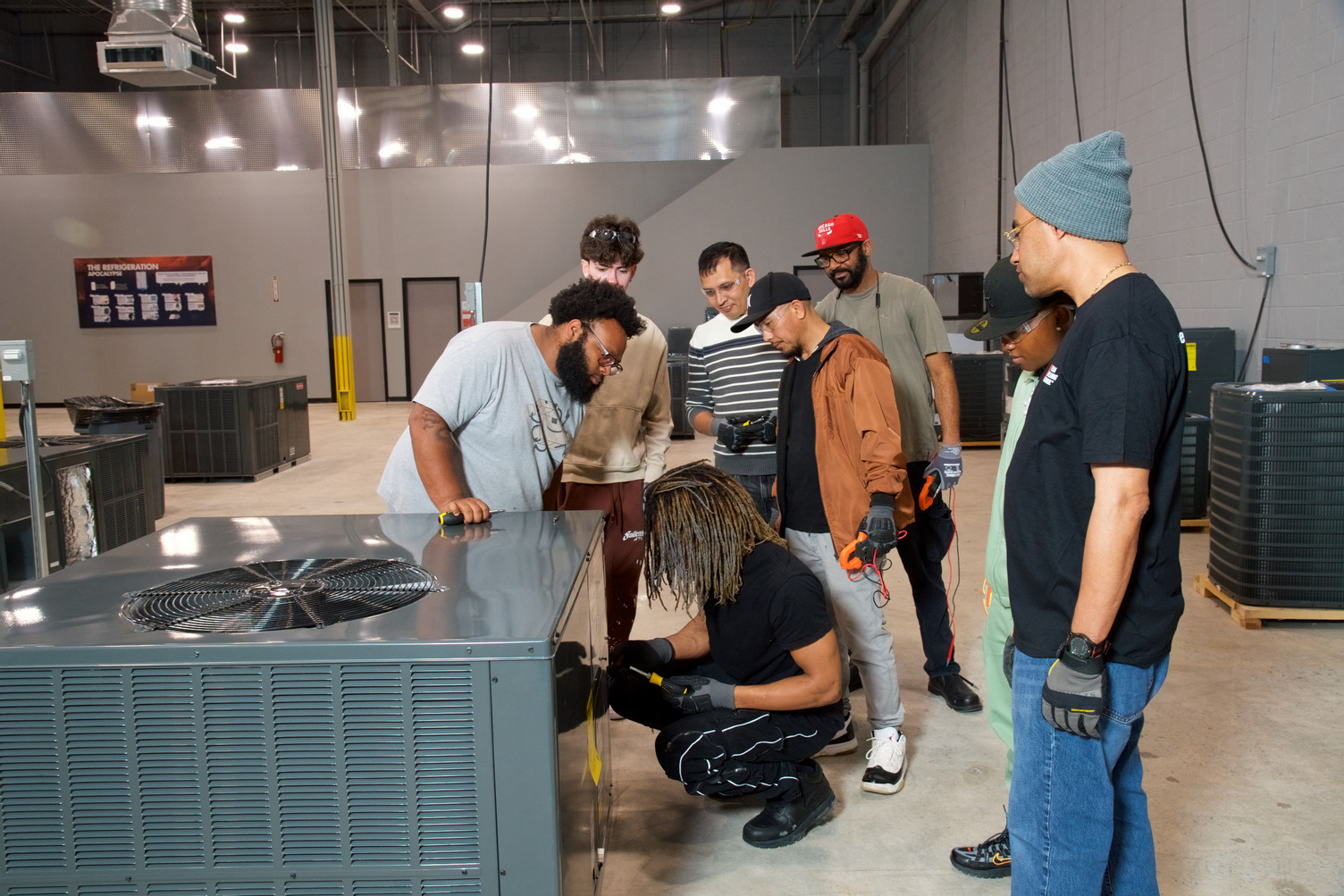
The regulatory side explains what’s required. The lab side is where a student actually builds the skill. Since A2L is now the equipment standard, current HVAC/R training covers:
- Refrigerant identification and leak-detection equipment built for mildly flammable gases, not the tools used on older A1 systems
- Brazing and soldering technique changes required to keep an ignition source away from flammable refrigerant lines
- Reading manufacturer charge specs and pressure charts that run differently than R-410A equipment
- Lab time on both legacy and A2L systems, so graduates aren’t limited to servicing one refrigerant type
Plenty of R-410A equipment is still in service and will be for years, so a well-rounded technician needs to be comfortable working on both refrigerant families.
None of this replaces classroom instruction on refrigeration theory; it builds on it. The underlying physics of a refrigeration cycle hasn’t changed, only the chemical doing the work and the precautions that come with it.
What the Switch Means for Entering HVAC Training Now
Anyone starting HVAC/R training today is stepping into an industry already mid-transition. A2L equipment is already shipping into new installs nationwide, and training providers across the industry are working to reflect that shift.
Technicians who built their skills entirely on R-410A systems face a learning curve now, since the equipment shipping today isn’t what they trained on. Someone starting training now has the chance to ask directly how a program is keeping pace with the refrigerant shift, rather than discovering gaps later on the job.
This kind of timing is rare in a skilled trade. Most equipment shifts happen mid-career, forcing working technicians to retrain around new tools or methods on top of a full workload, while someone starting fresh can build the right habits from day one instead of unlearning old ones.
Talk to Tulsa Welding School About HVAC/R Training
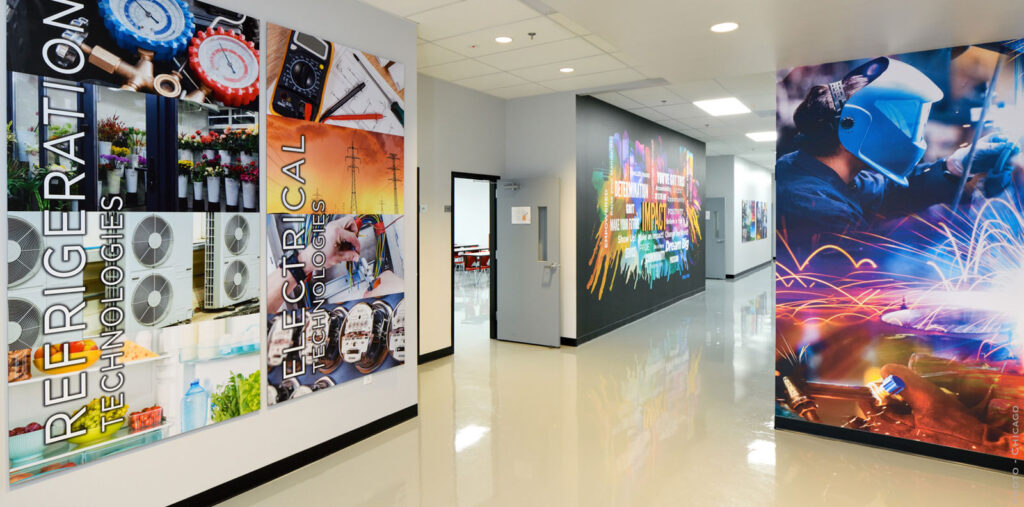
The Refrigeration Technologies program at Tulsa Welding School (TWS) is built around hands-on learning, with lab time making up the majority of class time rather than lecture. Students move through fundamentals of electricity and refrigeration before advancing into residential and commercial comfort systems, refrigeration systems and practices, and advanced troubleshooting coursework.
The program can be completed in as few as seven months, with a hybrid schedule that lets students finish coursework online and reserve in-person time for hands-on lab work. Graduates are prepared for entry-level HVAC/R roles in service, installation, and maintenance, and A2L refrigerants are the current standard shaping that work, worth understanding before choosing where to train.
Talk to a TWS Advisor to learn more about the HVAC/R Refrigeration Technologies program and how it fits into where the HVAC industry is headed.