TWS is a Great Training Option for Everyone
Learn more about how we can prepare you to advance your career.
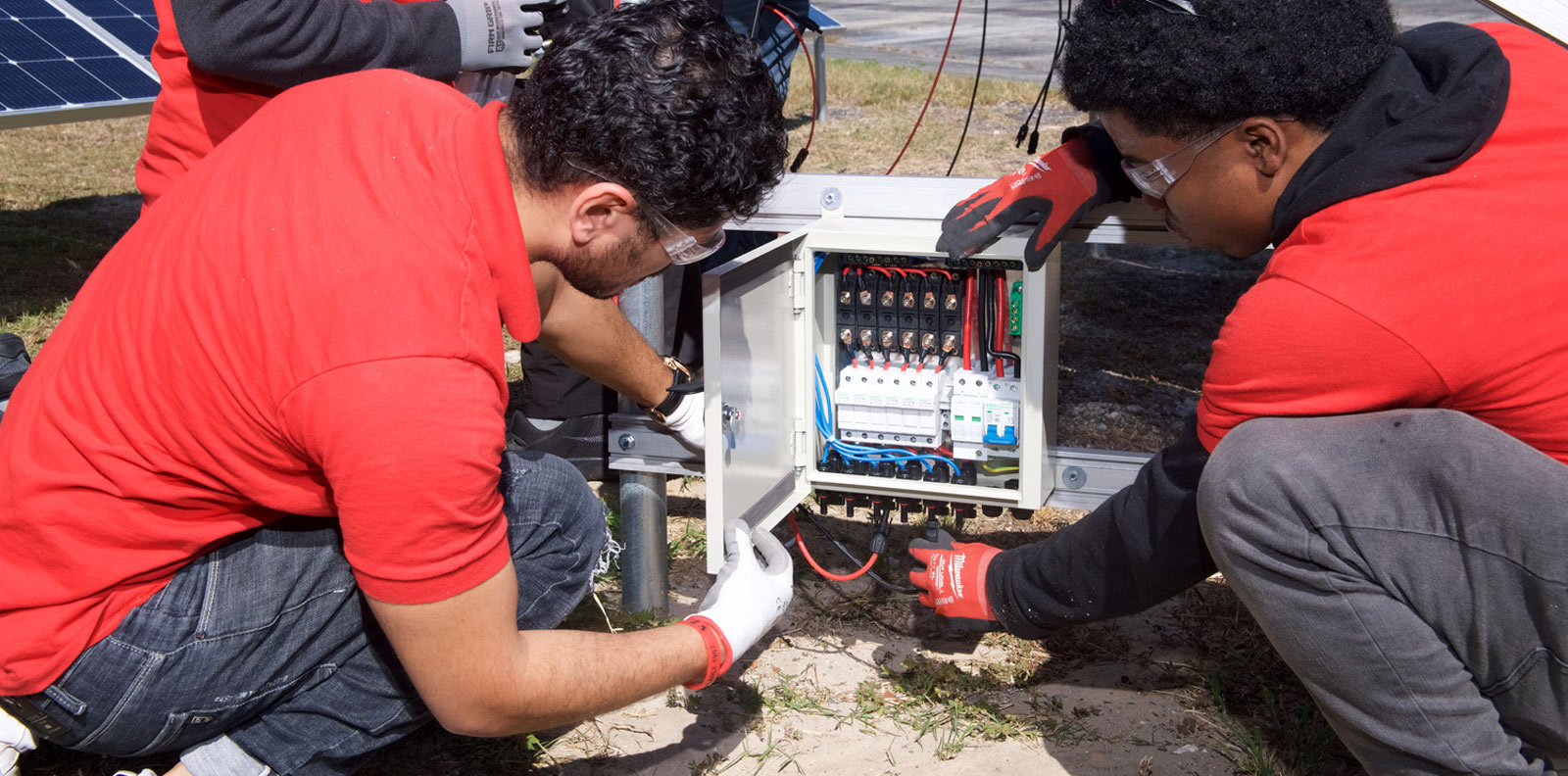
If you’re looking for a great career, Tulsa Welding School offers training as an electrician in our new Electrical Technologies program as well as training as a welder with program options such as Professional Welder, Welding Specialist and Welding Specialist with Pipefitting. But what career path is right for you? Both options offer promising job opportunities. Here are some considerations when deciding on which program to choose.
Training
Welding training can take as little as seven months to complete. You only have one day a week in the classroom; the rest of the time is spent hands-on using the welding equipment that you would on the job. The new electrical technologies program follows a similar timeline, also able to complete in about seven months, though they carry more lecture hours than some welding programs given the depth of code knowledge required. Both programs offer flexible scheduling designed for people who are working full-time or managing family obligations while they train.
Licensing and Certification Requirements
Becoming a welder can offer a rewarding career path. Welding inspector training followed by certification can show employers that a professional organization has approved a welder’s skills to meet industry standards, which may increase your access to job opportunities and better pay. The Bureau of Labor Statistics (BLS) 1 outlines some certifications available to welders, such as Certified Welder, Certified Welding Inspector and Certified Robotic Arc Welding, all of which can be obtained through the American Welding Society.
In order to obtain electrician jobs, most states require that you be licensed and that you pass a test for that license, indicates the BLS 2. Tests and regulations vary from state to state, so it’s extremely important to learn what’s required so you can obtain a license. Contacting your state electrician licensing board is a good start. You are likely to be tested on local electrical codes, state electrical codes and the National Electrical Code.
Have You Considered a Career in the Skilled Trades?
Fill out the form to recieve a no obligation info packet.
Industry Outlook and Pay Scales
Comparing welding vs. electrician salary is one of the first things most people research, and the gap between the two has widened over the past decade. According to the Bureau of Labor Statistics (BLS), the median annual wage for welders, cutters, solderers, and brazers was $51,000 in May 2024. The highest 10 percent of welders earned more than $75,850.
Electricians generally earn more at the median. According to the BLS, the median annual wage for electricians was $62,350 in May 2024, with the top 10 percent earning more than $106,030.
The job growth picture also favors electricians in the near term. Employment of electricians is projected to grow 9 percent from 2024 to 2034, much faster than the average for all occupations, with about 81,000 openings projected each year. Welding tells a different story depending on how you read the numbers. Employment of welders is projected to grow 2 percent from 2024 to 2034, but roughly 45,600 openings are still projected each year, most driven by an aging workforce heading into retirement rather than an absence of demand.
Specialization can shift the numbers significantly in both fields. Welders who move into pipeline, underwater, or inspection work can earn well above the median. Electricians who advance to master status or move into industrial settings often cross six figures. Those interested in utility work can also look at the electrical lineworker path, where the median annual wage was $92,560 in May 2024.
Work Environments and Tools
Both careers involve physical, hands-on work with schedules that can extend into evenings and weekends. Here is how they compare:

New: Industrial Maintenance
Learn About Our New Advanced Industrial Maintenance Program
Tulsa Welding School is proud to announce our newest program offering available at our Houston & Dallas Metro Campuses – Advanced Industrial Maintenance Technology! Learn the skills you need to take on the industries of manufacturing, distribution, energy production and facility maintenance in as few as 7 months.
Welding
Work settings include:
- Manufacturing facilities, construction sites, shipyards, pipelines, and energy production operations
- Indoor and outdoor environments, often in tight or confined spaces
- Shift-based schedules in manufacturing, which can include overnight hours
Common tools and equipment include:
- Welding processes such as MIG, TIG, flux-cored arc, plasma arc, shielded metal arc, and submerged arc welding
- Grinders, heated cutting equipment, and metal manipulation tools
- Safety equipment including helmets with protective lenses, heat-resistant gloves, safety shoes, and goggles
Electrician
Work settings include:
- Electrical contracting, commercial construction, residential projects, and facilities maintenance
- Indoor and outdoor job sites that change regularly
- Self-employment is a viable option, with roughly 9 percent of electricians working independently
Common tools and equipment include:
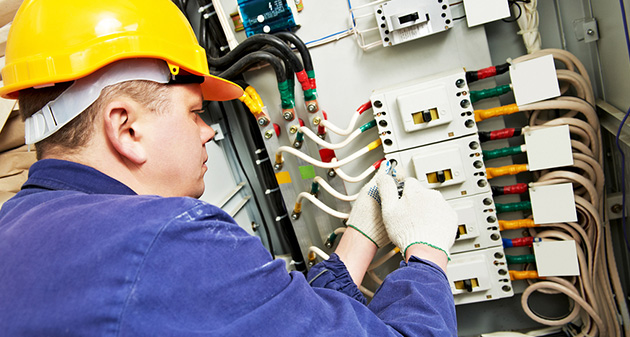
- Ammeters, voltmeters, and harmonics testers
- Conduit benders, wire strippers, drills, pliers, saws, and screwdrivers
- Blueprints and wiring diagrams used to plan and execute installations
Which Career Is Right for You?
Welding tends to be a good fit for people who enjoy fabricating and building physical structures and want the flexibility to move across industries like construction, manufacturing, shipbuilding, and energy. If you are drawn to specialized, higher-earning paths like pipeline or underwater welding, or prefer outdoor and hands-on work that can take you to different locations and job sites, welding offers that range.
Electrician careers tend to suit people who enjoy working through technical systems and solving wiring or circuitry problems. The path is well-defined, moving from apprentice to journeyman to master electrician, and it opens the door to running your own business down the road. Strong projected job growth tied to construction, renewable energy, and infrastructure also makes it an attractive long-term option.
Train at Tulsa Welding School
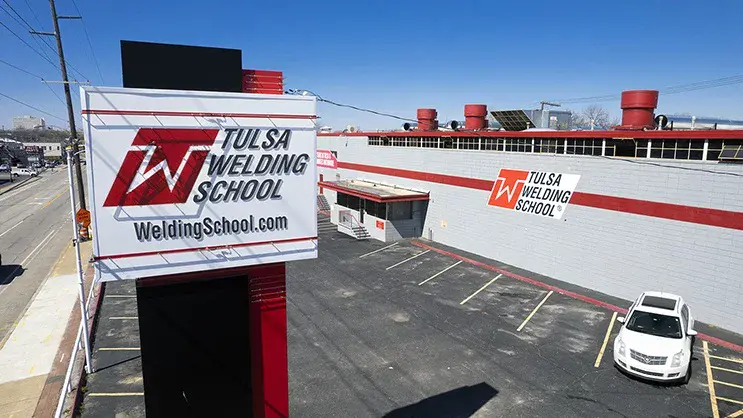
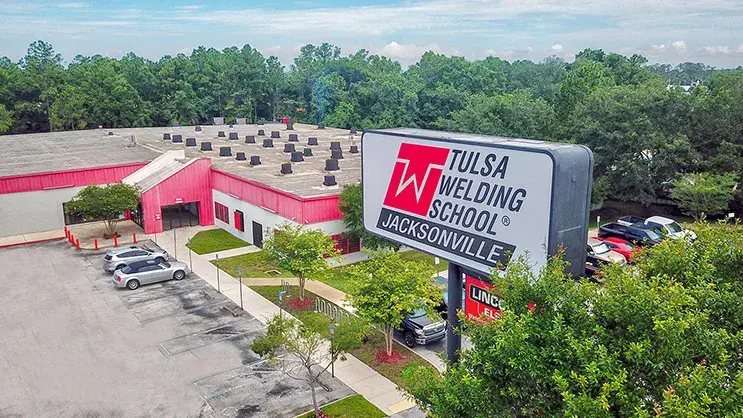
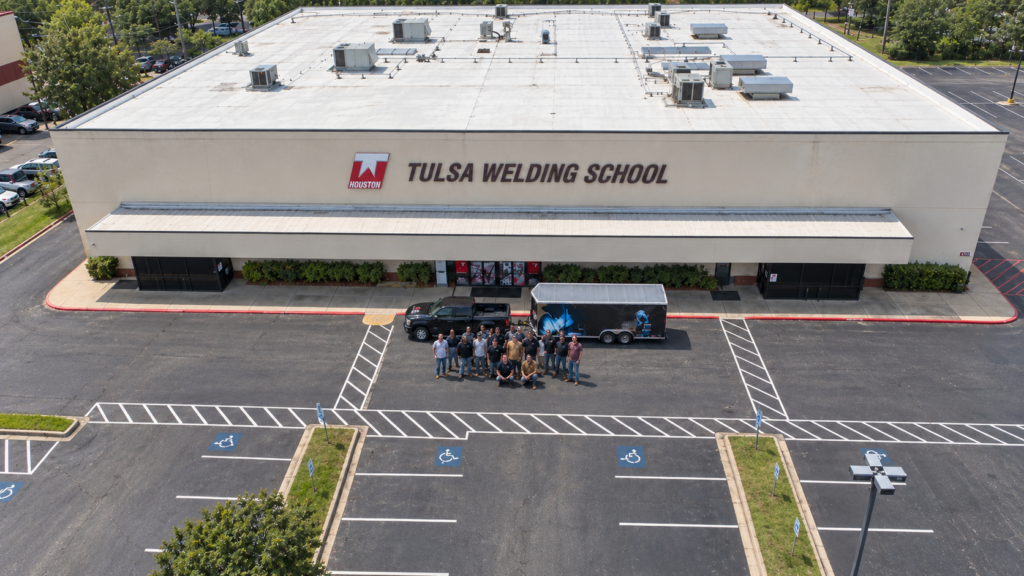
Becoming an electrician or a welder can lead to a solid, long-term career with real earning potential. TWS offers training in both fields across campuses in Tulsa, Jacksonville, Houston, Dallas, and Atlanta, with financial aid available to those who qualify. Programs can be completed in as few as seven months, with schedules built around people who are working or managing other obligations. Contact TWS today to learn more about which program is the right fit for you.