TWS is a Great Training Option for Everyone
Learn more about how we can prepare you to advance your career.
Alongside many industrial processes, welding can have environmental consequences. The release of fumes, consumption of energy, and use of non-renewable sources can all contribute to pollution and waste. Fortunately, the welding industry is moving toward more sustainable methods, often referred to as green welding. These eco-friendly practices help reduce the environmental impact of welding while still meeting industry demands.
Green welding introduces methods that reduce waste and emissions while promoting efficiency. Understanding these techniques, along with the environmental hazards of welding, helps students at Tulsa Welding School (TWS) prepare for careers that balance technical skill with environmental responsibility.
Green Welding Explained
Green welding can refer to welding methods and techniques that reduce waste, limit emissions, and use energy more efficiently. The goal is to minimize the environmental impact of welding while maintaining quality and safety standards.
Eco friendly welding can include:
Have You Considered a Career in the Skilled Trades?
Fill out the form to recieve a no obligation info packet.
- Using energy efficient equipment.
- Choosing filler materials with reduced toxicity.
- Recycling scrap metal and consumables.
- Improving ventilation and fume capture systems.
- Applying virtual reality training systems, which reduces material waste in training.
What Are Some Common Environmental Welding Hazards?
Welding hazards affect not only workers but also the surrounding environment. Some of the most common environmental hazards include:
Fume and Gas Emissions
Welding produces fumes containing metal particles and gases such as carbon dioxide, ozone, and nitrogen oxides. These can contribute to air pollution and pose health risks to welders if not properly managed.
Energy Consumption in Welding
Welding equipment consumes a large amount of electricity, much of which is generated from nonrenewable sources. Energy intensive processes contribute to greenhouse gas emissions.
Waste Generation in Welding
Unused filler metals, slag, and scrap metal can contribute to solid waste. Without recycling programs, these materials may end up in landfills.
Chemical Hazards from Welding Materials
Solvents, cleaning agents, and coatings used in welding may release volatile organic compounds (VOCs) that affect air and water quality.
Eco-Friendly Welding Techniques for a Sustainable Future
Green welding focuses on reducing these hazards through practical solutions:
Energy Efficient Equipment
Modern welding machines often feature inverter technology, which consumes less electricity compared to traditional equipment. Training students to operate these machines can lower energy costs and environmental impact.
Advanced Fume Extraction Systems
Installing effective ventilation and filtration systems reduces the release of harmful gases into the atmosphere and protects worker health.
Recycling and Waste Reduction in Welding
Recycling scrap metals and reusing materials wherever possible minimizes landfill waste. Many shops also recycle electrode stubs and metal shavings.
Eco-Friendly Welding Consumables
Using welding rods, wires, and fluxes that contain fewer hazardous elements reduces toxic emissions.
How Tulsa Welding School Trains Students for Green Welding Careers
Across its campuses in Tulsa, Jacksonville, Houston, and the Dallas Metro, TWS provides training that reflects industry needs, including safe and efficient welding practices.
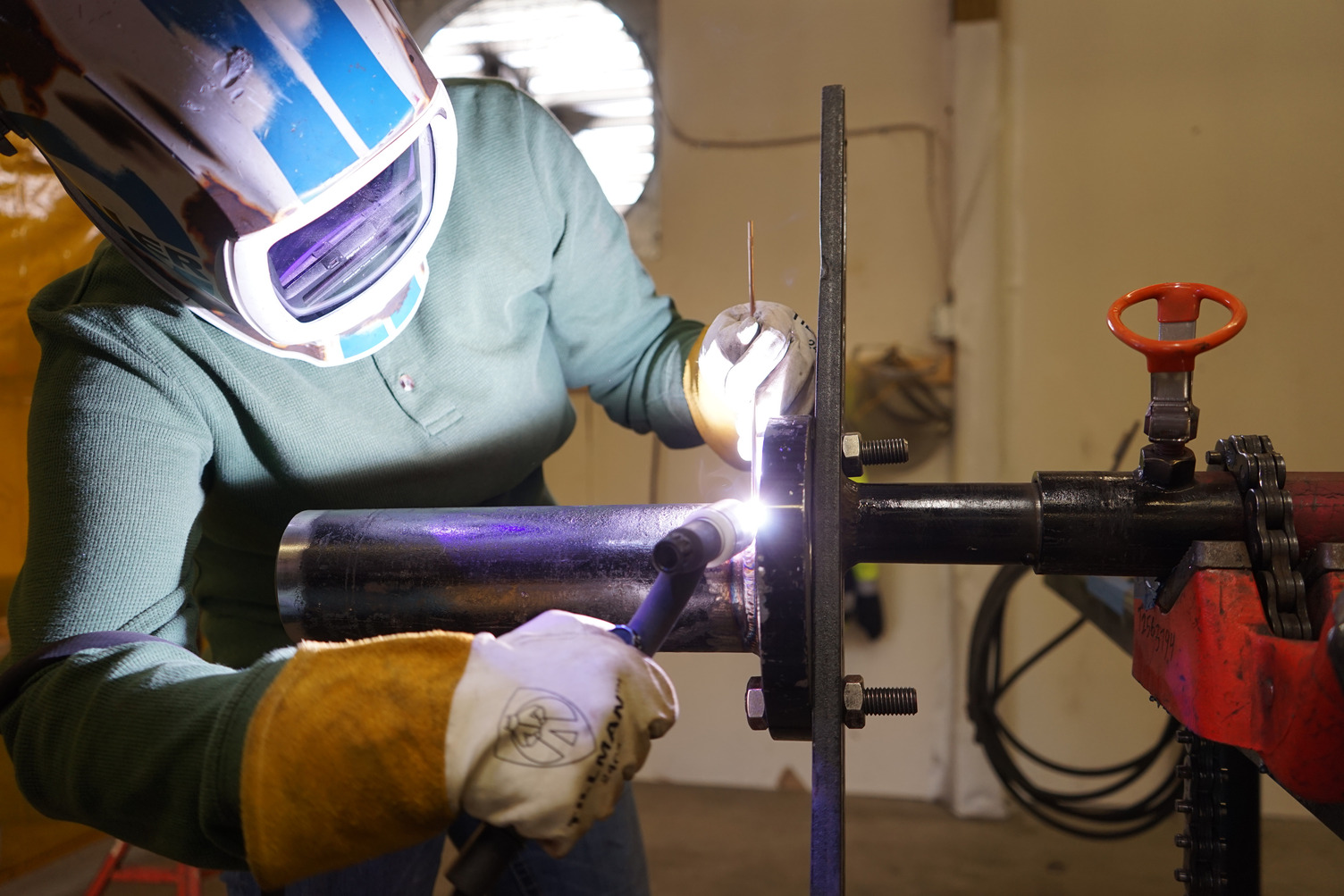
The Professional Welder program at TWS gives students the chance to learn in interactive workshop courses and welding booths, simulating real jobsite conditions. In as little as seven months, students gain training in structural welding, fluxcore welding, and pipe welding; several welding practice areas that are widely used across multiple industries.
This program not only builds technical skills but also prepares students to perform in job interviews and weld tests for various welding certifications, giving them confidence to transition into the workforce.
To learn more about our trade school programs, contact us today or call (214) 227-9911.