TWS is a Great Training Option for Everyone
Learn more about how we can prepare you to advance your career.
Most people who consider a career change get stuck asking the same questions: Is there actually room for me in this field? Am I walking into something already crowded?
For anyone weighing a move into the skilled trades in Atlanta, that question has a clear answer. The city is in the middle of a construction boom, it does not have enough trained workers to support, and that gap is not closing on its own.
A focused trade program can get you job-ready in as few as seven months, which means a career pivot into the trades is less of a leap than most people assume.
Why Atlanta Is a Strong Market for Skilled Tradespeople
Atlanta’s construction pipeline is one of the most active in the country, with residential, commercial, infrastructure, and data center projects all running at the same time. The U.S. construction industry needed to attract roughly 439,000 new workers in 2025 to meet demand alone, and that number is expected to climb to around 499,000 in 2026. A regional labor study identified the metro as one of several markets where project timelines are being set by worker availability, not material supply.
Have You Considered a Career in the Skilled Trades?
Fill out the form to recieve a no obligation info packet.
Georgia-specific job growth projections through 2032 reflect that pressure directly:
- Electrician positions: 20,630 to 24,130
- HVAC/R technician jobs: 12,780 to 15,030
- Welder positions: 14,210 to 16,580
Trades Worth Considering in Atlanta
| Trade | What the Work Involves | Georgia Licensing | GA Job Growth (through 2034) |
|---|---|---|---|
| Welding | Join metal using MIG, TIG, stick, and flux-core processes in construction, manufacturing, and industrial settings | No state license required; AWS certification commonly expected | 14,210 to 16,580 positions |
| HVAC/R | Install, maintain, and repair heating, cooling, and refrigeration systems in residential and commercial settings | State license required; EPA Section 608 certification required | 12,780 to 15,030 positions |
| Electrical | Install and maintain wiring, systems, and components in residential, commercial, and industrial buildings | State license required; apprenticeship hours required | 20,630 to 24,130 positions |
What Trade School in Atlanta Looks Like
A four-year degree is built around broad academic exposure. A trade program is built around getting you ready to work in a specific field as fast as possible. That difference in focus is exactly why trade school makes sense for career changers.
Program Length and Structure
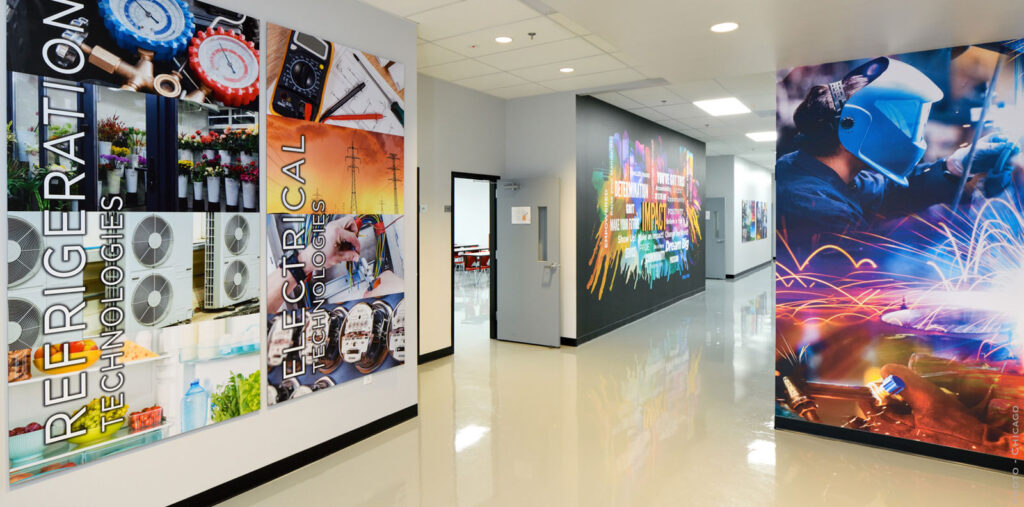
Trade school programs are shorter than a four-year degree. For example, TWS Atlanta’s Welding Specialist, Refrigeration Technologies, and Electrical Technologies programs can each be completed in as few as seven months. This condensed timeline is because trade school programs focus only on building the skills and knowledge relevant to the industry you want to enter.
Every hour is pointed at the skills and knowledge employers expect from an entry-level hire in your trade.
Hands-On Training From Day One
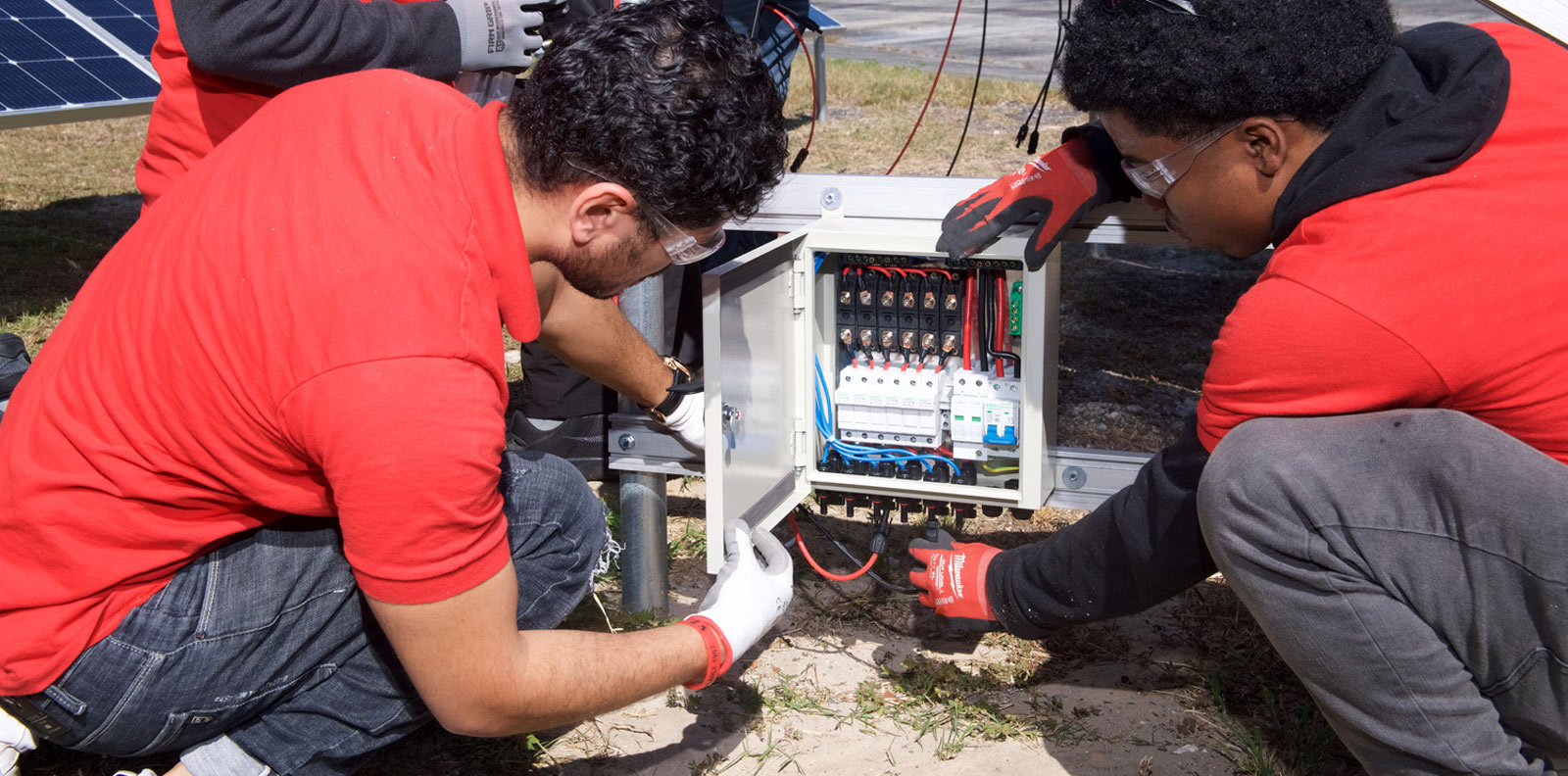
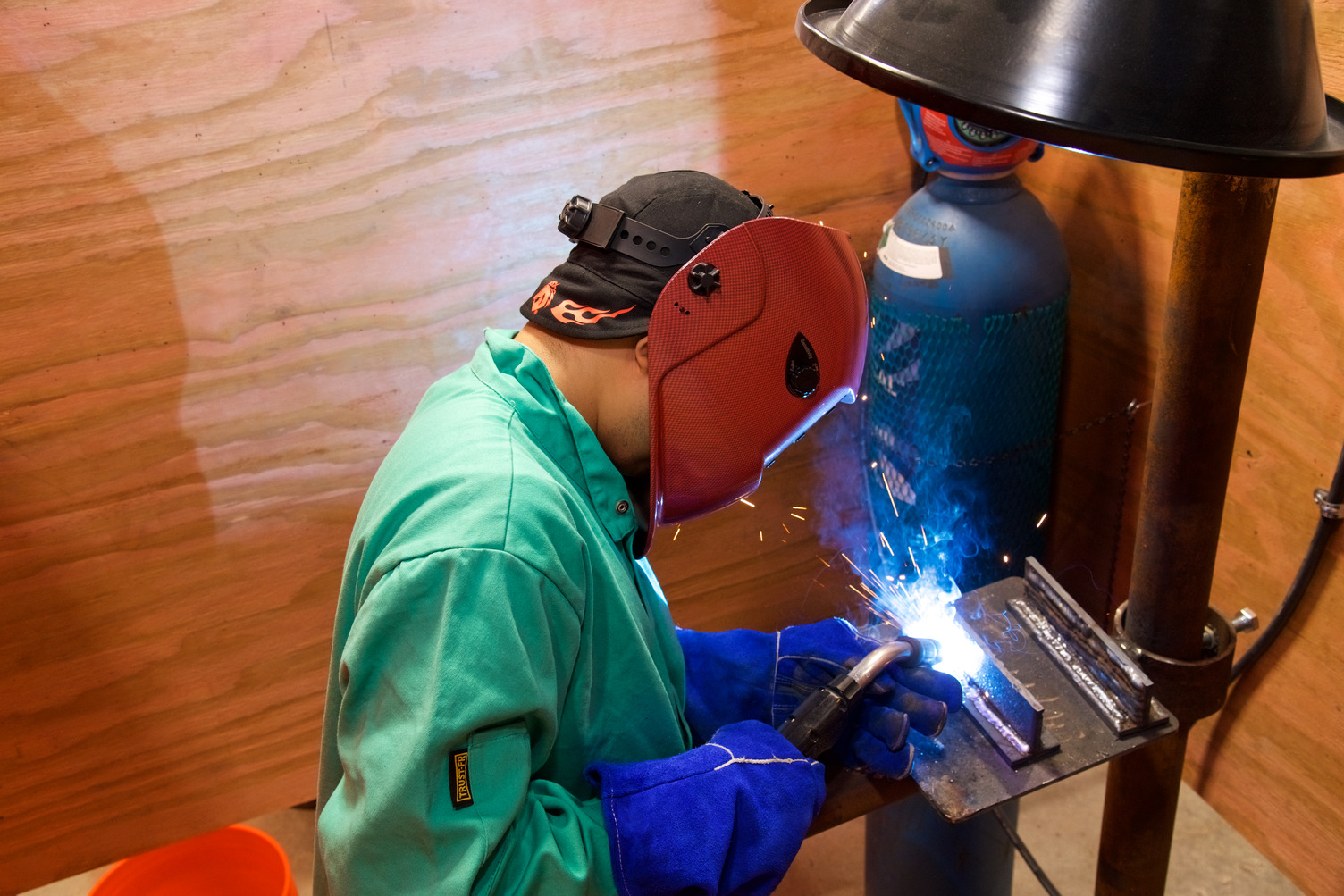
Trade programs spend the majority of class time in a shop or lab environment, not a lecture hall. At TWS Atlanta, students work with real equipment from the first day of training:

New: Industrial Maintenance
Learn About Our New Advanced Industrial Maintenance Program
Tulsa Welding School is proud to announce our newest program offering available at our Houston & Dallas Metro Campuses – Advanced Industrial Maintenance Technology! Learn the skills you need to take on the industries of manufacturing, distribution, energy production and facility maintenance in as few as 7 months.
- Welding students practice MIG, TIG, stick, and pipe techniques on actual welding stations
- HVAC/R students work with live heating, cooling, and refrigeration systems
- Electrical students wire real circuits under instructor supervision
That repetition is how trade skills are built. Reading about a weld or watching a demonstration does not prepare you for a job site. Running hundreds of welds does. For career changers entering a physical trade for the first time, the transition from classroom-style learning to hands-on work is significant, and it is also what makes the training stick.
Georgia Licensing and Industry Certifications
Georgia requires licensure to work independently in electrical and HVAC/R trades. Most pathways combine formal education, documented work experience, and a state examination. Completing a structured trade program accelerates that process: it builds the technical foundation that licensing exams test and creates a documented training record that licensing boards and apprenticeship programs recognize. Candidates should confirm current requirements for their specific trade and license type with the appropriate Georgia licensing authority.
Trade programs also prepare students for industry certifications that carry weight regardless of licensing requirements.
| Trade | Certification(s) | Certifying Body | Why It Matters |
|---|---|---|---|
| Welding | Certified Welder (CW) | American Welding Society (AWS) | Required on many commercial and industrial job contracts; shows tested skill to employers |
| HVAC/R | EPA Section 608 R410A Safety Certification |
U.S. Environmental Protection Agency | Required by federal law to handle refrigerants; expected by HVAC employers. Demonstrates safe handling of a common refrigerant used in residential and commercial systems |
| Electrical | National Electrical Code (NEC) proficiency | National Fire Protection Association (NFPA) | NEC knowledge is required for Georgia electrical licensing exams; the TWS Electrical program builds this foundation during training |
TWS welding programs are structured to help students develop the skills needed to pursue AWS certification after graduation. The HVAC/R program builds toward EPA Section 608 and R410a certification, with students eligible to test during their training.
Welding follows a different licensing path than electrical or HVAC/R. Georgia does not require a state license to work as a welder, but AWS certification carries industry weight and is frequently required by employers and on project contracts.
What to Look for in a Trade School
Not all programs are built the same way, and the details matter when you are investing months of your time and money into training. Evaluating schools on these criteria gives you a clearer picture of whether a program will actually get you to employment, not just graduation.
- Accreditation from a recognized body such as the Accrediting Commission of Career Schools and Colleges (ACCSC) signals that the curriculum meets industry standards and that credentials carry weight with employers and licensing boards.
- Scheduling options designed for working adults make it possible to start training without quitting your job first. TWS Atlanta offers morning, afternoon, evening, and overnight classes, so you can find a schedule that fits your life before you commit.
- Career services support after graduation means you are not on your own when it comes to finding work. TWS Career Services helps graduates with resume writing, interview preparation, and connections to employers actively looking for trained candidates.
- Instructors with real field experience bring context that classroom-only backgrounds cannot. At TWS, instructors have worked in the trades they teach, which shapes how they explain techniques, troubleshoot mistakes, and prepare students for what job sites actually look like.
Making the Switch: What the Transition Actually Takes
The path from where you are now to working in a trade is more straightforward than most people expect. These are the steps that move you forward.
Step 1: Decide What You Want to Learn
Start by matching a trade to how you want to spend your days.
- Welding: Most of your time is in a shop or on a job site, working with your hands to join and fabricate metal.
- HVAC/R: You move between job sites, diagnosing system problems and making repairs in homes, commercial buildings, and industrial facilities.
- Electrical: You work inside structures at every stage of construction and renovation, installing and troubleshooting the wiring and systems that keep buildings running.
If you are unsure which fits best, TWS admissions representatives can walk you through what each program covers and what entry-level work actually looks like day-to-day.
Step 2: Pick a Program (and Schedule) That Fits Your Life
Not all programs are built around the realities of career changers. Look for a school with scheduling options that work around existing obligations.
TWS Atlanta offers morning, afternoon, evening, and overnight classes specifically for working adults, so you can find a start time that does not require quitting your job before training begins.
Step 3: Sort Out the Finances Before You Start
Program costs vary, and financial aid can significantly change what you pay out of pocket. TWS has a financial services team that helps students explore grants, scholarships, and federal aid options for those who qualify. Mapping out your budget before enrollment, including living expenses during training, puts you in a stronger position than figuring it out mid-program.
Step 4: Show Up and Put In the Reps
Trade programs are built for people who have never done this work before. The learning curve is expected and accounted for in the curriculum. Students who succeed are the ones who show up consistently and engage with the hands-on work. The skills compound quickly once you are in the shop.
Step 5: Use Your Career Services Team
Finishing a program is not the finish line. TWS career services supports graduates with resume writing, interview preparation, and employer connections so the move from training to employment has structure behind it. That support is part of what you are investing in when you enroll.
Taking the Next Step
An Atlanta career change into the trades starts with accurate information and the right program. TWS Atlanta’s Decatur campus offers Welding Specialist, Refrigeration Technologies, and Electrical Technologies training with flexible schedules, hands-on instruction, and career support from enrollment through job search.
Reach out to a TWS admissions representative to learn how the program fits your goals.