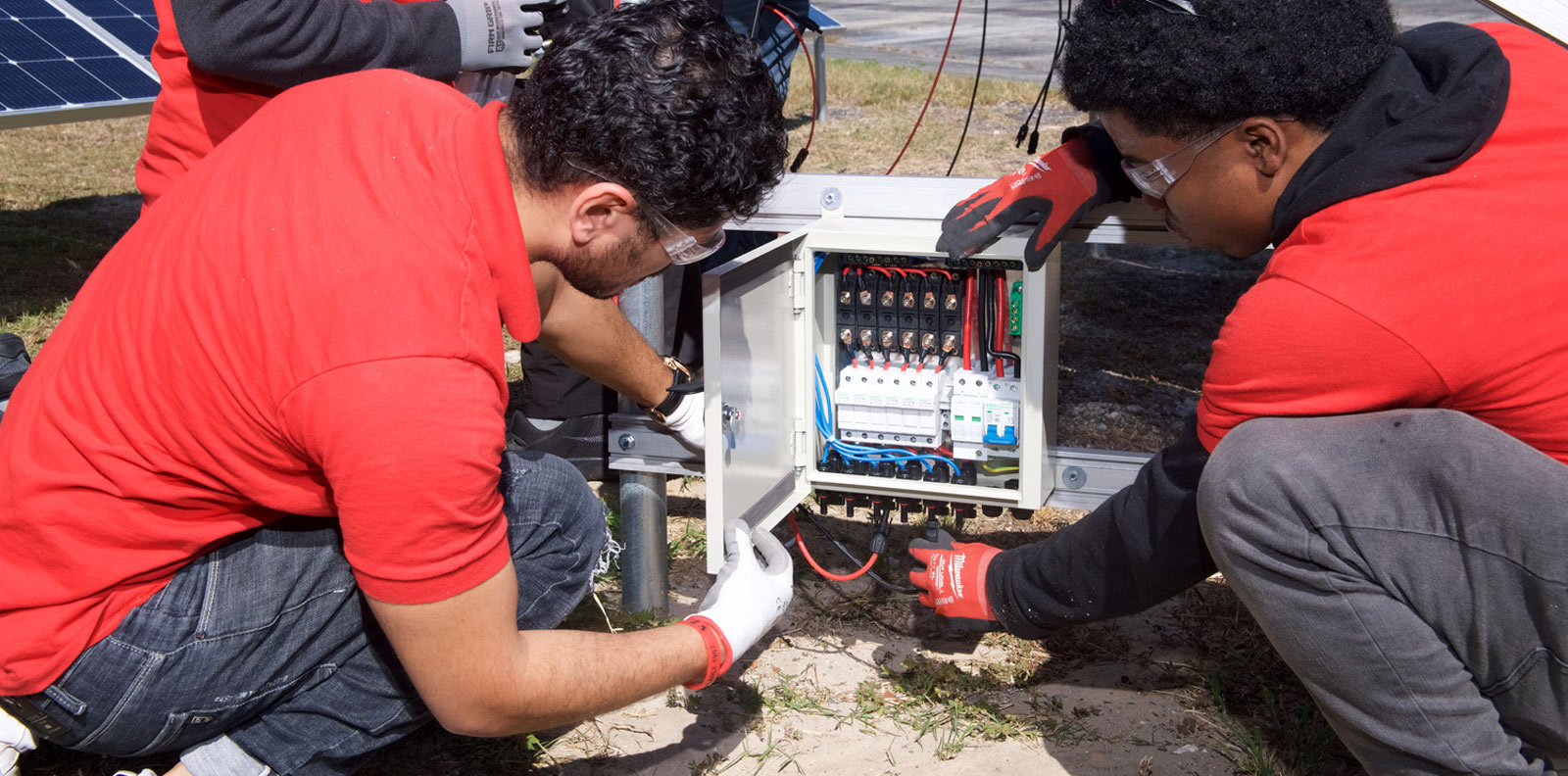
TWS is a Great Training Option for Everyone
Learn more about how we can prepare you to advance your career.
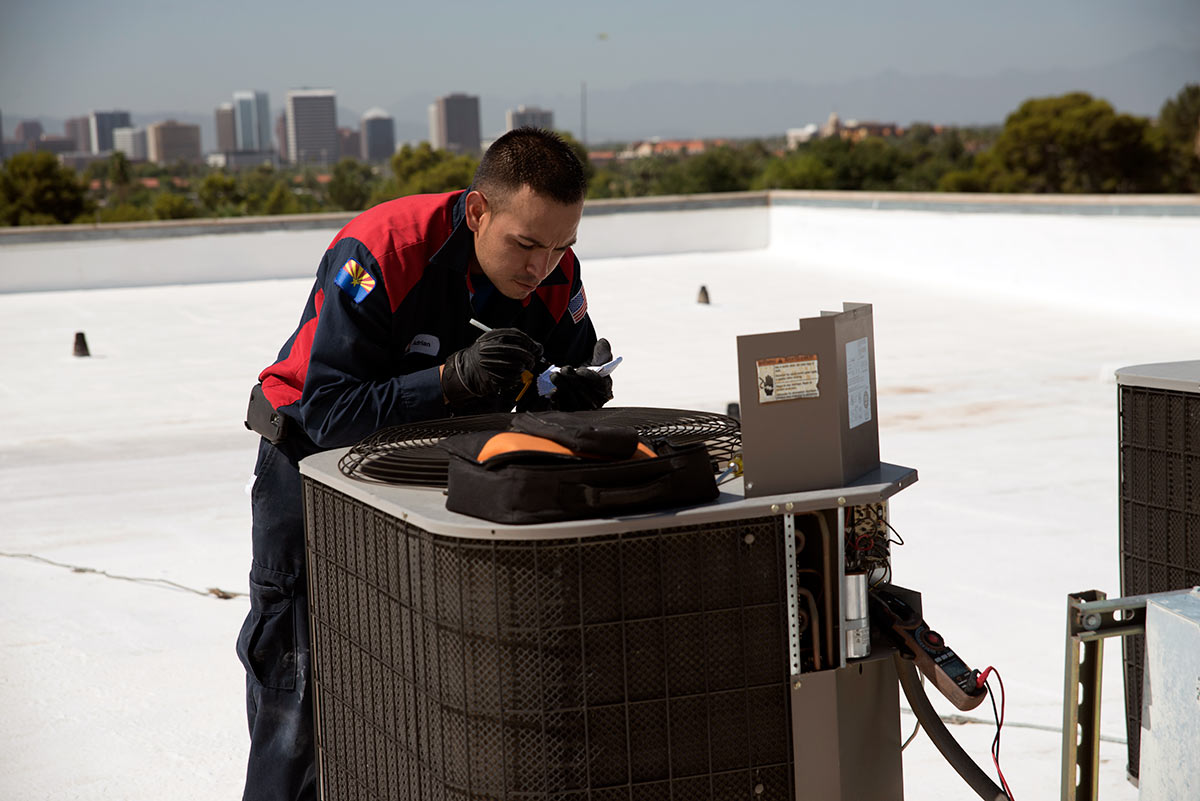
What might you expect from a career as an HVAC technician? Below are just some of the benefits the occupation could offer:
- Getting outdoors and staying active on the job.
- Daily variety in job duties and work environments.
- Hands-on problem-solving.
- Healthy job growth and pay.1*
Should you become an HVAC technician? Learning more about this skilled trade may help you decide. Find information in the career overview below.

Have You Considered a Career in the Skilled Trades?
Fill out the form to recieve a no obligation info packet.
Why Incomes for HVAC Technicians Vary
What sets an HVAC technician in the 10th percentile of earners apart from one in the 90th? A host of factors.
Higher earners may have more work experience and in-demand skills. They may also possess vocational training certificates, EPA and industry HVAC certifications, and state or local licenses. Credentials like these can demonstrate proficiency in specific skills and knowledge to employers.9
An HVAC technician’s job duties can also influence how much he or she earns. As mentioned earlier, entry level-technicians tend to handle simpler tasks than experienced techs do. Even within the same career level, technicians with better performance records may earn more than those with less impressive ones.9
Geographic location and industry are two other factors that can impact how much an HVAC technician makes.9 Check out the BLS data below to see the highest paying states and industries for techs in 2025.
Is There a Demand for HVAC Technicians?
Yes, demand for HVAC technicians in terms of job growth is set to be much faster than average. The BLS projects 4% job growth through 2029.3**
Depending on where an HVAC technician works, job growth may be even faster than the national average for this occupation.
| State | Predicted HVAC Technician Job Growth** |
|---|---|
| Florida | 16.2% through 202810 |
| Arizona | 21.4% through 202811 |
| California | 12.5% through 202812 |
| Colorado | 29.7% through 202813 |
| Texas | 15.9% through 202814 |
Is HVAC Technician a Good Career?
-
- Working outdoors instead of in offices.
- Hands-on work.
- Solving practical problems.
- Handling tools and machinery.
- Minimal paperwork.
- Working independently instead of close to others.
- Following set procedures and routines.
- Dealing with details and data more than ideas.
- Answering to a clear line of authority.
- Investigating problems.
Career Goals
- Becoming a skilled tradesman or woman.
- Entering a growing industry.3**
- Enjoying opportunities for career advancement and higher earnings.2*
- Obtaining certifications and licenses.4
- Being self-employed or starting your own HVAC service company.5
Career Preparation Resources
- Shorter training time than for professions requiring 4 years or more of college (7 months to 2 years).4
- Fewer years of tuition to pay for and possibly lower tuition costs.15
- Flexible training options for working students and parents.
Of course, there may be other factors to take into account when choosing a new career. During this time, conducting research, utilizing HVAC technician career resources and speaking with HVAC school representatives can help you learn more about the occupation and whether or not it’s a good fit.
SECTION 6
What Are the HVAC Technician Training Requirements?
What skills are needed to be an HVAC technician? Is vocational training necessary? Do HVAC technicians need to be licensed?
These are important questions to ask when considering becoming an HVAC technician. Find answers to them below.
HVAC Technician Education Requirements
- High School Diploma or GED
Many post-secondary institutions that provide HVAC training, such as trade schools and community colleges, require students to have a high school diploma or GED. It’s also common for employers to require one or the other.16While in high school, taking classes in math, physics and vocational education can help with preparing to become an HVAC technician, according to the BLS. Learning about basic electricity and plumbing can also be beneficial.4 - HVAC Training
Due to the increasing complexity of the equipment, many employers prefer to hire workers with formal HVAC training from a trade school or community college.4 The Refrigeration Technologies program at Tulsa Welding School (TWS), for example, has the following courses:- Fundamentals of Electricity
- Fundamentals of Refrigeration
- Comfort Systems – Commercial
- Comfort Systems – Residential
- Refrigeration Systems & Practices
- Advanced Trouble-Shooting Techniques
HVAC Certification and Licensing Requirements
HVAC technicians who handle refrigerants are required to have Environmental Protection Agency (EPA) Section 608 Technician Certification. It’s common for HVAC schools to help prepare students for this test.4
Beyond the EPA mandate, HVAC certifications and licenses may be beneficial for certain positions or required in some states.4 Industry organizations that grant general or specialized HVAC certifications include HVAC Excellence and North American Technician Excellence (NATE).17
SECTION 7
Train to Become an HVAC Technician
Want to learn more about becoming an HVAC technician or ready to enroll in an HVAC training program? A representative for Tulsa Welding School can answer any questions you may have, walk you through the admissions process, and help get you started on this exciting career path. Call TWS today at 888-671-5803.
Additional Sources
1 https://www.onetonline.org/link/summary/49-9021.01
2 https://www.bls.gov/oes/current/oes499021.htm
3 https://www.bls.gov/ooh/installation-maintenance-and-repair/heating-air-conditioning-and-refrigeration-mechanics-and-installers.htm
4 https://www.bls.gov/ooh/installation-maintenance-and-repair/heating-air-conditioning-and-refrigeration-mechanics-and-installers.htm#tab-4
5 https://www.bls.gov/ooh/installation-maintenance-and-repair/heating-air-conditioning-and-refrigeration-mechanics-and-installers.htm#tab-3
6 https://www.bls.gov/ooh/installation-maintenance-and-repair/heating-air-conditioning-and-refrigeration-mechanics-and-installers.htm#tab-2
7 Title: Fundamentals of HVAC; Authors: Carter Stanfield and David Skaves; Air-Conditioning, Heating, and Refrigeration Institute; Second Edition; Textbook page 6-7
8 https://www.bls.gov/oes/current/oes_nat.htm#00-0000
9 https://www.bls.gov/careeroutlook/2015/article/wage-differences.htm
10 https://www.projectionscentral.com/Projections/LongTerm (search for “Florida” and select “Heating, Air Conditioning, and Refrigeration Mechanics and Installers)
11 https://www.projectionscentral.com/Projections/LongTerm (search “Arizona” and select “Heating, Air Conditioning, and Refrigeration Mechanics and Installers” to generate job growth projection)
12 https://projectionscentral.org/Projections/LongTerm?AreaName=california&Name=heating&i tems_per_page=10
13 https://www.projectionscentral.com/Projections/LongTerm (search “Colorado” and select “Heating, Air Conditioning, and Refrigeration Mechanics and Installers” to generate job growth projection)
14 https://projectionscentral.org/Projections/LongTerm?AreaName=texas&Name=heating&item s_per_page=10
15 https://www.thesimpledollar.com/investing/college/why-you-should-consider-trade-school-instead-of-college/
16 https://education.seattlepi.com/advantages-ged-1135.html
17 http://www.hvwtech.com/hvac-certification/
This blog has been labeled as archived as it may no longer contain the most up-to-date data. For a list of all current blog posts, please visit our blog homepage at https://www.tws.edu/blog/