TWS is a Great Training Option for Everyone
Learn more about how we can prepare you to advance your career.
Welders use math on the job, and more of it than most people expect. Reading blueprints, calculating material dimensions, working with fractions and decimals, and applying basic geometry and trigonometry to joint angles and pipe fits are practical, daily tasks on a job site, not abstract concepts from a classroom.
That doesn’t mean you need to be a math expert before you start training. Welding programs like the Associate of Occupational Studies in Welding Technology at Tulsa Welding School (TWS) build math instruction into the curriculum alongside hands-on welding technique, so students develop both skills at the same time. Here’s a look at the specific types of math welders use and why they matter in the field.
Fractions and Decimals in Welding
Fractions and decimals allow you to work in either construction or fabrication so you can determine sizes. Being able to convert fractions to decimals means you’ll need to know computational fractions. Fractions and decimals have several applications in welding:
- Reading blueprints
- Working with penetration depths
- Welding seams together
- Measuring project sizes
- Determining the correct amount of materials to use
- Cutting pipe
Geometry in Welding
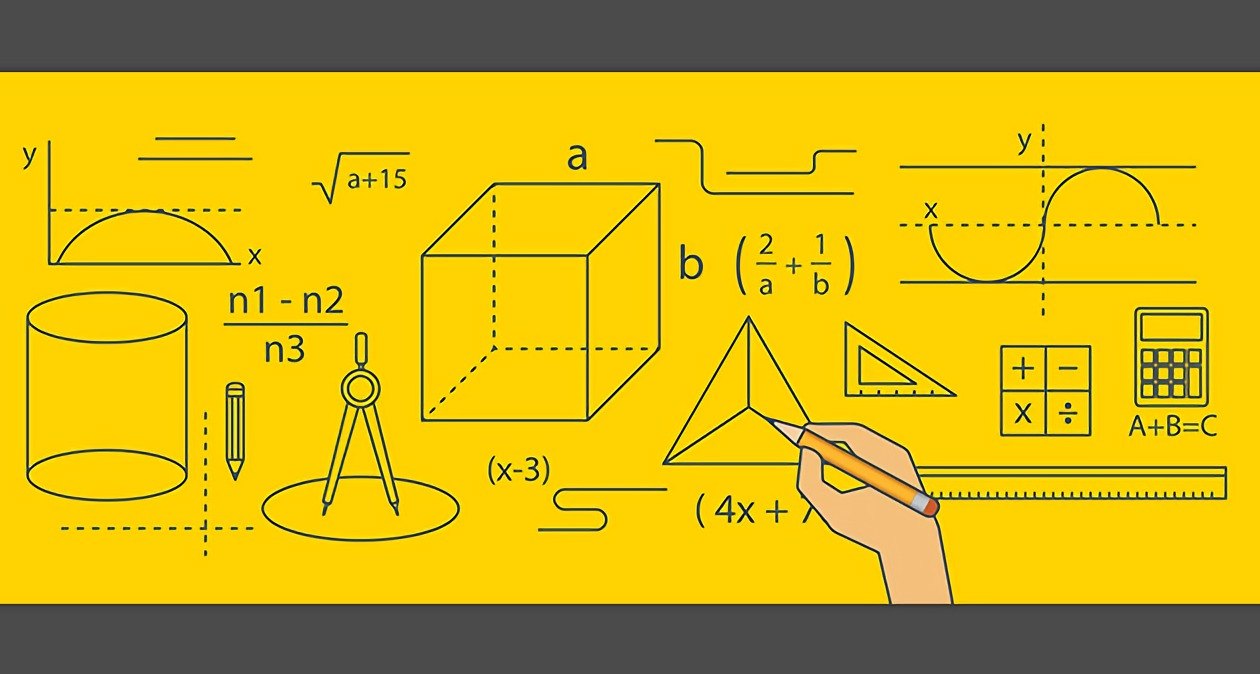
A welder needs to have a strong knowledge of geometry in order to work with angles, radius, volume, diameter and circumference. A part of this work means a welder needs to know how to use drafting tools and a compass. With this knowledge, a welder will be capable of executing the following tasks that are integral to the trade:
Have You Considered a Career in the Skilled Trades?
Fill out the form to recieve a no obligation info packet.
- Forming accurate joints
- Measuring and creating angles
- Finding the correct proportions of a circle when welding circular objects
Formulas in Welding
Knowledge of formulas isn’t restricted to mathematicians or engineers. An experienced welder relies on accurate formulas so he or she can carry out several critical operations:
- Calculating shapes and volume
- Determining the pressure and volume of gases
- Figuring out how temperature changes will affect pressure
- Recreating shapes
Trigonometry in Welding
Don’t let this one scare you away. If you are going to be a successful welder, you need to have a beginning understanding of some of the operations of trig like sine, cosine and tangent. If you have trouble grasping trig, tutors can help you catch up. Trigonometry will help you in several areas of welding:
- Calculating degrees for accurate angles
- Determining the length of each side of a shape being replicated
- Finding the theoretical strength of a weld
The Value of Math in Welding
Good welders use basic and advanced math to be able to carry out several welding operations every day. Knowing whole numbers, fractions, converting to decimals, how to calculate volume and area, using geometry to determine angles and using tangents, sine and cosine all make a welder a critical member of any construction team or company. Some of these math skills can be learned in high school while others can be learned in a professional welding program.
This blog has been labeled as archived as it may no longer contain the most up-to-date data. For a list of all current blog posts, please visit our blog homepage at https://www.tws.edu/blog/