TWS is a Great Training Option for Everyone
Learn more about how we can prepare you to advance your career.
When headlines are dominated by mass layoff announcements climbing to their highest levels since the pandemic, arguments of AI displacing white-collar roles, and forecasts of “uncomfortably slow” job growth in 2026, it’s natural to wonder: What kind of career can actually hold up when things get shaky?
It’s a fair question, especially if you’re choosing a career path for the first time or thinking about starting fresh.
The reality is that not all jobs respond to a downturn the same way. Some depend on trends, budgets or business cycles that shift quickly. Others are tied to things people need no matter what the economy is doing: functioning buildings, safe infrastructure, running water and reliable power.
Skilled trades fall squarely into that second category. And welding, in particular, has a strong track record as one of the more recession-proof careers available. The work it supports, from maintaining industrial equipment to keeping critical infrastructure operational, tends to continue even when hiring slows in other sectors because it can’t be deferred, outsourced or automated away.
Have You Considered a Career in the Skilled Trades?
Fill out the form to recieve a no obligation info packet.
What Makes a Career Recession-Resistant?
No job is completely immune to economic pressure. But, according to U.S. News & World Report, careers with job security tend to share a few common traits:
- They involve essential work that people and businesses rely on regardless of economic conditions.
- They require hands-on expertise that takes real training and can’t be easily replaced by software.
- They can’t be performed remotely from another country or consolidated into a corporate restructuring.
The occupations that consistently score well are ones rooted in tangible, in-person skills rather than tasks a company can cut, automate or offshore during a downturn.
Why Essential Infrastructure Work Doesn’t Pause for a Recession
The United States still has significant infrastructure needs, and they don’t take a break when the economy slows down.
The American Society of Civil Engineers’ 2025 Report Card for America’s Infrastructure gave U.S. infrastructure an overall “C” grade and identified a $3.7 trillion gap between current investment levels and what’s needed to bring the nation’s systems into good working order.
Pipelines corrode. Bridges need structural repairs. Power grids require maintenance. Manufacturing equipment breaks down.

New: Industrial Maintenance
Learn About Our New Advanced Industrial Maintenance Program
Tulsa Welding School is proud to announce our newest program offering available at our Houston & Dallas Metro Campuses – Advanced Industrial Maintenance Technology! Learn the skills you need to take on the industries of manufacturing, distribution, energy production and facility maintenance in as few as 7 months.
These are not optional line items on a budget.
Safety and Compliance Don’t Have an Off Switch
Facilities are legally required to maintain equipment, pass inspections and meet safety codes. A building owner might delay a cosmetic upgrade during a recession, but they can’t skip a boiler inspection, ignore a failing weld on a pressure vessel, let an electrical system fall out of code or leave a commercial refrigeration unit unrepaired. When something critical fails, the repair call goes out immediately.
This is especially true in the industries that rely on skilled trades workers.
According to the U.S. Bureau of Labor Statistics, welders alone held about 457,300 jobs in 2024, with the largest share working in manufacturing, followed by specialty trade contractors and repair and maintenance services. Add in electricians, HVAC/R technicians and maintenance professionals, and the footprint of essential trades work is enormous.
The same pattern holds across infrastructure careers more broadly. The BLS projects roughly 649,300 annual openings in construction and extraction occupations through 2034, plus another 600,000 annual openings in installation, maintenance and repair occupations.
That level of demand reflects ongoing maintenance, code compliance and the sheer volume of work that needs attention regardless of economic conditions.
A Workforce Shortage That Works in Your Favor
Even when hiring slows in other sectors, the skilled trades face a different problem: there aren’t enough trained workers to go around.
The Numbers Tell a Clear Story
The American Welding Society estimates the U.S. welding workforce at roughly 771,000 professionals, with over 157,000 nearing retirement and approximately 320,500 new welding professionals needed by 2029. Meanwhile, the BLS projects the following annual openings through 2034:
- Electricians: approximately 81,000 openings per year (9% growth, much faster than average)
- HVAC/R technicians: approximately 40,100 openings per year (8% growth, much faster than average)
- Welders: approximately 45,600 openings per year
- Plumbers, pipefitters and steamfitters: approximately 44,000 openings per year
That gap between retiring workers and incoming talent is why employers in the trades often can’t afford to stop hiring, even during a downturn. When a significant portion of your workforce is approaching retirement age, you don’t have the luxury of freezing recruitment.
This supply-and-demand imbalance puts people entering the trades in a strong position. Instead of competing with hundreds of applicants for a single opening, you’re stepping into a field where your skills are scarce, and employers are actively looking for qualified candidates.
It’s a shift that younger workers are starting to recognize. According to a ResumeTemplates survey covered by The HR Digest, six in 10 Gen Z workers expressed interest in pursuing skilled trades, with nearly half citing better long-term security as a primary reason.
How Each Trade Holds Up During a Downturn
Not all trades serve just one industry, and that diversity is part of what makes them stable jobs in a recession. Here’s how the core skilled trades that TWS offers training in tend to weather economic slowdowns.
Welding
Welders work across a wide range of industries, which is a big part of what makes the occupation resilient. If one sector slows, another is often ramping up.
An oil and gas downturn, for example, doesn’t erase the need for structural welders on commercial construction projects or pipe welders maintaining water treatment facilities. Industries that rely on welding include:
- Construction and structural fabrication
- Manufacturing and industrial production
- Oil, gas and energy infrastructure
- Shipbuilding and marine fabrication
- Aerospace and defense
- Water and wastewater systems
The variety of welding specializations adds another layer of resilience. A welder trained in multiple processes isn’t locked into one narrow lane. Common specializations include structural welding, pipe welding, TIG, MIG, flux-core and welding inspection.
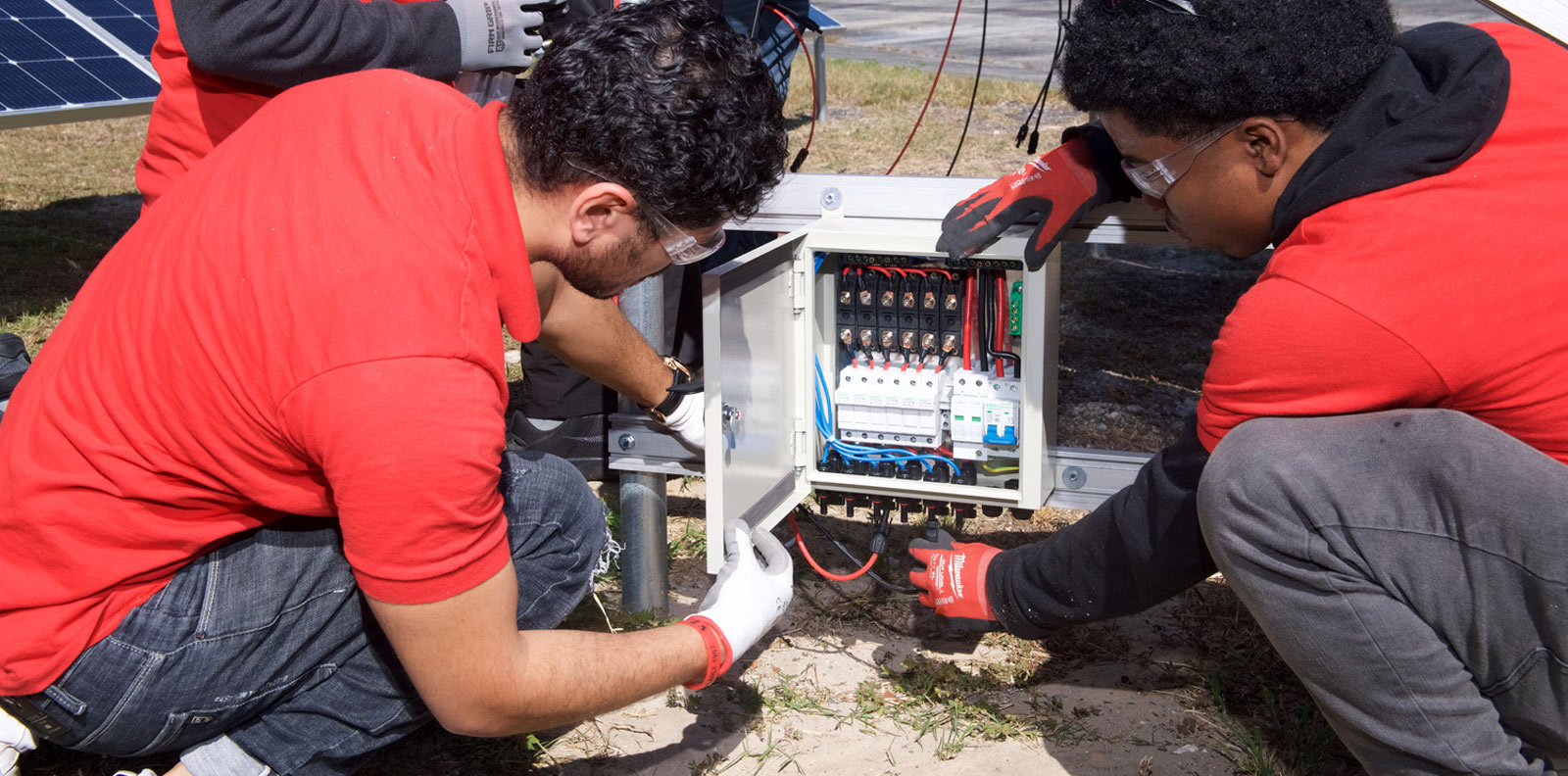
And emerging sectors are layering new demand on top of traditional industrial needs. Renewable energy infrastructure, from wind turbines to solar panel mounting systems to electric vehicle charging stations, relies on welding at every stage of fabrication and installation.
HVAC/Refrigeration
Heating and cooling systems don’t stop breaking down during a recession. When a furnace fails in January or an air conditioning unit goes out in July, that’s an emergency call regardless of what the stock market is doing. Hospitals, grocery stores, data centers and schools all depend on climate control and refrigeration systems that require regular maintenance and repair.
The BLS projects 8% job growth for HVAC/R technicians through 2034, which is much faster than the average for all occupations. Rising demand for energy-efficient systems and stricter building codes are driving additional need for trained technicians.
Electrical
Every building, home and piece of infrastructure runs on electricity. Electricians install, maintain and repair the systems that keep power flowing, and that work continues in any economic climate. Code violations, outages, equipment failures and new safety requirements don’t wait for a recovery.
The BLS projects 9% growth for electricians through 2034, with a median annual wage of $62,350 as of May 2024. The expansion of data centers, EV charging networks and renewable energy systems is adding long-term demand on top of existing maintenance and construction needs.
Industrial Maintenance
Factories, distribution centers and production lines depend on maintenance technicians to keep equipment running. When a conveyor system jams or a hydraulic press fails, production stops and money is lost. Companies may delay expansion projects during a slowdown, but they rarely cut the maintenance staff keeping existing operations functional.
The BLS projects faster-than-average growth across installation, maintenance and repair occupations through 2034, with a median annual wage of $58,230 as of May 2024 for the category overall.
Skills That Travel With You
One of the biggest advantages of a trades career is that you own your skills. They don’t belong to a company, and they don’t expire when a particular employer restructures.
Geographic Flexibility and Growth Potential
Every region of the country needs welders, electricians, HVAC technicians and maintenance professionals.
The American Welding Society reports that the South, Southeast and Great Lakes regions account for roughly 60% of the welding workforce alone, with strong concentrations across the Pacific Coast and Central U.S. as well. The same geographic spread applies to HVAC, electrical and maintenance work.
If the job market shifts in one area, a trained trades professional has options elsewhere. Experienced trades professionals can move into roles such as:
- Inspection and quality assurance
- Shop or site supervision
- Project management
- Estimating and sales engineering
- Business ownership
A skilled trades career doesn’t box you in; it gives you a foundation you can build on in multiple directions.
That kind of versatility is exactly what Tulsa Welding School’s programs are designed to support. TWS trains students across multiple trades and processes so that graduates enter the workforce with range, not just a single narrow specialty.
Getting Started With Less Debt Than a Four-Year Degree
One of the reasons skilled trades are increasingly seen as recession proof careers is the financial math. Traditional four-year degrees often come with significant student loan debt and no guarantee that the resulting job will be stable during a downturn.
A Faster, More Affordable On-Ramp
Trade training programs offer a shorter path to employment. At Tulsa Welding School, students can choose from programs designed to match different career goals:
| Program | Focus | Approximate Timeline |
|---|---|---|
| Professional Welder | Structural, flux-core, and pipe welding | As few as 7 months |
| Welding Specialist with Pipefitting | Welding combined with pipefitting skills | As few as 9.5 months |
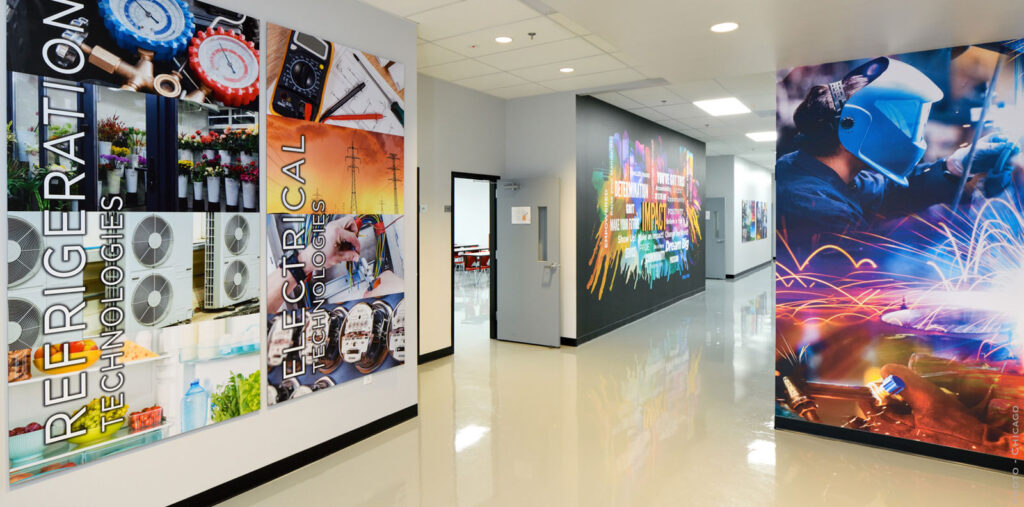
| Refrigeration Technologies | HVAC/R system installation, service, and diagnostics | 7 months |
| Electrical Applications | Residential, commercial, and industrial electrical work | 7 months |
| Advanced Industrial Maintenance | Mechanical systems, electrical controls, and automated equipment | 7 months |
That shorter timeline translates to less debt and an earlier start on earning. BLS median annual wages as of May 2024 reflect the earning potential across these fields:
- Electricians: $62,350
- HVAC/R technicians: reported above the $49,500 median for all occupations
- Welders, cutters, solderers and brazers: $51,000
- Installation, maintenance and repair occupations overall: $58,230
Starting your career sooner and with less financial burden is itself a form of job security. When you’re not weighed down by years of loan payments, you have more flexibility to weather any economic cycle.
A Career Built on Skills the Economy Keeps Demanding
Economic cycles are inevitable. Slowdowns happen. But the need for people who can weld structural steel, maintain HVAC systems, wire buildings, keep production lines running and build the infrastructure that keeps communities functioning doesn’t go away when hiring slows in other sectors.
Choosing a skilled trades career isn’t a backup plan. It’s a decision to build on skills that stay in demand, transfer across industries and give you control over your professional future.
If you’re ready to take the next step, request more information to find the right program for your goals.