TWS is a Great Training Option for Everyone
Learn more about how we can prepare you to advance your career.
If you’ve been stuck behind a register, zoned out in a cubicle or grinding through shifts that don’t lead anywhere, you’re not the only one.
For a growing number of adults in the DFW area, the answer is the skilled trades. And if a Dallas career change has been on your mind, this is one of the best metros in the country to make it happen.
Why Dallas Is Built for Trade Careers
Dallas-Fort Worth added roughly 178,000 new residents between July 2023 and July 2024, making it one of the fastest growing metro areas in the country. That kind of population surge drives demand for new housing, commercial construction, infrastructure upgrades and all the systems that keep buildings and facilities running.
Those 178,000 people need homes wired, air conditioning units installed and roads maintained.
Have You Considered a Career in the Skilled Trades?
Fill out the form to recieve a no obligation info packet.
The Dallas Federal Reserve reports that DFW employment growth reached 2.7% in early 2025, with broad-based gains across construction, professional services and healthcare. DFW also ranks second nationally for new residential construction, and the Dallas Fed forecasts continued job growth into 2026, backed by professional services, healthcare and construction sectors.
That translates directly into Dallas trades careers.
Welders, electricians, HVAC technicians and maintenance specialists are the workforce behind all of that growth, and the region doesn’t have enough of them.
According to the Texas Construction Association, electricians and low-voltage technicians are among the most in-demand workers in the state, and addressing the skilled labor gap is a top priority for sustaining Texas’ construction boom.
How Long Does Training Actually Take?
One of the biggest differences between trade school and a traditional four-year degree is time. Most skilled trade programs can be completed in under a year, and some finish in a matter of just a few months.

New: Industrial Maintenance
Learn About Our New Advanced Industrial Maintenance Program
Tulsa Welding School is proud to announce our newest program offering available at our Houston & Dallas Metro Campuses – Advanced Industrial Maintenance Technology! Learn the skills you need to take on the industries of manufacturing, distribution, energy production and facility maintenance in as few as 7 months.
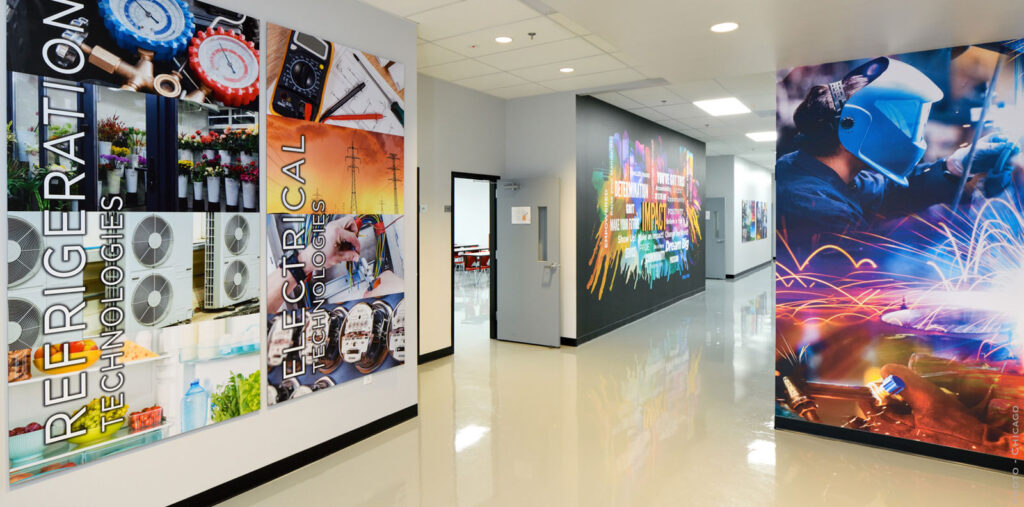
Here’s what typical timelines look like at Tulsa Welding School’s Dallas metro campus:
- Professional Welding: approximately 7 months
- HVAC/Refrigeration Technologies: approximately 7 months
- Electrical Technologies: approximately 7 months
- Advanced Industrial Maintenance: approximately 7 months
Compare that to a bachelor’s degree, which typically takes four years of full-time enrollment. In the time it takes to finish a degree, a trade school graduate could already be working, earning and stacking experience.
What Does It Cost, and How Do You Pay for It?
Trade school tuition varies by program and institution, but the investment is substantially lower than a four-year university. Financial aid options, including grants, scholarships and student loans, are available to those who qualify. Military pricing may also be offered at certain schools.
The better way to think about cost is in terms of what you get back. A four-year degree can take years to pay off, while a trade program gets you into the workforce faster with less debt. You’re earning sooner, and in fields where overtime and specialization can bump your pay over time.
Which Trade Fits Your Life?
Not every trade looks the same day to day. Some are indoors. Some are outdoors in all conditions. Some involve travel; others keep you local. The programs available at trade schools in the Dallas area span a range of work environments and career paths.
| Trade | What You’d Do | Work Environment | Median Salary (National) | Salary Range (10th–90th %ile) | Job Growth, 2024–2034 (BLS) |
|---|---|---|---|---|---|
| Welding | Join, cut, and fabricate metal used in construction, manufacturing, aerospace, and pipeline work. | Indoor and outdoor environments; pipeline and industrial work may involve travel. | $51,000 per year | $38,130–$75,850 | 2% growth; about 45,600 openings per year |
| HVAC / Refrigeration | Install, maintain, and repair heating, cooling, and climate control systems. | Residential job sites and commercial buildings. | $59,810 per year | $39,130–$91,020 | 8% growth; faster than average |
| Electrical | Wire buildings, install lighting and electrical systems, and work with motors, PLCs, solar equipment, and security systems. | Residential and commercial job sites. | $62,350 per year | $39,430–$106,030 | 9% growth; faster than average |
| Industrial Maintenance | Troubleshoot, repair, and maintain machinery in factories, plants, and warehouses. | Indoor industrial facilities. | $63,510 per year | $40,490–$97,510 | 13% growth; faster than average |
Source: U.S. Bureau of Labor Statistics, Occupational Employment and Wage Statistics (OEWS), May 2024. Figures reflect national median wages; the salary range shows the 10th and 90th wage percentiles. For Dallas-area figures, see the BLS OEWS data tool. Job growth projections from the BLS Occupational Outlook Handbook, 2024–34 decade.
Think about what kind of day you want. If you like being on your feet and solving problems in different locations, HVAC or electrical work might suit you. If you’re drawn to precision and fabrication, welding could be the right fit. If you want to work inside a facility troubleshooting complex systems, industrial maintenance is worth considering.
What Happens After You Graduate?
Completing a trade program is the starting point. From there, career progression depends on the certifications you pursue, the experience you gain and the industry you land in.
Certifications Worth Knowing About
Each trade has its own credential path, and many training programs build certification prep into the curriculum so you’re ready before you graduate.
Here are some of the most common:
- Welding: The American Welding Society (AWS) offers certifications that are widely recognized across construction, manufacturing and aerospace.
- Electrical: Electricians in Texas work toward state licensure through the Texas Department of Licensing and Regulation (TDLR).
- HVAC/Refrigeration: The EPA requires Section 608 certification for handling refrigerants. Many technicians also pursue credentials through North American Technician Excellence (NATE).
- Industrial Maintenance: Certifications in PLC programming, predictive maintenance or specific equipment platforms can increase your earning potential and open doors to specialized roles.
Career Services and Job Placement
Trade schools with strong career services departments help graduates with resume building, interview preparation and connecting with local and national employers. Tulsa Welding School, for example, reports graduates working across all 50 states, according to ACCSC Annual Report data for the reporting period from July 1, 2018, to July 1, 2023. Accreditation from organizations like the Accrediting Commission of Career Schools and Colleges (ACCSC) also signals to employers that a program meets industry standards.
Room to Grow
These careers don’t cap out at entry level. Welders can move into inspection, supervision or pursue advanced welding training. Electricians can advance to master electrician licensure or specialize in areas like solar installation or industrial controls. HVAC technicians can move into commercial refrigeration, building automation or business ownership. Industrial maintenance technicians can specialize in automation, PLC programming or shift into reliability engineering roles.
Taking the First Step
A Dallas career change doesn’t have to start with a dramatic leap. It can start with a phone call to an admissions team, a campus tour or an open house visit.
A Few Things You Can Do This Week
- Research programs: Look at what’s offered at local trade schools and match the training timeline to your schedule.
- Ask about financial aid: Find out what grants, scholarships or military benefits you qualify for. Tools like scholarship finders can help surface options you might not know about.
- Pick a start date: Most trade programs offer multiple start dates throughout the year, so you don’t have to wait for a fall semester.
If you don’t have a high school diploma or GED, some schools offer pathways to help you qualify before enrollment. That shouldn’t be a barrier.
Dallas Is Ready. The Question Is Whether You Are.
DFW added 178,000 residents last year, according to Census estimates. The construction pipeline is one of the biggest in the country. Dallas shows no signs of slowing down when it comes to job growth, and the sectors driving that demand are the same ones hungry for skilled tradespeople. The workforce gap isn’t closing on its own.
Trade school programs in Dallas can get you trained in as few as seven months. The industries hiring right now in DFW are the same ones that will need skilled workers for years to come.
If you’re ready to start the conversation, request more information from Tulsa Welding School’s Dallas campus or schedule a tour to see the training firsthand.