TWS is a Great Training Option for Everyone
Learn more about how we can prepare you to advance your career.
The Atlanta metro area reportedly added over 64,000 new residents between April 2024 and April 2025, bringing the 11-county region to roughly 5.3 million people, according to the Atlanta Regional Commission. That’s a lot of people who need homes, offices, roads and working AC to counter the brutal Atlanta summer heat. And the pace isn’t slowing down:
- ARC projections put the region on track to reach an estimated 7.9 million people by 2050.
- Fulton County gained 18,800 residents in a single year and Gwinnett County added 15,200.
- Outer suburbs like Forsyth and Cherokee counties each grew at 2.4% annually.
These population shifts translate to steady, long-term demand for trades jobs in Atlanta, not just right now, but for the decades to come.
More People, More Projects, More Trades Work
When a city grows this fast, the work doesn’t show up in just one place. It hits housing, commercial development, infrastructure and maintenance all at once.
New Housing Across the Metro
That residential growth is already showing up in permits. Across the 11-county region, 29,482 residential building permits were issued in a recent year. Every single one of those projects needs welders, HVAC techs, electricians and other tradespeople to go from blueprint to move-in day.
Have You Considered a Career in the Skilled Trades?
Fill out the form to recieve a no obligation info packet.
Commercial and Mixed-Use Development
Atlanta’s skyline tells the same story. Dodge Data & Analytics forecasts that metro Atlanta construction starts could reach $24.3 billion in 2026, a 5% increase from the prior year. Healthcare, higher education and data center construction are driving much of that activity, according to Turner Construction’s Atlanta preconstruction team.
At the same time, major mixed-use projects are reshaping entire neighborhoods. Centennial Yards is transforming dozens of acres in the heart of downtown. High-rises are going up across Midtown and Buckhead, including the 60-story 1072 West Peachtree, which will be the tallest tower built in the city in over three decades.
Infrastructure and Public Works
The Atlanta BeltLine is one of the biggest urban redevelopment projects in the country, with trail segments, parks and transit infrastructure under construction across the city. Timelines stretch through 2028 and beyond. MARTA’s first new transit line in over two decades, the Rapid Summerhill bus-rapid transit route, launched in 2025. And the city is fast-tracking road and venue upgrades ahead of the FIFA World Cup 2026, when Atlanta serves as a host city.
All of that means construction careers in Atlanta spanning welding, electrical, HVAC installation and heavy equipment operation.
Ongoing Maintenance and Repair
Population growth doesn’t just create one wave of construction jobs and then stop. Every new home and commercial building generates long-term demand for HVAC maintenance, electrical repair and welding work. If you’ve ever lived through an Atlanta summer, you know HVAC systems run nonstop, which means HVAC jobs in Atlanta aren’t tied to any single project timeline. They’re year-round.

New: Industrial Maintenance
Learn About Our New Advanced Industrial Maintenance Program
Tulsa Welding School is proud to announce our newest program offering available at our Houston & Dallas Metro Campuses – Advanced Industrial Maintenance Technology! Learn the skills you need to take on the industries of manufacturing, distribution, energy production and facility maintenance in as few as 7 months.
A National Worker Shortage Meets a Growing City
Here’s the part that makes this relevant if you’re thinking about what to do next. Atlanta’s growth is happening while the country is running out of construction workers.
According to the Associated Builders and Contractors, the U.S. construction industry needed to attract approximately 439,000 new workers in 2025 to meet demand. In 2026, that number is expected to rise to around 499,000. As of mid-2025, roughly 306,000 construction positions remained unfilled across the country. And nearly one-fifth of the current construction workforce is over 55, so retirements are only going to widen the gap.
Atlanta Is Feeling It
A regional labor study from ABLEMKR specifically identifies Atlanta as one of several metro areas facing overlapping project pipelines and ongoing shortages in specialized trades. Electricians, welders and mechanical/HVAC technicians are in particularly high demand, and the report notes that project timelines are increasingly being dictated by worker availability rather than material delays.
Long-Term Growth Projections
The U.S. Bureau of Labor Statistics projects that employment in the skilled trades will grow by 5.3% on average from 2024 to 2034, compared with 3.1% overall job growth across all occupations. Some trades are growing even faster: electrician employment is projected to surge 9.5%, and HVAC technician employment is expected to rise 8.1% over that same period.
That’s a 10-year window of above-average job growth in fields that already can’t find enough trained workers. If you’re looking for job security, it’s hard to beat that.
What Do These Jobs Pay in Atlanta?
Here’s what skilled trades careers actually pay, according to the U.S. Bureau of Labor Statistics (BLS):
| Trade | Median Annual Salary | Low (10th Percentile) | High (90th Percentile) | Source |
|---|---|---|---|---|
| Welder | $51,000 | $38,130 | $75,850 | BLS OEWS, May 2024 |
| HVAC Technician | $59,810 | $39,130 | $91,020 | BLS OEWS, May 2024 |
| Electrician | $62,350 | $39,430 | $106,030 | BLS OEWS, May 2024 |
Source: U.S. Bureau of Labor Statistics, Occupational Employment and Wage Statistics, May 2024.
All figures from the U.S. Bureau of Labor Statistics, Occupational Employment and Wage Statistics (OEWS), May 2024 release. Low and high figures represent the 10th and 90th wage percentiles nationally. For Atlanta-specific figures, visit the BLS OEWS data tool.
Those numbers climb with experience and specialization. BLS data shows that the top 10 percent of HVAC technicians nationally earn above $91,020 per year, and the top 10 percent of electricians earn above $106,030. Wages across the electrical trades have been rising faster than many other sectors, with employment projected to grow 9 percent through 2034; well above the average for all occupations.
Where the Work Is: Atlanta Projects Hiring Now
Salary numbers are great, but seeing where the jobs actually are makes it real.
The Atlanta BeltLine
The aforementioned BeltLine project is one of the largest urban redevelopment programs in the country. Trail segments, parks, connector paths and transit infrastructure are actively under construction across the city, with completion timelines running through 2028 and beyond. The work calls for welders, heavy equipment operators, electricians and construction laborers on an ongoing basis.
Data Centers
Mission-critical facility construction is booming across metro Atlanta. Turner Construction reports that demand for data center projects has filled the gap left by softening commercial office construction, with multiple projects underway and more in the pipeline. Electricians and mechanical trades workers are in especially high demand for this type of work.
FIFA World Cup 2026
Atlanta is one of the host cities for the 2026 FIFA World Cup, and infrastructure improvements are being accelerated ahead of the tournament. Road work, venue upgrades and public transit enhancements all require skilled trades labor.
Residential and High-Rise Construction
Beyond the headline projects, the metro area’s population growth keeps fueling steady residential construction. Nearly 30,000 building permits were issued in a recent year, and new apartment and condo developments keep going up across Midtown, Buckhead, Decatur and the outer suburbs.
Faster Training, Faster Start
Four years of college isn’t the only path to a solid career, and it’s definitely not the fastest one. Trade school programs can get you trained and earning in months, not years.
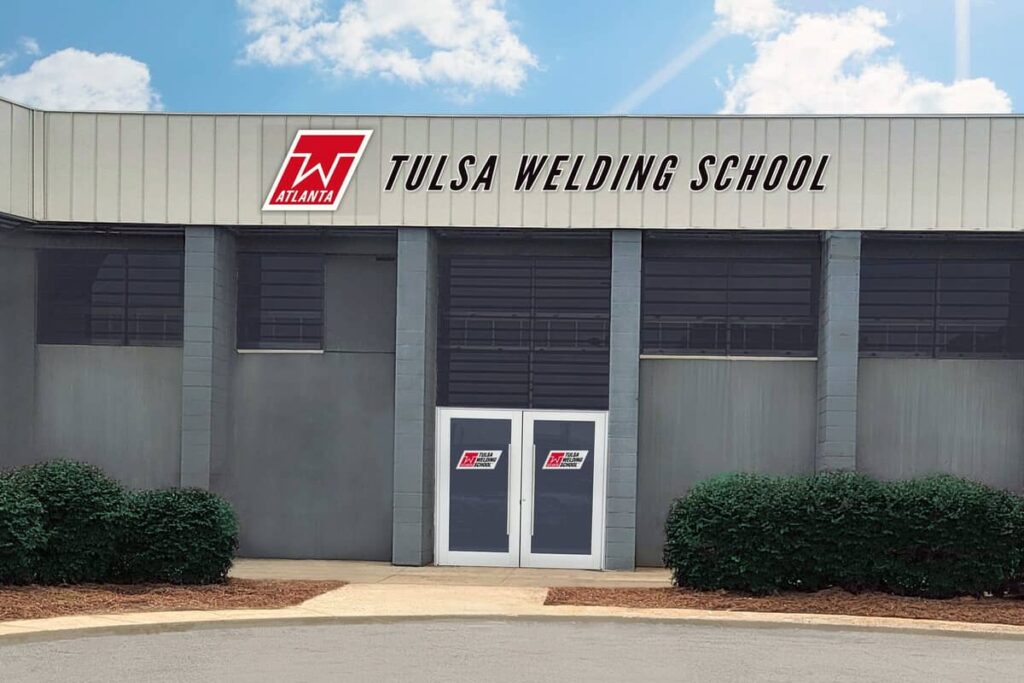
Tulsa Welding School’s Atlanta Metro campus in Decatur, Georgia recently opened and offers three programs that can each be completed in as few as seven months:
- Welding covering structural, fluxcore and pipe welding
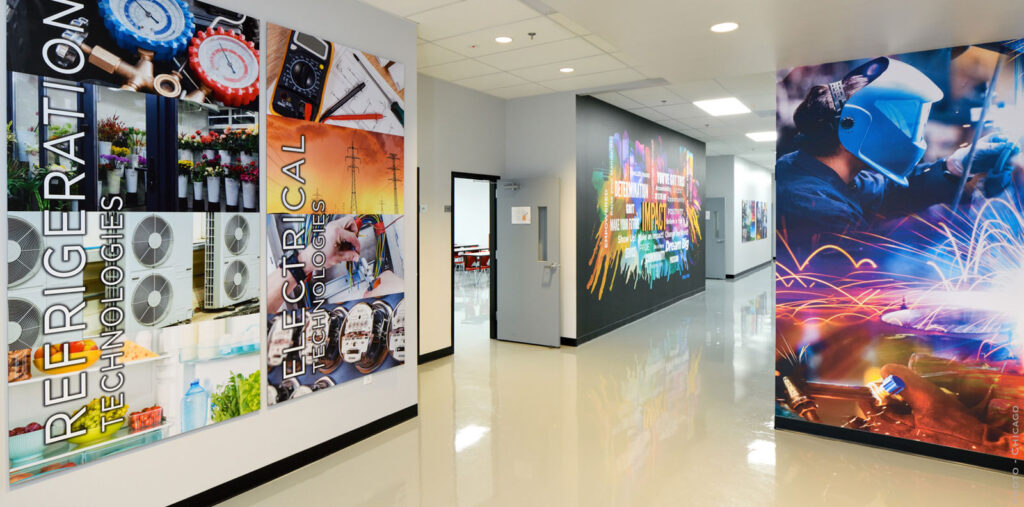
- HVAC/Refrigeration covering heating, ventilation, air conditioning and refrigeration technologies
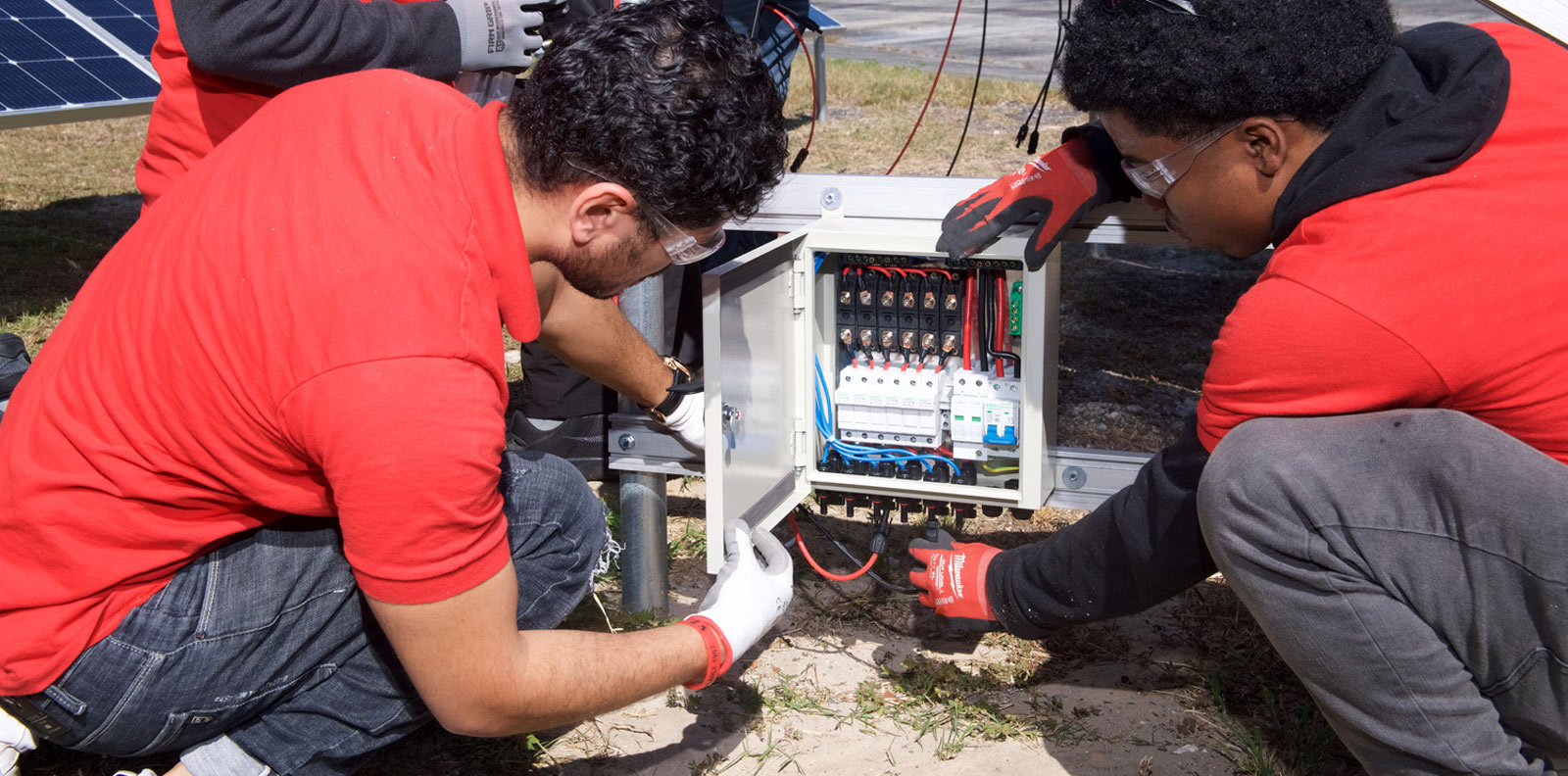
- Electrical covering residential, commercial and industrial electrical systems
The campus is accessible via public transit and was built specifically to serve metro Atlanta.
TWS combines classroom instruction with hands-on training designed to get students job-ready. After graduation, the school’s Career Services team helps with resume writing, interview prep and job leads to connect graduates with employers.
Atlanta Keeps Growing. The Opportunity Grows With It.
Metro Atlanta is projected to add nearly 2 million more residents by 2050. Every new home, office, data center, school and stretch of road needs trained tradespeople to build and maintain it. The worker shortage isn’t seasonal. It’s structural. And salaries reflect that.
If you’re figuring out your next move after high school or thinking about switching careers, the situation is pretty clear: a growing city plus a shrinking labor pool means real, long-term opportunity in the skilled trades.
Tulsa Welding School’s Atlanta Metro campus is now enrolling for welding, HVAC/R and electrical programs. Get more info or take a virtual tour to see how training can get you started in as few as seven months.