TWS is a Great Training Option for Everyone
Learn more about how we can prepare you to advance your career.
Picture a neighborhood the morning after a Category Four hurricane. Roofs are peeled back, streets are flooded, and power lines are down. But there is another layer of damage most people overlook: the HVAC systems.
Condensers torn from rooftop mounts. Ductwork soaked through by wind-driven rain. Compressors filled with sand and saltwater.
Every one of those systems needs a trained technician to assess, repair, or replace it.
That recovery work matters, but so does the work that happens before the storm, when technicians make installation decisions designed to help systems survive in the first place. Hurricane preparation influences every part of real-world HVAC work, and that makes the trade far more dynamic than most people realize.
Have You Considered a Career in the Skilled Trades?
Fill out the form to recieve a no obligation info packet.
If you are considering a career in the skilled trades, hurricane-region HVAC work shows what this job actually looks like: reading flood maps, choosing corrosion-resistant materials, anchoring equipment to withstand 140 mph winds, and coordinating with engineers and electricians on systems built to hold up under extreme conditions.
This is hurricane-resistant infrastructure work, and trained HVAC technicians are the ones who make it happen.
Hurricanes and HVAC: How Systems Take Damage
HVAC systems are uniquely vulnerable during hurricanes because their components sit both inside and outside a building. Split systems, among the most common residential setups, place the condensing unit outdoors where it faces the full force of wind, rain, and debris. Commercial packaged units often sit on rooftops with even greater exposure.
High Winds and Shifting Equipment
Sustained winds above 100 mph can shift or dislodge improperly secured outdoor units. Once a unit moves even slightly, the refrigerant lines, electrical connections, and condensate drains connected to it can crack or disconnect entirely.
Flooding and Submersion
Even brief submersion can short out electrical components and fill condenser coils with silt or sediment. FEMA’s guidance on building utility systems notes that floodwaters can destroy the electrical components of outdoor HVAC equipment even after short periods of exposure.
Saltwater Corrosion
In coastal areas, storm surges carry saltwater far inland. That salt deposits on condenser coils, circuit boards, and electrical terminals, accelerating corrosion that can shorten equipment lifespan by years. For technicians working in hurricane zones, factoring in long-term material degradation is part of the job from day one.
How Hurricane Threats Determine Equipment Placement
In regions like the Gulf Coast and Southeast, HVAC installation starts with a question that has little to do with heating or cooling efficiency: where can this equipment survive a major storm?
Elevation Above Flood Lines
FEMA’s Hurricane and Flood Mitigation Handbook for Public Facilities (P-2181) guidelines recommend that all indoor and outdoor HVAC equipment be elevated at least one foot above the base flood elevation. In practice, that means technicians install outdoor units on raised concrete or masonry platforms, cantilevered brackets, or elevated pedestals rather than placing them directly on the ground. The platform itself needs to extend below expected erosion and scour depths and be anchored to resist both flood and wind forces.
This type of installation requires you to read and interpret FEMA flood maps, understand local elevation requirements, and coordinate with builders and engineers on platform specifications. That goes well beyond connecting refrigerant lines.
Wind-Rated Anchoring
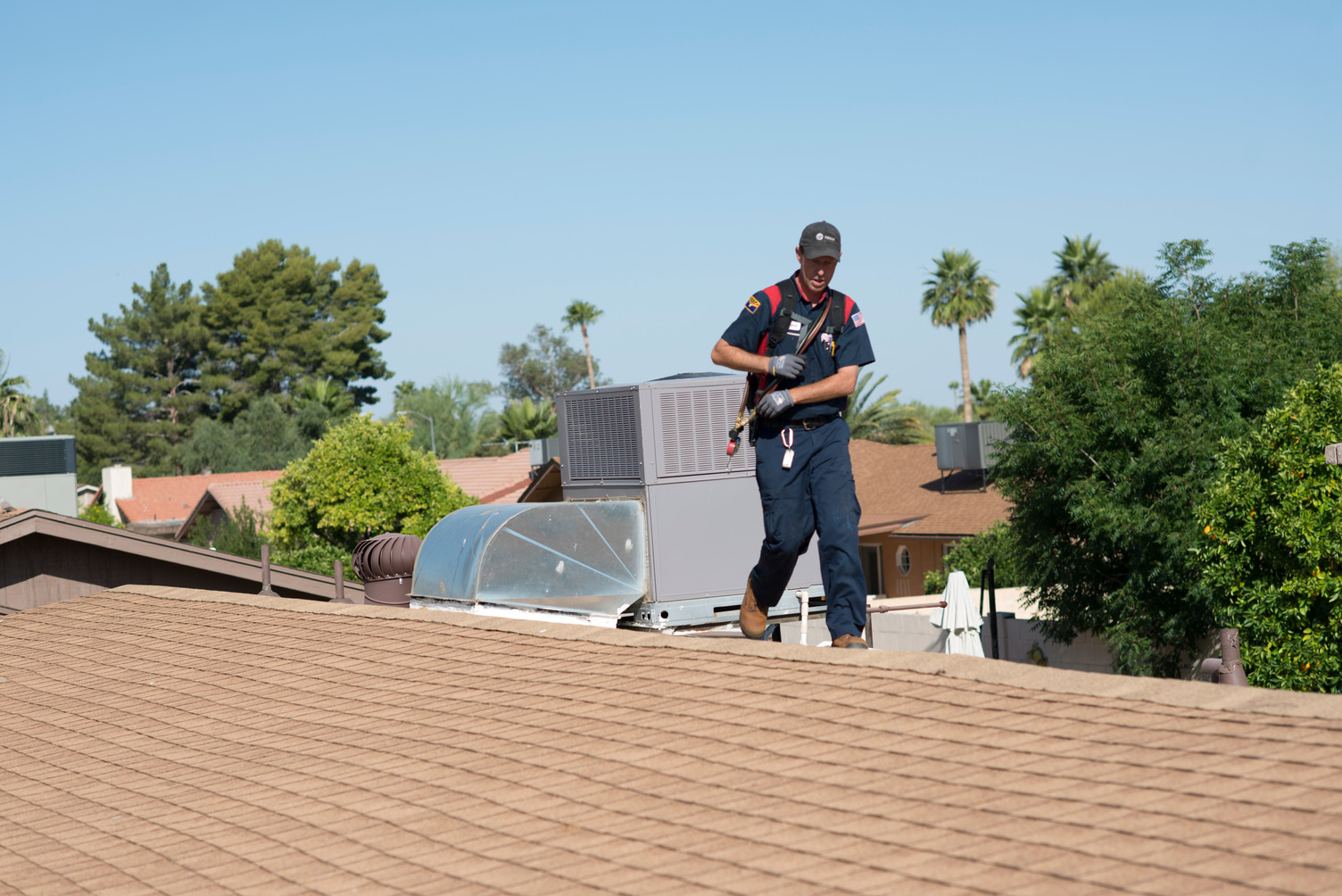
Rooftop HVAC units in hurricane-prone areas need reinforced mounting systems. Hurricane straps, bolted curb adapters, and wind-rated tie-downs prevent units from becoming airborne projectiles. The Florida Building Code requires that ventilation mechanisms and mechanical equipment withstand pressure levels determined by state-specific wind load standards. In designated High Velocity Hurricane Zones like Miami-Dade and Broward Counties, minimum wind velocity standards reach 140 to 146 mph (3-second gust).
Strategic Placement Using Building Geometry
Experienced technicians also consider a building’s shape and orientation when choosing equipment locations. Placing a condenser on the leeward side of a structure (the side shielded from prevailing storm winds) reduces debris impact. Using alcoves, parapet walls, or recessed areas as natural wind barriers turns the building itself into a layer of protection.
System Design for Disaster-Resistant Infrastructure
Hurricane planning extends into how entire HVAC systems are designed, not just where individual pieces are placed. Building disaster resistant infrastructure means thinking about the full system, from ductwork sealing to backup power integration.
Ductwork Protection
Wind-driven rain commonly enters buildings through soffits, roof seams, and attic vents, saturating ductwork and surrounding insulation. Wet insulation changes airflow balance, forces compressors and fans to run longer, and accelerates mechanical wear. Technicians in hurricane zones seal duct joints more aggressively and select moisture-resistant insulation materials to limit this type of damage.
Corrosion-Resistant Materials
Coastal installations call for different material choices than inland work. Copper and aluminum components exposed to salt air corrode faster, so technicians may spec equipment with marine-grade coatings, stainless steel fasteners, or factory-applied corrosion protection. These material decisions influence both upfront cost and long-term durability, and understanding them is part of what sets a trained professional apart.
Backup Power Integration
Hospitals, emergency shelters, data centers, and schools all need HVAC systems that keep running during and after a storm. That means HVAC technicians on these projects coordinate with electrical teams to integrate generator connections, automatic transfer switches, and load management systems. Different states have different building codes governing this work. The Florida Building Code, for example, includes specific provisions for generator enclosures in hurricane zones, requiring that enclosures protect generators from wind and missile impact. Technicians working across state lines need to understand how these requirements vary by region.
Codes and Compliance: A Skill That Sets You Apart
You might not expect code knowledge to be a career advantage, but in hurricane-prone regions, it is one of the most in-demand skills an HVAC technician can bring to a job site. Employers need people who can navigate state, federal, and local requirements without slowing a project down.
HVAC technicians in hurricane-prone regions work within several overlapping regulatory frameworks. Here is a quick comparison of the major ones:
| Framework | Scope | What It Covers for HVAC |
|---|---|---|
| Florida Building Code (FBC) | State-level (Florida) | Equipment mounting, wind load resistance, energy efficiency minimums, and ventilation system resilience. These standards reflect Florida’s exposure to severe storms, including Hurricane Andrew (1992). |
| International Building Code (IBC) | National and regional adoption | Wind speed maps that guide equipment selection and anchoring requirements. Widely used across the Gulf Coast, Southeast, and Mid-Atlantic. |
| EPA Section 608 Certification | Federal | Required for technicians who maintain, service, repair, or dispose of equipment containing refrigerants. This certification is a legal requirement and supports safe handling practices, especially after storm-related system damage. |
Knowing how to work within these frameworks makes you more employable and more effective on every job site.
What This Means for Your Career
The HVAC trade is growing steadily. According to the U.S. Bureau of Labor Statistics:
- Employment for heating, air conditioning, and refrigeration mechanics and installers is projected to grow 8% from 2024 to 2034, faster than the average across all occupations.
- Roughly 40,100 job openings are projected per year over the same period, driven by retirements and transfers as much as new demand.
- The median annual wage was $59,810 as of May 2024, with the top 10% earning over $91,020.
Hurricane-prone states like Florida, Texas, and Louisiana sit at the intersection of high HVAC demand and strict building standards. Technicians who understand hurricane resistance infrastructure, including flood mitigation, wind-rated installations, and code compliance, bring a specialized skill set to a market that consistently needs qualified professionals.
This kind of work also tends to hold up during economic downturns. Heating and cooling systems need maintenance regardless of market conditions, and storm recovery creates surges in demand that can last months or years after a major hurricane.
More Than Turning Wrenches
If your image of HVAC work is someone swapping out a filter or topping off refrigerant, hurricane-region installation should shift that picture. Every project involves reading environmental data, interpreting codes, selecting materials for specific climate conditions, and coordinating with other trades. You are solving real problems that affect whether buildings and the people in them stay safe when conditions get severe.
Start Training for a Career That Builds Hurricane-Resistant Infrastructure
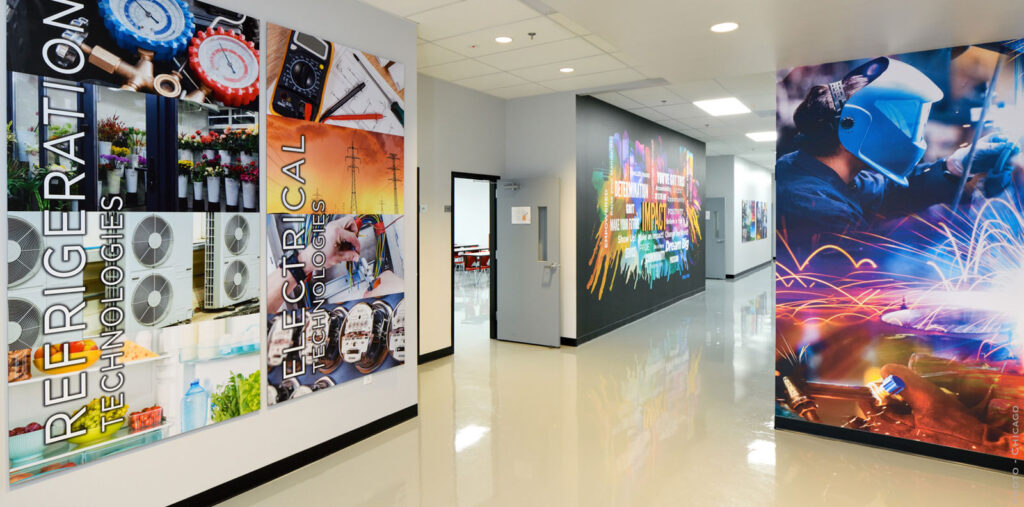
Tulsa Welding School’s Refrigeration Technologies program trains students in the fundamentals of heating, ventilation, air conditioning, and refrigeration systems. The program can be completed in as little as seven months and is available at the following campuses:
- Tulsa, Oklahoma
- Jacksonville, Florida
- Houston, Texas
- Dallas Metro area in Irving, Texas
- Atlanta Metro area in Decatur, Georgia
TWS also offers an Electro-Mechanical Technologies program that provides broader training across electrical and mechanical systems, including HVAC/R, and can be completed in as little as nine months.
Both programs combine classroom instruction with hands-on lab training, preparing graduates to apply for entry-level positions in HVAC/R service and maintenance. Curriculum includes training in:
- Electricity fundamentals
- Residential and commercial HVAC systems
- Refrigeration technologies
- Advanced troubleshooting techniques
If hurricane-ready HVAC installation sounds like the kind of work you want to do, the next step is straightforward.
Contact Tulsa Welding School to learn more about program options, financial aid, and upcoming start dates.