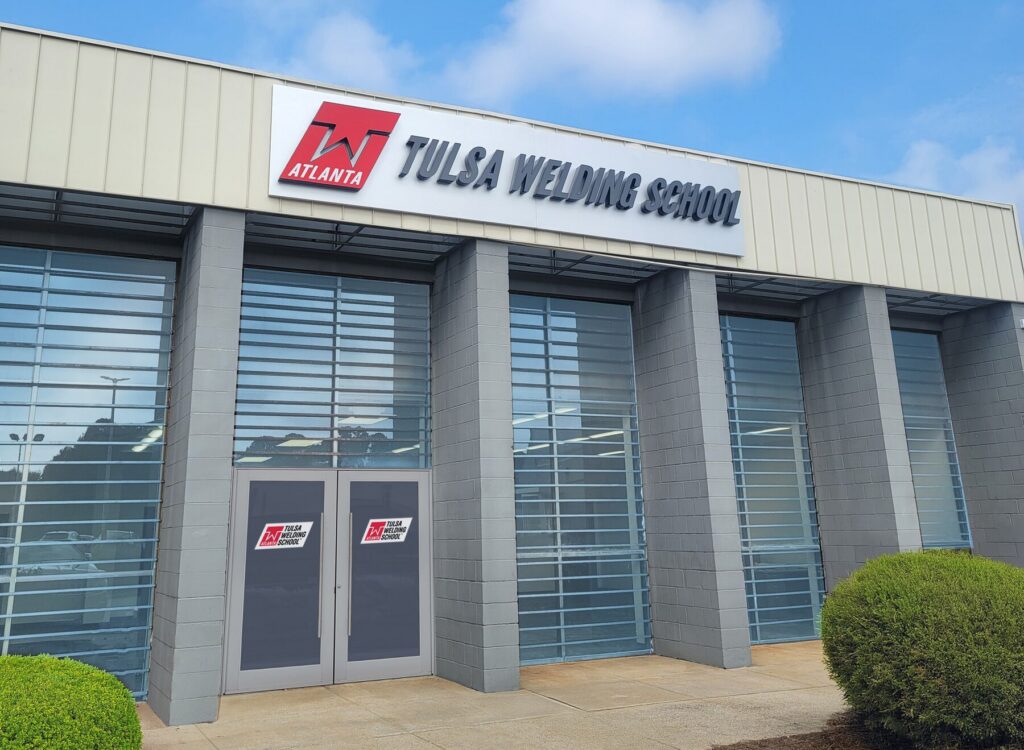
TWS is a Great Training Option for Everyone
Learn more about how we can prepare you to advance your career.
Every search comparing welding school or an apprenticeship turns up a different timeline, because “faster” is quietly answering two separate questions. One measures how quickly you earn a credential, and the other measures how quickly you start getting paid. This guide separates the two so you can pick based on what you actually need right now.
Welding school gets you a training certificate in months and can help prepare you to test for American Welding Society (AWS) certification, though passing that exam is a separate step outside any school’s control. An apprenticeship gets you a paycheck from day one, though the credential itself takes years longer to arrive.
How Long Does Welding School Take?
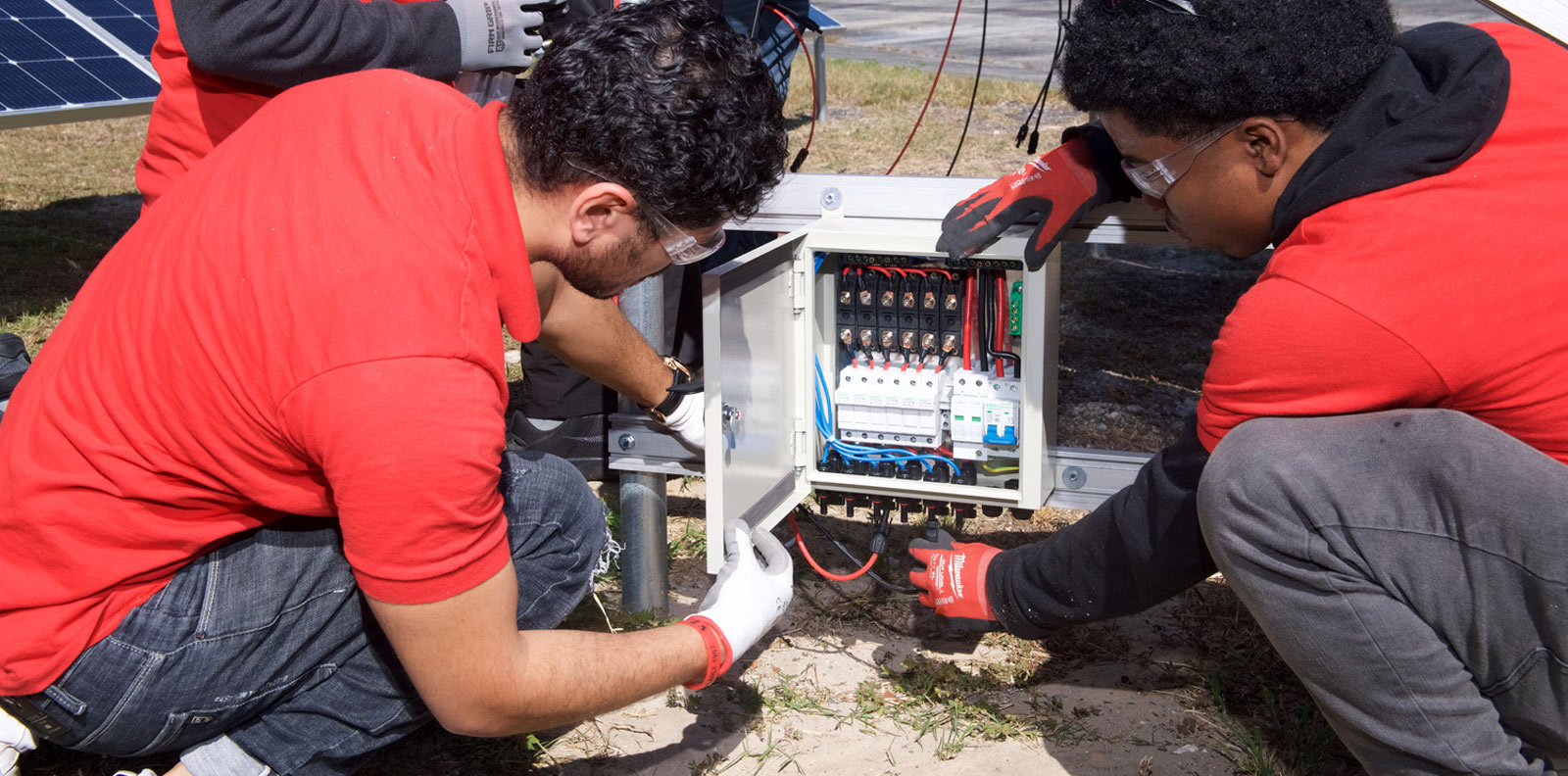
Tulsa Welding School’s (TWS) Professional Welder program is built to get you through training in as few as 7 months. That timeline includes hands-on lab work across processes like SMAW, MIG, TIG, and flux-cored welding, not just classroom time. Completion can help prepare you to sit for the AWS Certified Welder exam at an accredited facility. This third-party certificate is issued by AWS, not the school.
The hands-on hours matter because they’re what separates a diploma from a job-ready employee. Students spend real time running beads, reading blueprints, and passing weld tests in multiple positions, the same tasks a first-week hire is expected to know cold. Employers hiring straight out of a program are betting on that shop time, not just a piece of paper.
Have You Considered a Career in the Skilled Trades?
Fill out the form to recieve a no obligation info packet.
How Long Does an Apprenticeship Take?
Federal guidelines define four requirements for that timeline:
- Program length, three to five years
- On-the-job training, at least 2,000 hours per year
- Classroom instruction, at least 144 hours per year
- Pay, starts on day one at an apprentice wage, increasing steadily as you progress
That structure means years of paid, supervised experience before you reach full journeyman pay.
Apprenticeship slots are competitive, and openings, waitlists, and qualification requirements vary widely depending on your local union or contractor sponsor. That uncertainty is part of why some people hesitate, along with the length of the commitment itself.
Three to five years is a long runway to commit to before you know whether the day-to-day work is a fit.
Which Path Gets You Paid Sooner?
If speed to income is what you need, an apprenticeship wins outright, paid from day one at an apprentice wage with no unpaid training stretch first. Welding school flips that order, training first and searching for work after.
Tuition is the tradeoff for that shorter timeline, not a mark against it. TWS’s cost breakdown shows exactly what covers tuition, lab fees, and gear, so you can plan around it rather than being surprised by it. Financial aid options, scholarships, and payment plans can close much of that gap before your first day of class.
Completing a training program first can also help you land an apprenticeship once you’re done, since you walk in already knowing the fundamentals. Whether that head start changes your apprentice wage or how quickly you advance depends on the specific program and sponsor, so ask directly rather than assuming.
Either way, the choice comes down to whether you can manage without full income for several months or need a paycheck immediately.
Trade School or Community College, Which Gets You Hired Faster?
Between welding school or an apprenticeship as training paths, trade school and community college are the two most common ways to get certified quickly, and employers read them differently.
A trade school curriculum built around current welding codes and the electrical safety training required by the Occupational Safety and Health Administration (OSHA) can shorten the hiring conversation. Employers already know what that OSHA training covers, which removes guesswork from the interview process.
Community college programs often take longer, sometimes up to two years, and job placement support varies more from school to school. TWS’s career services team works with employer relationships built over decades, which is part of why graduates often move quickly from classroom to job site.
Total Earnings Over Time, Not Just Starting Pay
The starting point affects when your paycheck begins, not necessarily where it tops out. Welding school and apprenticeship graduates can converge on comparable pay several years into their careers, once both have logged enough real-world experience. The bigger practical difference tends to be debt, not the ceiling on your income.
Trade school graduates may carry tuition debt to pay down early in their careers, while apprentices typically graduate with little or none, since they earned throughout training. That difference shapes take-home pay for the first few years more than the training path itself does.
Neither path guarantees a higher lifetime salary, differing mainly in when the money starts and what you owe against it.
Can You Do Both?
Yes, and it’s quite common for welding school graduates. Completing welding school first can put you in position to land an apprenticeship afterward, walking in with fundamentals already down instead of starting from zero. Employers and program sponsors often view that head start favorably, even if it doesn’t shorten the apprenticeship’s required years.
The reverse is less common.
Apprentices are already working in the field and get their classroom instruction built into the apprenticeship itself, so there’s little reason to add a separate training program on top. If you’re choosing between welding school or an apprenticeship as your entry point, either can lead to the other later, just not usually in both directions at once.
A Framework for Choosing Your Path
Four practical questions can settle which path fits you best:
- Could flexible or evening scheduling let you work while training, or do you need full-time income right away?
- Do you have access to a local apprenticeship program, and can you meet its entry requirements?
- Would you rather start earning immediately with no tuition debt, or front the training cost for a faster credential?
- Do you want to test the work before committing several years, or are you already certain?
There’s no universally right answer, only the one that matches your finances, your local options, and how certain you already are about welding as a career.
Why the Timing Matters Right Now
Whichever path you choose, industry timing works in your favor. More than 157,000 welding professionals are approaching retirement, and new entrants aren’t keeping pace. The AWS Foundation projects 320,500 new welders will be needed by 2029 just to keep up with that gap.
That demand doesn’t pick between welding school and an apprenticeship. The sooner you start training, the sooner you’re positioned to help close that gap.
If you’ve worked through the questions above and landed on welding school as your fastest path, explore TWS’s welding programs to see program details, schedules, and next steps for enrolling.